The Venice Jewish Ghetto — the world's first, established here in 1516 — costs nothing to walk through. The canals, the tall painted apartment blocks, the open square at its center are all public. What costs money is going inside: a standard ticket covering the Jewish Museum and access to two of the historic synagogues runs about €12 for adults (€10 reduced, €7 for Venetian residents), plus a €2 advance-booking fee, and as of mid-2026 the ticket office keeps to roughly 10am–6pm Sunday through Thursday and a shorter 9am–5pm window on Fridays, with everything closed Saturdays and Jewish holidays.
That free-outside, paid-inside split trips up visitors expecting either a free museum or a ticketed neighborhood. This guide covers the 2026 ticket tiers, opening hours, how long to budget, how to get there, and the booking mistakes that leave people standing outside a locked synagogue door.
What Is the Venice Jewish Ghetto?
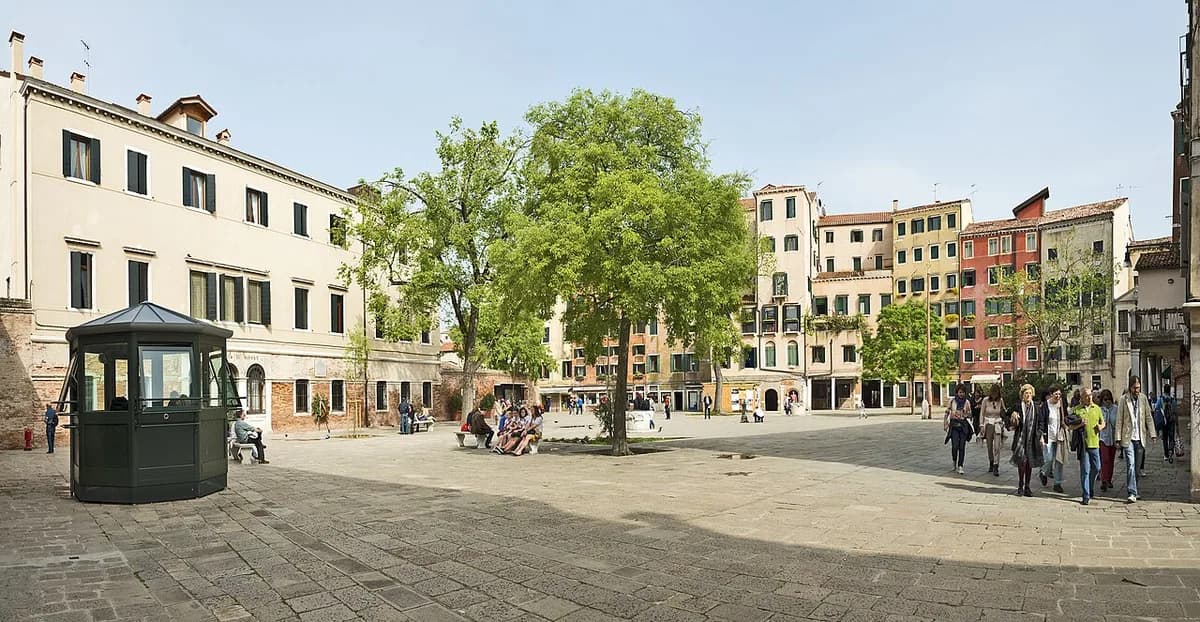
Venice created the Ghetto in 1516, confining the city's Jewish population to a single island in the Cannaregio district and locking its gates at night — a model later copied across Europe, which is also where the word "ghetto" itself comes from: it derives from "geto," the local term for the foundry that previously occupied the site. For nearly three centuries, a growing Jewish community — Ashkenazi arrivals from Germany, Sephardic Jews expelled from Spain and Portugal, and Levantine merchants from the Ottoman world — lived here under restriction, building upward instead of outward, which is why the apartment buildings on Campo del Ghetto Nuovo are noticeably taller than elsewhere in Venice.
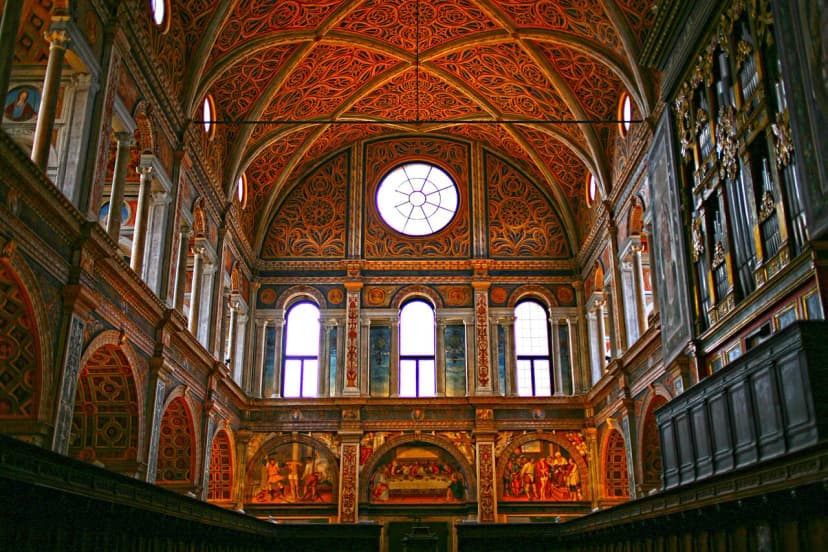
Five synagogues, known as Scuole, were built by these communities between the 16th and 17th centuries, each with its own architectural character; two remain active for services and are open to the public on guided visits. The gates came down in 1797 when Napoleon's forces took the city, and the neighborhood has stayed an open part of Venice ever since, though it remains the seat of Venice's small resident Jewish community today. It also stays genuinely quiet even in high season, which is part of why it shows up on most Venice hidden gems lists rather than the standard first-timer circuit.
Venice Jewish Ghetto Tickets & Prices (2026)
Walking Campo del Ghetto Nuovo and Campo del Ghetto Vecchio, looking at the synagogue facades from outside, and crossing the bridges into and out of the neighborhood costs nothing — there's no gate, no ticket check, no barrier. What you're paying for is the interior experience: the Jewish Museum's collection and guided entry into two of the five synagogues (which one depends on the day, since they rotate). Standard admission is about €12 full price, €10 reduced (children 6 and up, students under 26, and a few other categories), and €7 for Venetian residents. Children under 6, disabled visitors and their companion, and ICOM members enter free. Advance online booking adds a €2 fee on top of the ticket price.
A guided tour option runs closer to €15 full price (€13 or €10 for various concessions) and pairs a docent-led visit to the same synagogues with a fixed departure schedule rather than a self-paced walkthrough. There's also a self-guided "visit with app" ticket sold through Venice's official city booking portal, priced around €14. Whichever option you book, the synagogue portion runs on scheduled departure times, not open browsing — you're assigned a slot. These are third-party and official-portal prices current as of mid-2026; confirm the exact figure for your dates on the official ticket page before booking, since admission pricing here has moved more than once in recent years.
Opening Hours & Best Time to Visit
As of mid-2026, the museum and synagogue visits run roughly 10am to 6pm Sunday through Thursday, with the ticket office closing about 45 minutes before the facility itself — so plan to arrive by mid-afternoon at the latest for a same-day visit. Friday hours are shorter, roughly 9am to 5pm, closing early ahead of Shabbat. The site is closed entirely on Saturdays, on Jewish holidays, and on January 1 and December 25. Hours also shift for the winter season (roughly November through early April), typically compressing further on Fridays — check the official schedule for your exact travel dates, since this is one of the few Venice attractions where the calendar genuinely changes which days work at all.
Weekday mornings, right after opening, are the quietest window — tour groups cluster mid-morning to early afternoon. Avoid arriving on a Friday after about 3pm, since the shorter pre-Shabbat hours catch visitors off guard more than any other timing mistake here. If your trip includes a Saturday, plan the Ghetto for a different day — it's simply closed, no exceptions.
How Long to Plan for Your Visit
Budget 45 minutes to an hour for the museum and a guided synagogue visit — the tour itself typically runs about an hour once it departs. Add another 30 to 45 minutes to walk the neighborhood at an easy pace: crossing both campi, reading the Holocaust memorial reliefs on the wall of Campo del Ghetto Nuovo, and looking up at the tall apartment facades that mark this out from the rest of Venice. All told, most visitors spend 1.5 to 2 hours here, which fits comfortably as a half-morning stop on a 2-day Venice itinerary without crowding out the rest of the day.
How to Get to the Venice Jewish Ghetto
The Ghetto sits in Cannaregio, Venice's northern district, and it's one of the easier landmarks to reach on foot. From Santa Lucia train station, it's about a 10-minute walk along the Lista di Spagna and across the Ponte delle Guglie bridge — genuinely one of the shortest walks from the station to any major Venice sight. The nearest vaporetto (water bus) stops are Guglie and San Marcuola on Line 1 along the Grand Canal, both within a five-minute walk of the neighborhood entrance.
Coming from the city center, it's roughly a 15- to 20-minute walk from the Rialto Bridge heading north along Strada Nova, Venice's widest and most direct pedestrian artery — an easy, well-signed route with no water crossing required beyond the bridges already built into the street. There's no car, taxi, or water-taxi drop-off directly at the Ghetto itself; like the rest of central Venice, the last stretch is on foot.
Visit Tips: Queues, Booking, and Common Mistakes
Book the synagogue visit ahead of time in high season (April through October). Because entry runs on fixed guided departures rather than open access, showing up without a reservation can mean waiting for the next slot or missing the day's rotation of synagogues entirely. Modest dress is appreciated inside, though not enforced as strictly as at St. Mark's Basilica; covered shoulders are the safer default. Photography is typically restricted inside the synagogues — check with your guide before shooting.
The most common mistake is the pricing confusion above: assuming the whole neighborhood needs a ticket, or that the museum is free because the streets are. Neither is true — the outdoor squares and the Holocaust memorial are open to everyone, and only the interiors are ticketed. A second common miss is treating this as a five-minute detour; because the synagogue tour runs on its own schedule, rushing it usually means missing the departure window and only getting the free, exterior half of the visit.
Nearby Attractions
Cannaregio is quieter than the San Marco side of the city, but it connects easily to the main sights. Walking south along Strada Nova brings you to the Rialto Bridge and its market district in 15 to 20 minutes. From the Fondamente Nove waterfront, a short walk from the Ghetto, vaporetto lines run directly to Murano, the glassmaking island, making it easy to pair the two in a single half-day loop. Further south, St. Mark's Basilica and the main square are about 20 to 25 minutes on foot or a short vaporetto ride from the Guglie or San Marcuola stops. For the rest of the district's must-sees, our Venice attractions guide covers the city with the same practical, ticket-first framing as this page.
Frequently Asked Questions
Is the Venice Jewish Ghetto free to visit?
The neighborhood itself is free — the squares, canals, bridges, and building exteriors are open to anyone at any hour. A ticket is required only to enter the Jewish Museum and the historic synagogues, which costs around €12 for standard adult admission.
How much are Venice Jewish Ghetto tickets?
Standard admission covering the museum and two synagogues runs about €12 full price, €10 reduced, and €7 for Venetian residents, plus a €2 advance-booking fee. A guided tour option runs closer to €15, and a self-guided app-based ticket through the official city booking portal is priced around €14. Confirm current prices on the official site before booking.
What are the opening hours of the Venice Jewish Ghetto?
As of mid-2026, hours run roughly 10am to 6pm Sunday through Thursday and 9am to 5pm on Fridays, with the ticket office closing about 45 minutes earlier. The site is closed Saturdays, Jewish holidays, and January 1 and December 25, and hours shift further in the winter season — check the official schedule for exact dates.
Do I need a guided tour to see the synagogues?
Yes, in practice. Synagogue access runs on scheduled guided departures rather than free walk-in browsing, whether you book the standard museum ticket, the dedicated guided tour, or the self-guided app ticket. Booking ahead in high season is the safest way to guarantee a slot on the day you want.
Is the Venice Jewish Ghetto worth visiting?
Yes, especially if you want a quieter, less-touristed side of Venice with genuine historical depth — it's the site of the world's first Jewish ghetto and still home to an active Jewish community. Budget 1.5 to 2 hours to take in both the free outdoor neighborhood and the ticketed museum and synagogue visit.
The Venice Jewish Ghetto rewards visitors who understand its two-tier structure: free to explore on foot, ticketed to go deeper. Book the synagogue visit ahead if you're traveling in high season, plan around the shorter Friday hours and Saturday closure, and pair it with a walk down Strada Nova toward the Rialto or a vaporetto hop to Murano for a fuller half-day in Cannaregio. Whether you spend 20 minutes at the Holocaust memorial or the full 90 minutes touring the museum and a synagogue, this is one of the few places in central Venice where the history feels lived-in rather than staged — worth the detour off the San Marco circuit in 2026.
For current hours and ticket options, see the official Venice Jewish Ghetto visiting information and the official Venice city ticket portal.