The Rialto Bridge is free to cross and open 24 hours a day — there's no ticket, no barrier, and no fee to walk across Venice's most famous crossing over the Grand Canal. Where cost actually enters the picture is Venice's separate day-tripper access fee: on roughly 60 specific dates between April 3 and July 26, 2026 (8:30am–4:00pm), visitors aged 14 and up who aren't staying overnight pay a City of Venice contribution — a lower rate if booked in advance, more at short notice. That fee applies to entering Venice on those dates, not to the bridge itself.
The bridge sits at the heart of the Rialto district, a short walk from Venice's other headline sights around St. Mark's Square. Because "Rialto Bridge tickets" is one of the most-searched phrases about it, this guide sorts out what's actually free, what costs money nearby, current hours, and how to time a visit that doesn't turn into a scrum of tour groups and selfie sticks.
What Is the Rialto Bridge?
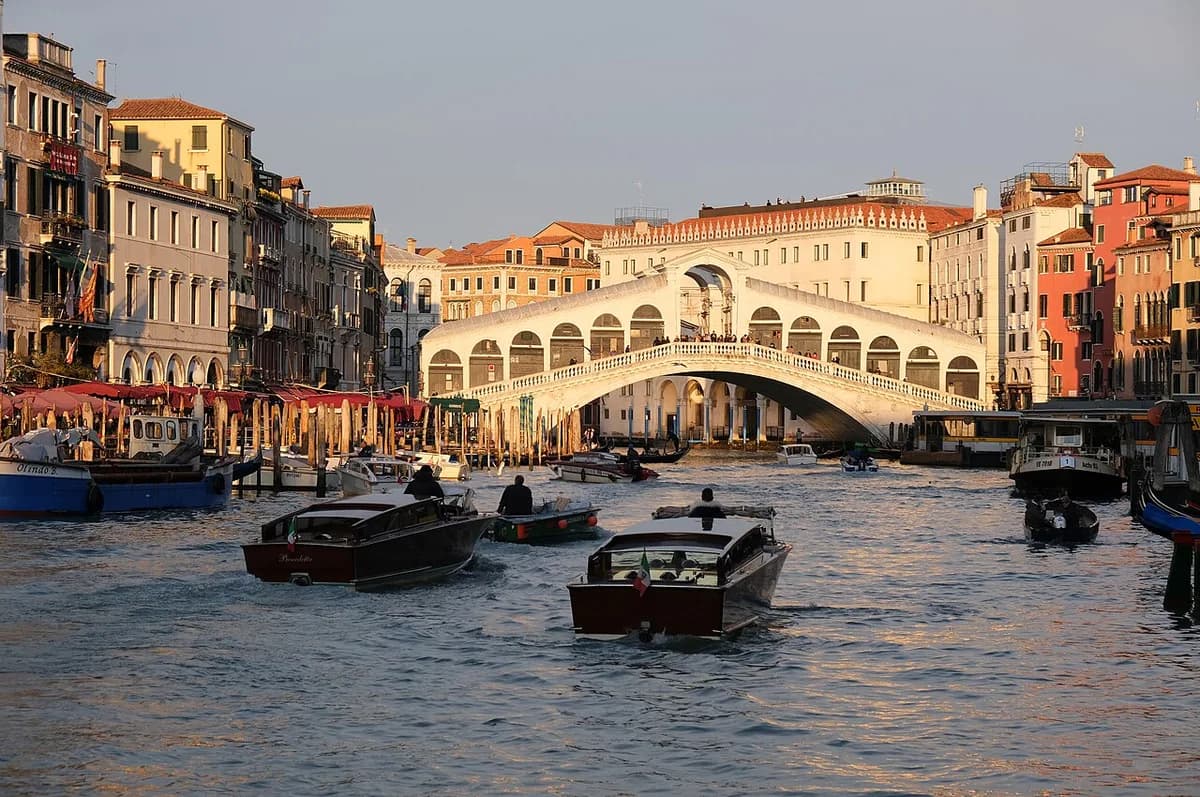
Ponte di Rialto is the oldest of the four bridges spanning Venice's Grand Canal, connecting the San Marco and San Polo districts at the canal's narrowest point. The current stone bridge — a single arch designed by Antonio da Ponte — was built between 1588 and 1591, replacing a run of wooden predecessors that didn't hold up well: one collapsed under crowd weight in 1444 during a wedding procession, and the last wooden version was demolished after decades of patchwork repairs. Da Ponte's design reportedly won out over a competition that drew entries attributed to architects including Michelangelo and Andrea Palladio, though only his stone version was ultimately built.
The bridge spans roughly 28 meters across the canal and rises about 7 meters above the water, resting on around 12,000 wooden pilings driven into the mud beneath its Istrian stone foundation. Two symmetrical ramps lead up to a covered central portico, each ramp split into three walkways — the wider central lane on both sides is lined with small shops, mostly jewelry and souvenir stalls today, a commercial use the bridge has carried since it was built.
Rialto Bridge Tickets & Prices 2026
There is no ticket to buy for the Rialto Bridge itself. It's a public pedestrian crossing, free and open to everyone at any hour, with no gates or turnstiles — unlike some of Venice's paid sights. If you see "Rialto Bridge tickets" for sale online, what's actually being sold is a gondola ride, a guided walking tour, or a boat tour that passes the bridge, not admission to the bridge itself.
The one real cost tied to visiting is Venice's city access fee (contributo di accesso), which applies on specific high-traffic dates between April 3 and July 26, 2026, from 8:30am to 4:00pm. Day visitors aged 14 and older who book in advance pay a lower rate than those who pay at short notice; overnight guests, residents, children under 14, and several other categories are exempt but in some cases still need to register the exemption. Because the exact euro amounts and the calendar of applicable dates are updated by the city, confirm current fees on the official Venice access fee site before you travel.
If you want the classic on-the-water view of the bridge, Venice regulates gondola prices directly: a private 30-minute ride runs a flat rate per gondola (not per person) during the day, rising for evening departures after 7pm. A cheaper alternative is a traghetto — one of the handful of stripped-down gondola ferries that still cross the Grand Canal for a couple of euros in cash, including a short crossing near the Rialto fish market. If you're weighing whether a paid sightseeing pass is worth it alongside free stops like this one, our guide to whether the Venice city pass pays off breaks down what it actually bundles.
Opening Hours & Best Time to Visit
The bridge itself has no opening or closing time — it's public infrastructure, accessible 24 hours a day, every day of the year. The shops built into the central portico keep more conventional retail hours, roughly 10am to 7:30pm, and most are closed or reduced on Sundays.
Timing your visit around the crowds matters more than timing it around any posted hours. Rialto is one of the busiest single points in Venice from mid-morning through early evening, when tour groups converge on it between stops. Before 9am the bridge is close to empty and the light is softer for photos, while the fish and vegetable stalls of the adjacent Rialto Market — produce roughly Monday through Saturday and fish Tuesday through Saturday, both closed Sunday, generally 7am to 1pm — are just setting up. After 8pm, once day-trip tour groups have left, is the other reliably calm window, with the bridge lit and canal traffic thinner.
How Long to Plan for Your Visit
Crossing the bridge and taking photos from the top or the surrounding fondamenta takes most visitors 10–15 minutes. Budget closer to 30–45 minutes if you want to browse the shops on the bridge, wander the nearby market stalls, or find a café table on the canal for a drink with a view — a popular but not cheap way to sit with the bridge in frame.
Because it's centrally located and free, most itineraries treat the Rialto Bridge as a stop within a longer walk through San Marco and San Polo rather than a standalone destination — it pairs naturally with the sights around St. Mark's Square a short walk away.
How to Get to the Rialto Bridge
The Rialto vaporetto (water bus) stop sits right at the bridge's base and is served by Lines 1 and 2, both of which run the length of the Grand Canal connecting Santa Lucia train station and Piazzale Roma to St. Mark's Square. From the train station, Line 2 reaches Rialto in well under 20 minutes; walking the same route through the narrow calli takes closer to 25–30 minutes.
On foot, Rialto is about a 10–15 minute walk from Piazza San Marco along the Mercerie, Venice's main shopping lanes — one of the more reliable ways to navigate the city, since the route is well signposted at most intersections. There's no vehicular access anywhere near the bridge; Venice's historic center is entirely pedestrian and canal-based.
Visit Tips: Queues, Booking & Common Mistakes
There's no queue to manage because there's no ticket — the only crowding is foot traffic, and it's worst at the top of the bridge itself, where everyone stops for the same photo. Keep moving if you're not stopping to shoot, and expect subway-platform density at midday during peak season, roughly April through October.
The bridge's ramps are stone steps on both sides, which makes it impractical for wheelchairs, heavy strollers, or large rolling luggage. The accessible workaround is the Rialto vaporetto itself: riding Line 1 one stop between the Rialto and Rialto Market docks crosses the same stretch of canal without the steps, at a reduced fare for wheelchair users.
The most common mistake is assuming a "Rialto Bridge ticket" sold online is admission to the bridge — it isn't; it's almost always a gondola ride, boat tour, or walking tour that includes the bridge as a stop. A tightly packed bridge is also a magnet for pickpockets, so keep bags zipped and phones secured, especially while everyone's attention is on photos at the top.
Nearby Attractions
St. Mark's Square and its cluster of sights are the natural next stop: the St. Mark's Basilica and Doge's Palace are both about a 12–15 minute walk southeast along the Mercerie, and the St. Mark's Campanile bell tower sits right beside them if you want the elevated lagoon view that the Rialto area itself doesn't offer. Together they make a natural half-day loop with the bridge as your starting or ending point. To fit all of it into a short trip, our 2-day Venice itinerary maps out where the Rialto Bridge fits alongside the rest.
Frequently Asked Questions
Do you need a ticket to visit the Rialto Bridge?
No. The Rialto Bridge is a free public crossing with no gates, turnstiles, or admission fee, open at any hour. Anything sold online as "Rialto Bridge tickets" is a gondola ride, boat tour, or guided walking tour that stops at the bridge, not entry to the bridge itself.
How much does it cost to cross the Rialto Bridge?
Nothing — crossing the bridge is free for everyone. The nearest cost is Venice's separate day-tripper access fee, which applies to entering the city (not the bridge) on around 60 specific dates between April 3 and July 26, 2026, for non-overnight visitors aged 14 and up.
What are the Rialto Bridge's opening hours?
The bridge itself is open 24 hours a day, every day, since it's public infrastructure rather than a ticketed monument. The small shops built into its central portico keep separate retail hours, roughly 10am to 7:30pm, with reduced hours on Sundays.
Is the Rialto Bridge wheelchair accessible?
Not directly — both ramps are stone steps. The practical workaround is riding vaporetto Line 1 one stop between the Rialto and Rialto Market docks, which crosses the same stretch of the Grand Canal without stairs and offers a reduced fare for wheelchair users.
Does Venice's day-tripper access fee apply to the Rialto Bridge?
No — the access fee is a citywide charge for entering Venice on specific dates between April and July 2026, unrelated to any single attraction. It doesn't add a separate cost for visiting the Rialto Bridge; it applies (or doesn't, depending on your visitor category) regardless of which sights you plan to see.
The Rialto Bridge might be the easiest "expensive-looking" sight in Venice to get right: it costs nothing to see, it's open at any hour you show up, and the only real planning decision is timing — early morning or after dark, rather than the packed middle of the day. Save your travel budget for the things nearby that do charge admission, and treat the bridge itself as the free centerpiece of a longer walk through San Marco and San Polo.
Venice's day-tripper access fee and its exact 2026 calendar are separate from anything about the bridge and worth checking before you travel if you're coming for a single day between April and July.
For the latest official information, see Venice's official tourism and access-fee portal.