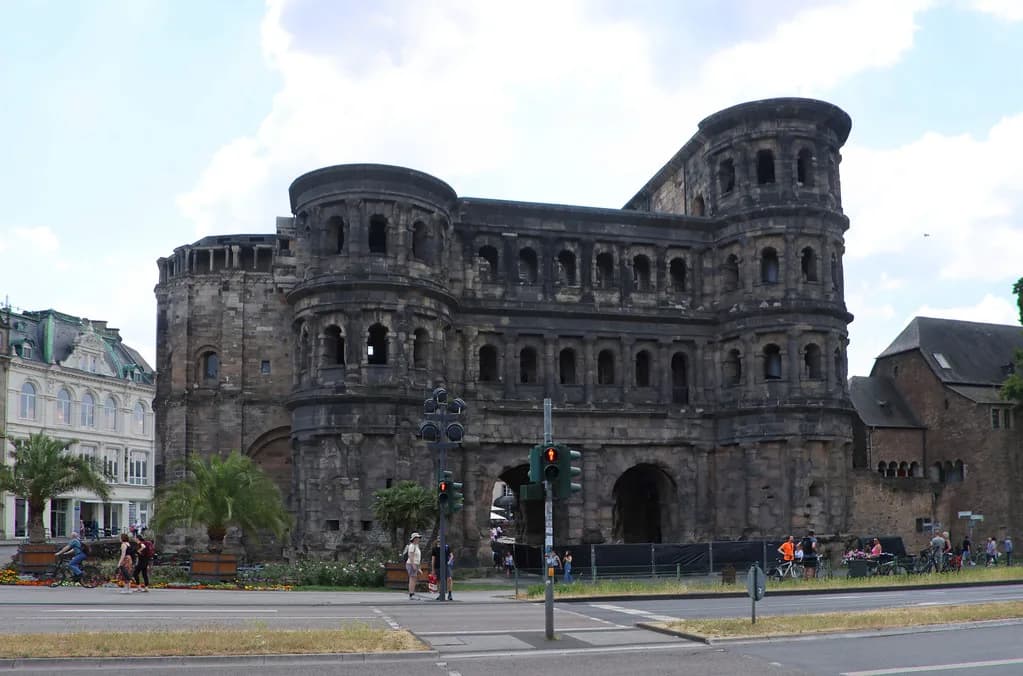
The Stadtmuseum Simeonstift occupies the buildings of the former Simeonstift around the Brunnenhof, directly beside the Porta Nigra at Simeonstraße 60. The permanent exhibition shows art and cultural treasures from the Middle Ages to the 20th century, offering insights into life and everyday life, economy and trade, politics and faith, art and technology of Trier's population. If you arrive expecting Roman archaeology, recalibrate before buying a ticket: this is Trier's city-history museum.
The museum's own site describes the permanent route as the city history of Trier and lists paintings, sculpture, decorative arts, Coptic textiles, furniture and East Asian small sculpture among the holdings. That range is wider than many short summaries suggest. As a suggestion rather than an official figure, allow roughly one to one and a half hours for the permanent collection at a steady pace, and add time if a special exhibition interests you.
What Kind of Museum Is the Stadtmuseum Simeonstift?
This is a city-history museum, not a Roman archaeology collection. Its subject is Trier itself, told through objects that show how people lived, traded, worshipped, governed and made things across roughly a thousand years. The Roman monuments are the backdrop and the neighbours, not the theme of the displays.
The museum's own site groups its permanent route under the heading of Trier's city history and names paintings, sculpture, decorative arts, Coptic textiles, furniture and East Asian small sculpture. A self-guided city route in Trier lists the Stadtmuseum Simeonstift as one of its stops, placing it among the city's central sights rather than on the edge. That combination is the reason to visit even if you have already seen Trier's Roman sites.
The building itself carries part of the story. The Simeonstift was a collegiate foundation whose structures now frame the Brunnenhof courtyard, and the museum's identity is tied to those former monastery buildings. Walking in through the courtyard is the first interpretive step, before any object label.
Where the Museum Sits in Trier
The museum is at Simeonstraße 60 in 54290 Trier, in the buildings of the former Simeonstift around the Brunnenhof, right next to the Porta Nigra. Trier Tourist Information is also based at Simeonstraße 60, which makes the area around the gate a natural orientation point for visitors. If you can find the Porta Nigra, you are already at the museum's doorstep.
Simeonstraße runs from the Porta Nigra into the pedestrian centre, so the museum sits on the main walking approach into town rather than on a detour. A self-guided city route covering Trier places the Porta Nigra, the Dreikönigenhaus and the Stadtmuseum Simeonstift within a few minutes of each other. The Dreikönigenhaus, an early Gothic patrician tower house, is on the same street not far from the gate.
Most visitors arrive on foot, since the old centre is compact and the museum is inside it. If you are planning the wider city rather than just this one building, the city itineraries hub is the better starting surface than a single attraction page. Use the museum's and the tourist office's own directions pages to confirm the latest arrival details before travelling.
Inside the Permanent Collection
Paintings and sculpture form the backbone of the permanent display, supported by decorative arts and applied pieces. The museum describes the route as a way into life and everyday life, economy and trade, politics and faith, art and technology. Read in that order, the objects build a portrait of a city rather than a sequence of masterpieces. The museum's own site names the collection areas if you want detail before visiting.
The unexpected holdings are what distinguish a visit: Coptic textiles, furniture and East Asian small sculpture sit alongside the European fine art. A map listing for the Stadtmuseum Simeonstift notes that the permanent exhibition includes valuable paintings, sculptures and decorative arts, complemented by interactive stations and films. Those interactive elements help carry the city-history narrative for visitors who prefer context to captions.
Do not expect every room to be a highlight reel. The strength of the collection is its breadth across media and centuries, so allow time for the furniture, textiles and small sculpture that most summaries omit. If your interests lean toward Roman archaeology or church treasury art, compare the alternatives before committing your hours.
Temporary Exhibitions and the Programme
The museum layers changing special exhibitions and smaller Kabinett displays on top of the permanent route. Its site has advertised themes ranging from Jewish life in the Middle Ages to the 1920s in Trier and the history of Trier's pubs, presented as special exhibitions and a Stifterkabinett show. Because these change, the current programme is the single most important thing to check before you go.
The site also carries a dated events calendar with courses and guided formats, some of which show as fully booked or as still having places. Treat those listings as the museum's own scheduling information rather than as fixed facts once your travel date approaches. Verify the programme and any registration requirements directly with the museum for the week you plan to visit.
If a temporary show aligns with your interests, it can justify a longer visit than the permanent route alone. If nothing on at the time appeals, the permanent collection still stands on its own. Checking the programme first is how you decide which of those two visits you are actually planning.
How Long Should You Allow?
As a suggestion rather than an official figure, allow roughly one to one and a half hours for the permanent collection at a steady pace. Add thirty to forty-five minutes if a special exhibition of interest is running, since temporary shows are usually the part that slows people down. These figures are editorial guidance only, not a published visiting time.
Visitors who read labels closely, use the interactive stations and films, or linger over the furniture and textile holdings will need longer. Those who treat the museum as one stop on a wider circuit through the old centre can compress it to under an hour by following the main route. Decide which kind of visitor you are before you enter, because the collection rewards either approach.
If you are also visiting the Porta Nigra, place the museum and the gate in the same half-day rather than splitting them across separate trips. The sibling guide to Porta Nigra tickets and visitor guide covers the gate's own logistics, including what its admission does and does not include. Building that pairing into your schedule is the simplest way to avoid backtracking through the pedestrian centre.
Tickets, Opening Hours and Access: What to Verify
Opening hours, admission prices and any closing days are volatile and are not fixed facts to plan around from a third-party summary. The museum publishes visitor information covering opening times, admission prices, guided tours and directions on its own site. Check those pages for your specific travel date rather than relying on older listings.
One assumption is worth correcting directly: the Stadtmuseum Simeonstift and the Porta Nigra next door do not share a single ticket or a combined admission. They are separate institutions with separate entry arrangements, even though they stand side by side. Budget for each individually and confirm the current terms on each operator's own pages.
For guided tours, group arrangements and broader visitor services in the city, Trier Tourist Information publishes its own offerings and contact details. Its site lists museum and tour information alongside practical services, which is useful if you want a guided format rather than a self-directed visit. Use the contact channels on those official pages to confirm details close to your date.
Pairing the Museum With the Porta Nigra
The Porta Nigra is the natural companion because it is immediately next door, so the two form one stop rather than two. A sensible order is the gate first while you are fresh, then the museum's interior as a slower, object-led counterpoint. Either order works, but doing both back to back keeps you from crossing the old centre twice.
The complementarity is thematic as well as geographic: the Porta Nigra is Roman engineering on a monumental scale, while the Stadtmuseum covers the medieval to 20th-century city that grew around such remains. That shift from stone to object is what makes the pair more than two unrelated entries on a list. Read the gate's own Porta Nigra tickets and visitor guide for its practical details before you set the order.
Once you leave the Brunnenhof area, Simeonstraße leads you into the pedestrian centre toward the Hauptmarkt and the cathedral quarter. The Dreikönigenhaus and the market square are short walks from the museum, so the pair anchors a larger old-town loop. Keep those walking distances in mind when you allocate time rather than treating each sight as an isolated stop.
Who the Museum Suits, and Who Should Choose Differently
The Stadtmuseum suits visitors who want Trier's post-Roman story and are willing to read objects across media, from paintings to furniture to textiles. It also works for repeat visitors who have already covered the Roman monuments and want a different angle on the city. Families may find the interactive stations and films helpful for keeping younger visitors engaged with the city-history narrative.
Visitors whose priority is Roman archaeology, imperial baths or early Christian treasury art may get more from Trier's Roman sites and the cathedral quarter. The Barbara Baths in Trier visitor guide is a useful counterpart if your interest runs to Roman infrastructure rather than city-life collections. If your trip leans toward modern history and biography, the Karl Marx House in Trier covers a very different nineteenth-century thread.
The honest trade-off is that no single museum covers all of Trier, and the city's strength is the combination of Roman remains, church art and civic history. Choose the Stadtmuseum when you want the civic story and the unusual object range; choose elsewhere when you want imperial scale or religious treasury art. If time is short, pick one and do it properly rather than skimming three.
Plan Your Visit
The Stadtmuseum Simeonstift is the right stop when you want Trier's own story told through paintings, sculpture, decorative arts, Coptic textiles, furniture and East Asian small sculpture. Its setting in the former monastery buildings around the Brunnenhof, directly beside the Porta Nigra, makes it easy to pair with the Roman gate in one visit. Treat the two as separate ticketed sights and check each operator's own pages for current terms.
Before you travel, confirm opening hours, admission and the current exhibition programme on the museum's visitor pages, and use Trier Tourist Information for wider city services and tours. My suggested allowance is roughly one to one and a half hours for the permanent route, plus extra time if a special exhibition is running. That is guidance, not an official figure, so adjust it to your own pace.
Frequently Asked Questions
Is the Stadtmuseum Simeonstift Trier worth visiting?
It is worth visiting if you want Trier's city history rather than Roman archaeology. The permanent collection covers art and cultural treasures from the Middle Ages to the 20th century, including paintings, sculpture, decorative arts, Coptic textiles, furniture and East Asian small sculpture. Its position in the former Simeonstift buildings around the Brunnenhof, right beside the Porta Nigra, makes it easy to combine with the Roman gate. If your priority is Roman engineering or church treasury art, other Trier sights may suit you better.
How long should you spend at the Stadtmuseum Simeonstift?
As a suggestion rather than an official figure, allow about one to one and a half hours for the permanent collection, and add roughly thirty to forty-five minutes if a special exhibition interests you. Visitors who use the interactive stations and read labels closely will need longer, while those treating it as one stop on an old-town circuit can compress the visit. Check the museum's programme before you go, because a temporary show can change how much time you want.
Can you visit the Stadtmuseum Simeonstift and the Porta Nigra on the same ticket?
No. The Stadtmuseum Simeonstift and the Porta Nigra next door are separate institutions with their own admission arrangements, so do not assume a combined ticket or a single entry price covers both. Budget for each separately and confirm the current terms on the museum's own visitor pages and on the Porta Nigra operator's official information. The two are close enough on foot that pairing them in one half-day still makes sense.