
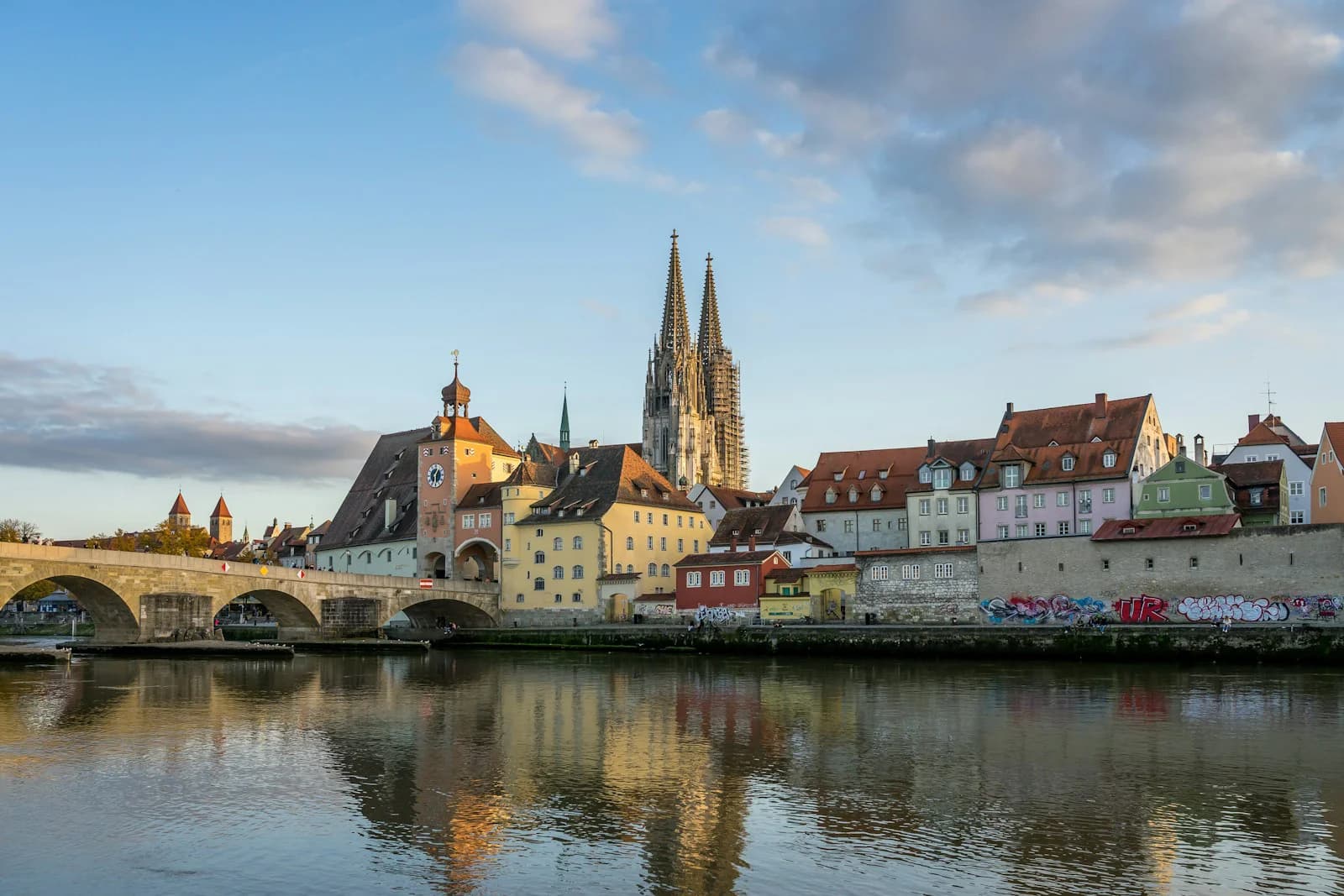
Regensburg's Historical Museum is housed in a former Minorite monastery, and its collections trace art and cultural history from the Stone Age to the 19th century. The tourism office publishes opening hours of Tuesday to Sunday and holidays from 10 am to 4 pm, which makes Monday a non-starter and shapes how you should sequence a short stay. Budget roughly 90 minutes if you want the Roman department and the medieval church and cloister, and closer to three hours if you intend to work through every permanent section in order. Those durations are suggestions, not official timings.
It is one municipal museum with its own ticket, not a pass covering every museum and document site in Regensburg. The city's museum service lists several institutions alongside the document sites, so treat a visit here as a single stop rather than assuming one admission opens the rest. For broader city planning, start with the Regensburg hub and the landmark guide index.
What the Historical Museum Actually Is
The museum occupies the former Minorite monastery, and the tourism office describes it as explaining the history of art and culture from the Stone Age to the 19th century. Its main components survive from the monastery, and in the preserved church and adjacent cloister the atmosphere of past centuries still shapes how the medieval displays read. That setting is a reason to visit in itself, not just a backdrop.
One practical consequence is that a ticket here covers this museum's collections, not every museum in Regensburg. The city runs several museums alongside the document sites, so if you also want the document Neupfarrplatz or the Museum of Bavarian History, plan them as separate stops with their own arrangements. Assuming one admission covers all of them is the most common planning mistake.
The collections span prehistory and early history, Roman times, medieval stone sculpture, life and trade in medieval Regensburg, sacred art of the 15th and 16th centuries, and home decor and arts and crafts of the 16th to 19th centuries. That breadth means the museum can absorb anything from a quick orientation stop to a long study visit. Deciding in advance which departments matter to you is the single biggest time saver.
Ticket Scope Explained
The rates published by Regensburg Tourismus are 7.50 euros normal, 4 euros reduced and 15 euros for families, and these should be treated as the amounts stated by that source rather than as guaranteed 2026 prices. Budget accordingly but verify before you commit, since municipal tariffs can change. Reduced eligibility rules are not spelled out in the same listing, so ask at the desk or check the city's museum pages if you expect to qualify for a concession.
Free admission applies every first Sunday of the month according to the same source, which makes that day both the cheapest and typically the busiest option. If your dates are flexible and cost matters more than quiet viewing, target the first Sunday; if you want space in the monastery church and cloister, choose a weekday instead. Either way, confirm the current first-Sunday arrangement before travelling, because such promotions are periodically reviewed.
Do not assume that a regular ticket automatically extends to every temporary display. The city lists a special exhibition on the 1950s in Regensburg and a studio exhibition called Krieger und Christ, and the studio exhibition is described as already included in the regular museum admission. For the special exhibition, the same clarity is not published, so treat its ticket status as something to confirm at the entrance or through the museum office before you plan around it.
Opening Days and the Closure Calendar
The published pattern is Tuesday to Sunday and holidays from 10 am to 4 pm, which effectively makes Monday a non-starter for a museum visit. That single fact should drive how you sequence a short Regensburg stay: put the museum on a Tuesday-to-Sunday slot and keep Monday for the old town, the Stone Bridge or the cathedral. Hours are listed only in that form, so do not count on a late evening opening.
The listed closures are 1 January, Shrove Tuesday, Good Friday, 1 May, 1 November, 24 December, 25 December and 31 December. Several of these fall in periods when visitors commonly travel, so a late-December or early-May trip needs a quick calendar check rather than an assumption. Note that 26 December is not among the closures listed, though holiday opening should still be verified directly.
A four-hour window each open day is workable but not generous, especially because the museum spreads across multiple departments and two floors of exhibition halls in the prehistory section alone. Arriving in the first hour gives you the calmest conditions and the widest margin if one department holds you longer than expected. Building in slack matters more here than at a single-room gallery.
Walking the Departments in Order
Starting with prehistory gives you the chronological spine of the collection. Two large halls present regional development from the Palaeolithic to the end of Celtic civilisation under the title of the prehistoric Upper Palatinate, spanning from a roughly 250,000-year-old hand axe found at Pösing to finds from the end of the Celtic period in the 1st century BC. Grave displays from different eras include what the source calls the first Regensburg, from the early Neolithic around 5500 BC.
The Roman department then shifts from archaeology to urban life. It covers the 1st to 5th centuries AD, when Regensburg, known as Castra Regina, was the most important military base on the Roman frontier in what is now Bavaria, and the displays use the founding inscription, a coin hoard, models and reconstructions to make those structures and everyday routines legible. This section was redesigned in 2003 and is described as especially popular with both younger and older visitors, so expect it to be the busiest part of the permanent route.
If your interest is the Roman frontier more broadly, the Danube Limes World Heritage title added to Regensburg in 2021 explains why this material sits in a city rather than at a remote fort. The Regensburg hub guide is a sensible next step when you are shaping a longer itinerary around the Roman and medieval layers of the city.
Medieval Regensburg in Church and Cloister
The medieval department is the part most tied to the building itself. Because the monastery church and cloister survive, the displays on the political constitution, economic activity, everyday life and art of the medieval city and its region are shown in an environment that still carries the atmosphere of those centuries. That combination of setting and subject is why this section rewards slower reading than its size might suggest.
Stone sculpture of the Middle Ages sits alongside this material, and it is easy to underrate if you move quickly toward the later decorative arts. Give the sculptures their own pass, then double back to the medieval city displays so you are not reading labels on the move. Regensburg was one of the best-preserved medieval cities in Germany, which is the wider context for this collection.
For a wider look at medieval Regensburg beyond the museum, the Neupfarrplatz area is a natural companion stop, and its underground document site covers a different chapter of the city's past. Planning it as a separate visit keeps expectations realistic about tickets and timing.
Sacred Art, Decorative Arts and Later Collections
The third act of the permanent collection moves into sacred art of the 15th and 16th centuries and then home decor and arts and crafts of the 16th to 19th centuries. This is where the museum stops being primarily archaeological and becomes a story about craftsmanship, domestic life and religious culture in the region. Visitors who only want Roman and medieval material can reasonably compress this section.
Objects here also connect to Regensburg's period as a trading metropolis and political centre of the Holy Roman Empire, a framing the city's tourism office uses when introducing the old town. Read the later galleries with that commercial and civic context in mind and the ceramics, metalwork and furnishings make more sense. It is the section most likely to surprise first-time visitors who came only for the Roman finds.
Temporary Displays Versus the Permanent Collection
The museum's public programme includes a special exhibition on the 1950s in Regensburg and the studio exhibition Krieger und Christ, which is documented as running until 7 February 2027 and as included in the regular museum admission. Treat the special exhibition as a separate question: no source states whether it needs its own ticket, so ask before you build a visit around it. Exhibitions rotate, and what is listed now may not be on view when you arrive.
The city museum service now also publishes its own newsletter, which is the most reliable way to see what is on before a trip without relying on third-party listings. If a particular temporary show is your main reason for going, check the museum's current notices rather than assuming the display you read about is still installed. The permanent departments, by contrast, are the stable core you can plan around.
Midday events have also featured at the museum, with a series of short lunchtime tours in which staff present individual highlights from the collection. Those are scheduled programming rather than something you can rely on walking into, so treat them as a bonus if the dates align with your stay. Checking ahead is the only way to know whether one falls during your visit.
How Much Time to Budget
As a suggestion rather than official guidance, allow about 90 minutes if you want the Roman department and the medieval church and cloister and little else, and around two and a half to three hours if you intend to work through prehistory, the medieval city, sculpture and the later decorative arts in sequence. The four-hour daily window makes the longer version feasible but leaves little room for a slow start. Your own pace and any temporary display will shift these figures.
If your trip coincides with the free first Sunday, add buffer time rather than trimming the visit, since waived admission tends to concentrate visitors into the same hours. Conversely, a rainy weekday in the old town makes the museum a strong default, and that is exactly when other people are thinking the same thing. The rainy-day guide is useful if you want alternatives for the rest of the day.
The museum has added a visitor lounge, which gives you a legitimate reason to break a longer visit into two halves instead of pushing straight through. Amenities and access rules are not published in the material available, so treat it as a pause point rather than planning around specific services. Even a short break makes the later galleries easier to absorb.
Who Should Prioritise This Museum
Prioritise it if you want one coherent narrative of the region from prehistory to the 19th century, or if Roman frontier history and medieval urban life are your interests. Skip or shorten it if your Regensburg time is limited to a single afternoon and you would rather spend it on the cathedral, the Stone Bridge and the old town streets, since those are outdoor and free to walk. The museum suits a half-day, not a rushed hour between other stops.
Families should note that the museum runs education activities for children and teenagers, including birthday parties and school and children's group programmes, and family tours roughly once a month. Those formats matter more than the collection for younger visitors, so check what is scheduled rather than assuming a self-guided walk will hold attention. The family-oriented city guide is a helpful companion when balancing museum time with outdoor stops.
If you are building a trip of several days, the Befreiungshalle Kelheim day trip from Regensburg pairs well with a museum morning, since it takes you out of the city for a different kind of monument. Keep the two on separate days rather than compressing both into one schedule. That way the museum gets the time its departments deserve.
Plan Your Visit
The Historical Museum is best understood as one museum in a former Minorite monastery, covering prehistory, Roman Regensburg, the medieval city, sculpture, sacred art and later decorative arts across a Tuesday-to-Sunday schedule. The rates published by Regensburg Tourismus are 7.50 euros normal, 4 euros reduced and 15 euros for families, with free entry on the first Sunday of the month, and those figures should be confirmed before you travel.
Plan around the closure list and the four-hour daily window, decide in advance whether the Roman and medieval departments are enough for you, and check the current exhibition programme if a temporary show is your motivation. For everything else in the city, from the document sites to the wider landmark guides, use the Regensburg hub to sequence your days sensibly.
Frequently Asked Questions
What is the Historical Museum in Regensburg about?
It is the city's museum of art and cultural history, housed in a former Minorite monastery, and its collections run from the Stone Age to the 19th century. The departments cover prehistory and early history, Roman Regensburg, the medieval city, medieval stone sculpture, sacred art of the 15th and 16th centuries, and decorative arts from the 16th to 19th centuries. The monastery church and cloister are part of the experience rather than just the setting.
How much does it cost to visit the Historical Museum in Regensburg?
Regensburg Tourismus publishes normal, reduced and family rates, and the reduced tier has eligibility conditions that are not spelled out in the same listing. Because municipal tariffs can change, confirm the amount and the concession rules with the museum office or on the city's museum pages before your visit rather than relying on any figure quoted second-hand.
Is the Historical Museum free on the first Sunday of the month?
The tourism office states that admission is free every first Sunday of the month. Expect that day to be busier than a normal weekday, since waived entry attracts local visitors as well as tourists. Check the museum's current notices before you go, as promotional arrangements can be revised.
What are the opening hours and closure days?
The published pattern is Tuesday to Sunday and holidays from 10 am to 4 pm, with Monday closed. The listed closure dates are 1 January, Shrove Tuesday, Good Friday, 1 May, 1 November, 24 December, 25 December and 31 December. Confirm these before travelling, especially around public holidays and the Christmas period.
How long does it take to visit the Historical Museum in Regensburg?
A focused visit covering the Roman department and the medieval church and cloister takes roughly 90 minutes at a steady pace, while working through all the permanent departments is closer to two and a half to three hours. These are suggestions, not official timings. Free-admission days and any temporary exhibition will change how long you need.
Is the special exhibition included in the regular ticket?
The studio exhibition Krieger und Christ is documented as included in the regular museum admission and as running until 7 February 2027. For the special exhibition on the 1950s in Regensburg, no source states whether a separate ticket is required, so ask at the museum or check its current pages before planning around it.


