The Studentenkarzer is one of Heidelberg's smallest sights and one of its strangest: a former university jail where students once served detention and covered the walls with names, portraits and verse. It sits on Augustinergasse in the Old Town, minutes from the university quarter rather than up at the castle. Between 1778 and 1914, the university held independent judicial authority and confined rule-breaking students here, where detainees still attended classes during the day.
Heidelberg rewards walking far more than it rewards rushing. The city's own guidance notes that distances in the centre are short and most journeys can be made on foot, which makes a small interior stop easy to fold into an Old Town circuit. A reasonable editorial suggestion for the jail itself is roughly twenty to forty minutes, long enough to read the walls rather than glance at them.
What the Studentenkarzer Actually Was
For roughly a century and a half, Heidelberg University ran its own disciplinary system, and the karzer was where students served short sentences handed down under it. The jail was in use between 1778 and 1914, when the university still held independent judicial authority over its students. Offences were usually minor rather than criminal in the ordinary sense. This is the detail adults tend to find most interesting.
A student could lose days or weeks of liberty depending on how seriously the offence was judged. Rather than being confined around the clock, detainees were expected to continue attending their classes during the day. That single fact reframes the whole place: it was an arm of student life, not a career criminal's cell.
Not a Grim Prison: Beds, Desks and Daytime Lectures
The interiors were surprisingly civilised. Cells were spacious by prison standards and furnished with proper beds and desks, much closer to a student room than a modern cell. Historical accounts record that students kept up their coursework while locked in, which is why the rooms feel like a lost corner of campus rather than a punishment block.
Because conditions were mild, a stay gradually turned into something close to a status symbol. Detention became a rite of passage for the more unruly element of the student body rather than a mark of shame. By the closing years, inmates were inviting friends in, and the jail carried a party-house reputation.
Now the preserved desks and metal bed frames are part of the display, not just empty space. They make the graffiti legible as something students did while living in these rooms. In the later years of use, those dorm-like conditions were exactly what turned the building into a social venue.
What You Actually See: The Graffiti Is the Exhibit
The main attraction is not the furniture but the walls. Over more than a century, detainees decorated surfaces using ink, soot and coloured chalk, working across walls, door frames and even the ceiling. The result includes profile portraits, fraternity emblems, names and poems layered over one another. Treat it as a dense archive and read it slowly.
The visual effect is accumulative rather than legible: one student's mark sits over another's, and the oldest layers are partly hidden. Because the layers are hard to separate, the rooms reward attention more than speed. Visitors who expect an explanatory museum will be surprised by how raw the space feels.
Detained students marked the walls with their own names and symbols as a form of group ritual. That ritual element is what makes the interior distinctive among European heritage interiors. Because visitors are admitted to the same rooms students occupied, the graffiti is the reason the building was preserved rather than repurposed.
Why It Closed and Why It Survived Intact
The karzer fell out of use in 1914, when the university's separate jurisdiction over students ended. Instead of being cleared out or converted to another purpose, the building was kept, down to the beds and desks that had furnished the rooms. That decision is why the interior survived as a period document.
Its later reputation as a party house, where inmates hosted friends, is part of why the graffiti was tolerated rather than scrubbed away. By the time the jail stopped functioning, the marks had accumulated a century of social meaning. That combination of light-touch punishment and unpunished decoration produced the surviving interior.
Where It Sits in the Old Town
The address is Augustinergasse 2 in the Altstadt, in the same compact university quarter as the Old University and the University Library. It is a short walk from the Hauptstrasse, the long pedestrian spine that carries most Old Town wandering, which makes it easy to slot between other stops.
The University Library is a sensible companion stop because it keeps you in the same quarter and the same theme. A visitor guide to the library helps you plan the pairing without rewalking the same streets twice.
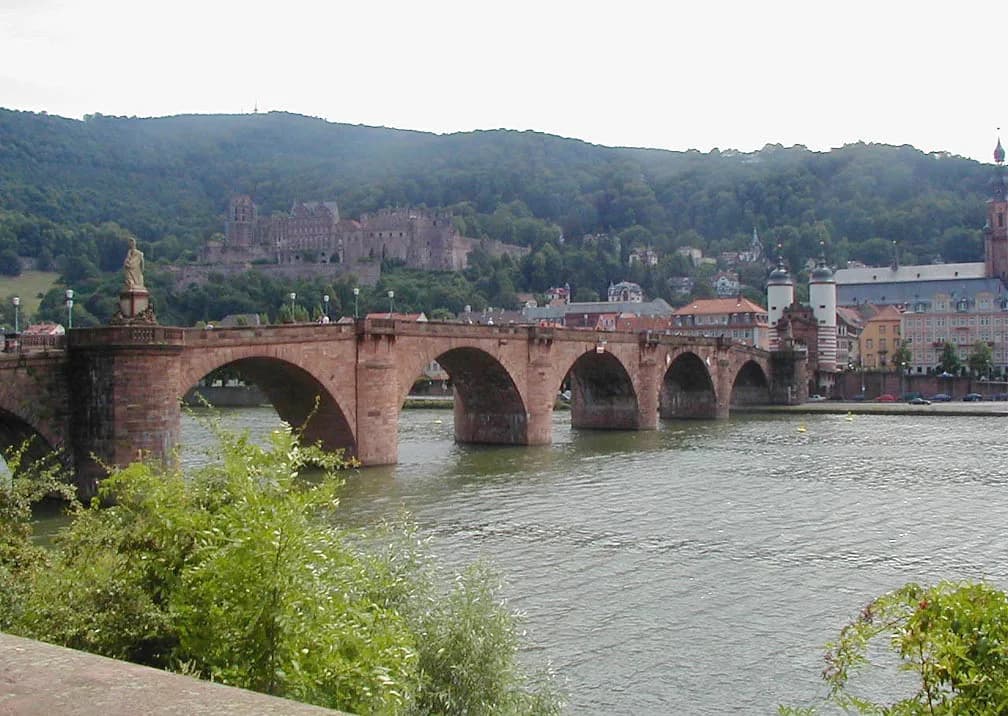
The other half of a walking day sits uphill. Heidelberg Castle and its grounds give the city its silhouette and its views down over the Old Bridge and the rooftops, and the funicular is the usual way up when legs are tired.
Should You Go? A Short-Visit Decision
Prioritise the Studentenkarzer if you are interested in university history or in reading graffiti as a primary source. The rooms are small and the visit is short, so it suits travellers who like layered detail rather than sweeping displays. Anyone expecting a full-scale museum will find the space limited.
Skip it, or move it down the list, if your Heidelberg time is measured in hours and you have not yet done the castle, the bridge and the Hauptstrasse. Each of those takes longer and delivers the city's headline experience. A disciplined short visit means choosing the jail as a deliberate add-on.
Tickets and Opening Times: What to Verify
No operator source reviewed here confirms current ticket prices, concessions, or combined admission with the University Museum, and the jail's own relationship to that museum is not something to assume. Entrance arrangements, including whether a ticket covers both, should be checked with Heidelberg University and with Heidelberg Marketing before you plan around them. Prices and conditions can change, so treat any figure you see quoted elsewhere as unverified.
Published times vary by source and season, so confirm the day's schedule rather than relying on a third-party listing. Accessibility, booking requirements and any last-admission cut-off are also unconfirmed here. If a visit hinges on any of those details, contact the operator directly before travelling.
Fitting It Into a Guided or Walking Day
Heidelberg's official tours include Old Town and castle options in multiple languages, which can be efficient if you want the university quarter explained rather than self-guided. For a short stay, a guided morning followed by an independent walk is a common workable pattern. Booking and schedule details sit with the operator.
The stop is naturally short, which makes it a good filler between larger sights on a walking day. Because it sits inside the Old Town grid, adding it rarely means adding transport. Build the day around the castle and the bridge, then treat the jail as a small, dense detour.
Plan Your Visit
The Studentenkarzer rewards a specific kind of curiosity: interest in how a university policed its own students and what those students wrote on the walls in response. Decide whether the graffiti is worth twenty to forty minutes of your day before you commit a slot to it. If it is not, the castle, the bridge and the Hauptstrasse will fill a Heidelberg day comfortably.
Whatever you decide, confirm admission scope and opening times with the operator shortly before you go rather than trusting out-of-date listings. That single check prevents the most common disappointment at small historic interiors. Everything else about the visit is a matter of how much attention you are willing to give a wall.
Frequently Asked Questions
What is the Studentenkarzer in Heidelberg?
It is Heidelberg University's former student jail, in use between 1778 and 1914, when the university had its own jurisdiction over students. Detainees served short sentences for minor offences and continued attending classes during the day. The preserved interior, including beds, desks and dense wall graffiti, is what visitors come to see.
Why were Heidelberg students jailed?
Typically for minor, often alcohol-related misbehaviour rather than serious crime. Historical accounts describe offences such as carousing, duelling and other disruptions to public order. The penalty ranged from a few days to a few months depending on how the university judged the offence.
How long should I spend at the Student Prison?
It reads as a short visit rather than a half-day stop. A rough editorial suggestion is roughly twenty to forty minutes if you want to read the wall markings properly; that is a planning figure, not an official duration. The rooms are small, so the length of the visit depends mostly on your interest in the graffiti.
Is the Studentenkarzer worth visiting on a short Heidelberg trip?
It depends on what you value. If you like social history and reading original inscriptions, it is a distinctive, dense stop that fits easily into an Old Town walk. If your time is tight and you have not yet seen the castle, the Old Bridge and the Hauptstrasse, those deliver more of Heidelberg's headline experience.
Where is the Student Prison located in the Old Town?
It is at Augustinergasse 2 in the Altstadt, close to the university quarter and a short walk from the Hauptstrasse pedestrian street. That makes it easy to pair with the University Library and other Old Town stops without extra transport. The castle is further uphill, reached separately.
Does the Student Prison share a ticket with the University Museum?
Do not assume it does. The link between the two appears in visitor accounts rather than in an operator statement, and admission scope and combined tickets are not confirmed here. Check current arrangements with Heidelberg University or Heidelberg Marketing before you plan around a shared ticket.