Kaiserswerth sits at the northern edge of Düsseldorf, where the Rhine bends and the city's oldest quarter keeps its cobbled lanes, church heritage and a ruined imperial palace in one compact, walkable area. It is not a museum with a single entrance and one ticket; it is a district you explore on foot.
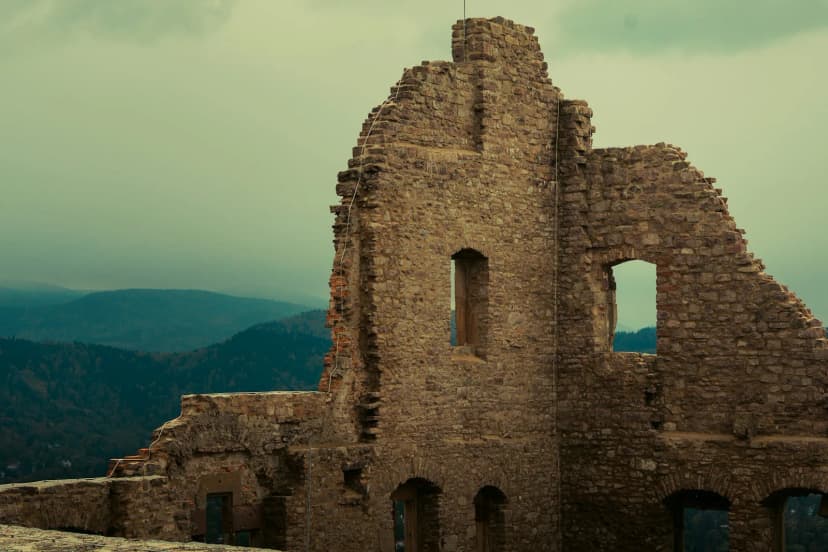
The headline sight is the Kaiserpfalz Kaiserswerth, an open-air ruin at Burgallee associated with Frederick I Barbarossa. One research source states a fortress has stood here since 1016, when records show it was gifted to Count Palatine Ezzo, with the ruins visible today dating largely from Barbarossa's era. It is described as free to visit because it amounts to crumbling walls rather than a roofed building.
As a suggested plan rather than an official figure, allow about an hour for the ruin alone and a half-day if you add the lanes and the riverbank. This guide treats the district as the attraction: the ruins first, then the streets, the river and the practical question of how much time to allow.
Why Kaiserswerth Rewards the Trip North
Most Düsseldorf itineraries concentrate on the Altstadt, the MedienHafen and the shopping boulevards, which makes Kaiserswerth feel like a different city entirely. The district lies north of the centre, right on the Rhine, and its appeal is cumulative rather than concentrated in one monument. You come for the combination of ruin, river and quiet residential streets.
One practical trade-off is timing. A first-hand visitor account describes arriving around 10am and finding the neighbourhood still sleepy, with the area not fully waking up until lunchtime, which suits anyone who prefers empty lanes and unhurried photography. If you want company and open terraces instead, later in the day is the opposite choice.
It also helps to set expectations about scale. Kaiserswerth is a residential quarter with historic fabric, not an enclosed visitor complex with turnstiles, so no single site justifies the journey on its own. The reward is the whole walk.
Kaiserpfalz Kaiserswerth: Barbarossa's Ruin on the Rhine
The history is unusually well documented for a set of ruins. Records cited in travel research trace a castle here to 1016, when it was granted to Count Palatine Ezzo, with the fortifications later transformed into an imperial palace under Emperor Heinrich III. The structures visible today are attributed largely to the era of Frederick I Barbarossa.
The site's strategic value came from the river. Barbarossa moved the Rhine customs station to Kaiserswerth in 1174 and ordered a stronger fortress, work completed in 1193 under his son Henry VI, which explains why the surviving walls occupy such a commanding position above the water. Some sections of the masonry are described as up to roughly four and a half metres thick.
The end of the palace was slow and unglamorous. It was destroyed across the seventeenth and eighteenth centuries during successive sieges and wars, and in the nineteenth and twentieth centuries the ruin served as a convenient quarry, so stone from the palace reappears in houses around the district. That recycling is part of why the lanes and the ruin feel like one continuous historic landscape.
Free Grounds, Not Ticketed Interiors
The most useful planning distinction is between the open-air footprint and anything enclosed. The Kaiserpfalz is described as free to visit precisely because it amounts to crumbling walls rather than a roofed building with rooms, which is why no ticket booth or combined ticket applies. Do not expect the district's other sites, including its churches, to share one admission or one schedule.
Opening information for the ruins is genuinely inconsistent across third-party listings, and one research source openly advises checking the city's official tourism website or local tourist information for up-to-date access times and rules before travelling. That is the responsible approach: confirm with Düsseldorf tourism rather than trusting a listing page, and note that these are open-air ruins where access conditions can change.
There is also a scope caveat worth carrying with you. One visitor account notes arriving to find gates closed and viewing the palace from outside instead, which is a reminder that a low gate is not the same as guaranteed entry. Budget for the possibility that you admire the ruin from the path and keep walking.
St. Suitbertus and the District's Religious Heritage
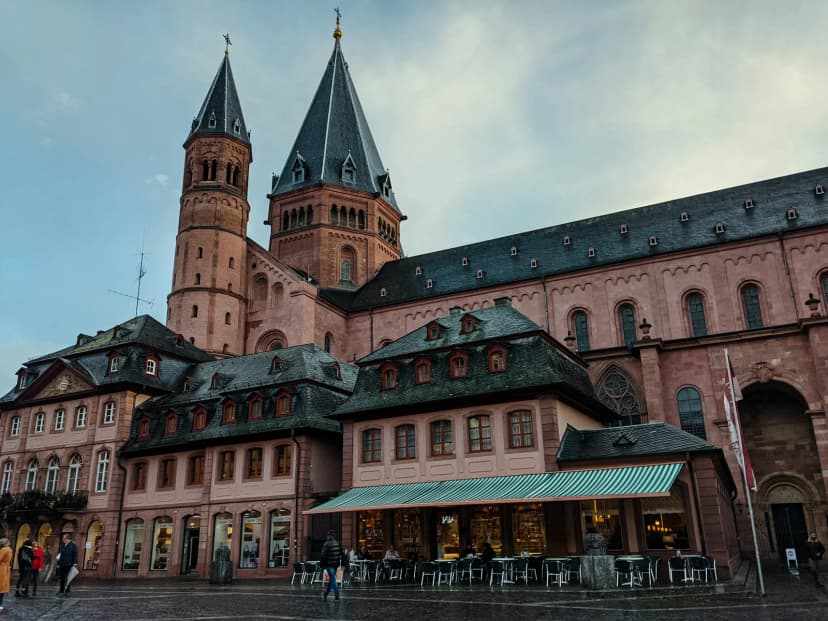
Kaiserswerth's identity is bound up with its religious history, and St. Suitbertus is the name most closely attached to that heritage in the district. One source dates the monastery tradition to around 700 AD, when the Anglo-Saxon monk Saint Suitbert founded a monastery on an artificial island in an old branch of the Rhine, but the details are not described consistently across travel sources, so treat them as context for your walk rather than a scheduled sight with confirmed visiting arrangements.
If seeing church interiors matters to you, plan around the uncertainty rather than against it. Check current opening arrangements locally on the day, and treat any church visit as separate from the castle ruin in both timing and access.
Cobbled Lanes, Baroque Houses and the Riverbank
The streets between the ruin and the river are the second half of the visit. Travel research describes the main street lined with handsome Baroque-era houses and the district as full of cobbled lanes, with a picturesque walking trail along the Rhine that makes an easy, flat finish to the outing. Comfortable shoes matter more than any other piece of kit here.
The riverside setting is also why the district works in shoulder seasons. One source highlights spring cherry blossom as a reason to come north, while the Rhine path itself is a year-round draw for anyone who wants the water without the crowds of the central promenade. For a comparable in-city river walk closer to the centre, the Rhine promenade Düsseldorf visitor guide covers the Altstadt-to-Media-Harbour stretch.
Do not build the day around named restaurants or beer gardens. Food and drink options in the district change, and no reliable current listing was confirmed here, so decide where to eat once you are on the ground or plan to return to the centre for a meal.
Getting There and What to Verify First
Public transport is the straightforward option, but the details differ between sources and should be checked rather than copied. One travel account suggests taking the U79 from Düsseldorf Hauptbahnhof towards Meiderich and getting off at Kittelbachstraße, followed by a ten-minute walk, while another source names Klemensplatz as the stop for the palace. Both describe the same general approach: metro or tram to Kaiserswerth, then a walk of a few minutes.
Journey times quoted in older accounts should not be treated as current facts. Check live timetables with the local transport operator on the day you travel, and allow extra time if you are connecting from a train at the main station. One source notes that cycling from the centre to Kaiserswerth is another realistic option for confident riders.
For anything time-sensitive, including whether the ruin's gates are open and whether any guided activity is running, treat the city's tourism information as the reference point and confirm shortly before you go. Third-party listings are useful for orientation, not for guarantees.
A Suggested Half-Day in Kaiserswerth
This is a suggested structure rather than an official itinerary, and it assumes roughly half a day including travel from central Düsseldorf. Start with the Kaiserpfalz while the lanes are quiet, then walk the historic streets towards the river for the second half.
For the ruin alone, one source suggests that 1–2 hours is usually sufficient to walk the grounds, examine the surviving walls and take in the Rhine views, extending longer if you want to study the fortifications closely. Add the district stroll and you are looking at a comfortable half-day, which is the figure to plan around rather than a rushed stop.
If you have only a couple of hours free, the ruin plus a short stretch of riverside path is a realistic minimum. If you have longer, the lanes and a slow riverbank walk are what make the trip feel worthwhile rather than merely efficient.
Pairing Kaiserswerth With the Rest of Düsseldorf
Kaiserswerth works best as one half of a day, not the whole of it. Because it sits north of the centre, pairing it with a central cluster such as the Altstadt and Carlsplatz market Düsseldorf keeps travel simple and avoids crossing the city twice.
For families, a north-city combination is worth considering: the Aquazoo Löbbecke Museum visitor guide covers a museum that sits on the same side of town, which reduces backtracking compared with returning to the centre.
If you would rather spend a full day outside the city, day trips from Düsseldorf by train cover options such as the Neanderthal Museum and Schloss Benrath. Keep the plan simple: pick either Kaiserswerth plus a central district, or Kaiserswerth plus one out-of-town trip, not both.
Plan Your Visit
Treat Kaiserswerth as a walking district with a ruined imperial palace at its centre, and it becomes an easy half-day rather than a puzzling detour. The ruin is open-air and described as free to visit, but access conditions and any opening arrangements should be confirmed with Düsseldorf tourism before you travel.
Build in slack, wear shoes that handle cobbles, and check your transport on the day rather than relying on older journey descriptions. Arriving early is the simplest way to enjoy the lanes before the neighbourhood fills up.
Frequently Asked Questions
Is Kaiserpfalz Kaiserswerth free to visit?
It is described as free to visit because it is an open-air ruin consisting mainly of surviving walls rather than a roofed building with ticketed rooms, and no combined ticket applies to the district. That said, do not treat free access as a guarantee on every day or at every hour: check with Düsseldorf tourism or local tourist information for current access before setting out.
How long do you need in Kaiserswerth?
As a suggested plan rather than an official figure, allow about half a day including travel from central Düsseldorf. One source suggests 1–2 hours for the ruins and Rhine views, and the district lanes and riverbank walk are what fill the rest of the time.
How do you get to Kaiserswerth from central Düsseldorf?
Travel sources describe taking the U79 from the main station towards Kaiserswerth, then walking a few minutes to the ruin, although they name different stops, so confirm the correct stop and timetable with the local transport operator on the day. Cycling from the centre along the river is another option for confident riders.
Is Kaiserswerth worth visiting on a Düsseldorf trip?
It is worth it if you want history and quiet rather than a ticketed attraction. The appeal is the combination of the Barbarossa-era ruins, Baroque-era houses, cobbled lanes and a riverside path, all within a short walk of each other. If you only have one day in the city and want the classic sights, keep it as an alternative rather than a priority.
What else is there to see besides the castle ruins?
The historic lanes, the Baroque-era houses and the Rhine-side path are the main companions to the ruin, and St. Suitbertus represents the district's religious heritage. Because sources describe the church's details inconsistently, treat it as heritage context and check locally if you want to go inside.