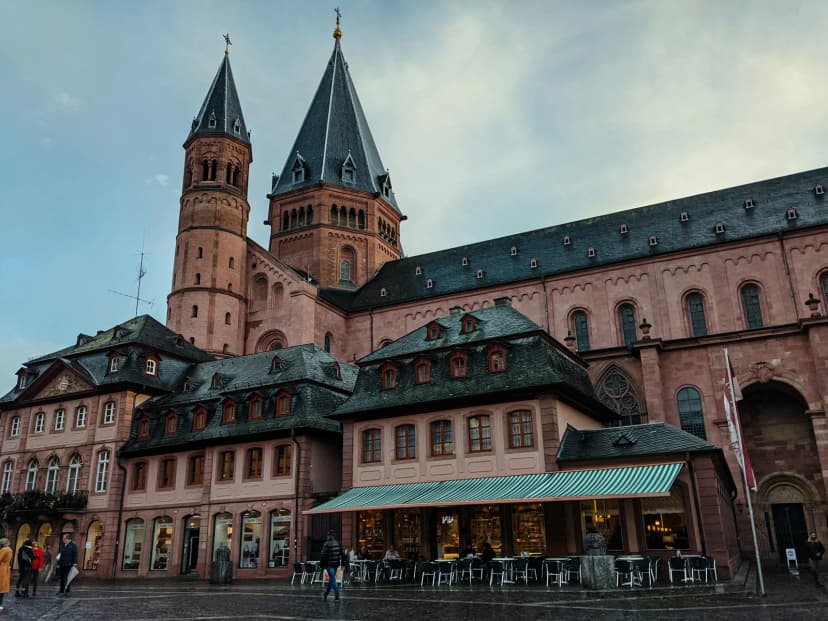
Carlsplatz is the produce-and-lunch market at the centre of Düsseldorf's Altstadt, and it works the way a city market should: stalls open in the morning, the lunch trade builds around midday, and trading stops for the week on Saturday evening. It is a square rather than a building, so there is no gate, no ticket and no single entrance to find. The food stalls are the reason most visitors come, but the flower sellers and small shops give non-hungry companions something to browse while lunch is ordered. The market's own description states that it runs from Monday to Saturday, which is the most reliable weekly pattern to build around.
This guide covers what the market actually sells, how the produce side differs from the prepared-lunch side, how to handle payment, and how to slot Carlsplatz into an Old Town walk without turning it into a full restaurant stop.
What Carlsplatz Actually Is
The market describes itself as the culinary heart of Düsseldorf, with more than 60 stands packed close together and competing on freshness, quality and range. That density is the point: in a short walk you pass fruit, vegetables, fish, meat and poultry, bread and cheese, confectionery, coffee, and a flower selection. It is a shopping and eating square, not a museum with a single collection. That makes it a flexible stop rather than a fixed timed visit.
Because the market is open-air and un-ticketed, you can walk through without committing to anything. You only spend money with the individual stallholders whose goods or dishes you choose. Anyone expecting one unified venue with one admission price has the wrong model in mind.
Where It Sits in the Old Town
Carlsplatz sits in the Altstadt, so it folds naturally into a walk that already takes in the Old Town's lanes and the Rhine edge. The market's visitor listing gives the administrative address as Carlsplatz 26, and the square itself carries the 40213 Düsseldorf postcode. Use the market as a mid-walk pause rather than a separate excursion; you will pass it anyway while crossing the old centre.
Because it sits inside a compact district, the market pairs well with the Old Town's other sights instead of replacing them. Plan it where your route naturally crosses the square, and you avoid a detour that eats time you would rather spend elsewhere. If you are building a broader day, the city's landmark guides help you see how the market fits alongside larger attractions.
What the Stalls Sell
The produce side is a working market: exotic fruit, local vegetables, fresh fish, meat and poultry, bread and cheese, plus confectionery, coffee specialties, and a good selection of flowers. If you are self-catering or packing a picnic, this is where you buy the components rather than a finished meal. Quantities and varieties move with the season, so treat any list as a description of the market's range rather than a fixed inventory.
Local vegetables and regional bread and cheese are the most useful purchases for visitors who want a taste of the Rhineland without sitting down. Bread and cheese travel well if you are heading onward to a park or the riverside. For anything with a short shelf life, buy it when you plan to eat it, not hours before.
The flower stalls and small shops are worth a look even if you are not shopping for food. A visitor who spends time in Düsseldorf describes flower stalls and other small shops at Carlsplatz as a reason to browse even when you are not hungry.
Lunchtime and the Prepared-Food Side
Around lunchtime the market shifts toward prepared dishes, and the range reads like a short culinary world trip: Germany, Italy, India, Persia, France and Turkey all appear among the lunchtime options. That is a different experience from buying produce. Come with a dish in mind if you want a quick bite, or graze across a couple of stalls if you would rather sample widely.
The pragmatic approach is to decide on one cuisine first and then queue, because mid-day is when the market is busiest and stallholders are moving fast. If you are travelling with someone who wants something different, split up, order separately, and regroup at a table or a standing spot. Treat the market as a fast, informal meal and keep the rest of your day's dining plans flexible.
The market is best used as a quick bite during a sightseeing day, which is exactly how one visitor frames it: a place to grab something fast in the Old Town rather than a full restaurant stop.
Cash, Cards, and Payment
One visitor reports that many of the stalls at Carlsplatz are cash only, so carrying some euros is a sensible precaution. That is a visitor tip rather than a market-wide rule, and individual stallholders set their own payment arrangements. Bring cash, and treat a card as a bonus rather than a guarantee.
If you arrive without cash and a stall cannot take a card, you have two options: use a nearby machine if one is available, or choose a different stall. Neither is a crisis at a market with more than 60 stands. Decide before you queue, so you are not holding up the line while you search for an alternative.
Flowers and Small Shops for Non-Eaters
Not everyone in a group wants lunch at the same moment. The flower stalls and the small shops give browsers a reason to linger while others order food. This is also how you use the market if you have already eaten: walk the stalls, look at what is in season, and skip the prepared dishes entirely.
If you are planning a broader, budget-conscious day around the city, the market's free-to-enter square format fits alongside other no-cost stops. You can find more ideas in this guide to free things to do in Düsseldorf.
Practical Timing: Monday to Saturday
The market runs from Monday to Saturday, according to the city's visitor listing. Beyond that weekly pattern, exact starting and closing times vary and are not published as fixed values here. Check the market's own website or the tourist information before you build a day around a specific hour.
Mornings behave differently from lunch. Come early and it is a shopping market with produce, bread, cheese and flowers; come at midday and it becomes a lunch crowd. If you want both, arrive before the lunch rush, buy your produce, and then eat. If you only want lunch, aim for the middle of the day and accept that you may wait.
Because the schedule is not fixed to the minute in public sources, do not plan a tight connection around a market visit. Treat it as a flexible stop that can be shortened or extended. If market timing is critical to your day, confirm it directly with the market office at Carlsplatz 26 or via the city's tourism pages.
How Long to Allow, and Combining It With Nearby Sights
A reasonable suggested duration for the market itself is about 30 to 60 minutes if you are buying lunch or a few provisions, and longer if you plan to sit and eat. That is a suggestion, not an official figure. Add time if you are travelling in a group that needs to negotiate cuisines.
The market is compact, so it will not fill a day on its own. Combine it with an Old Town walk, then continue to the Rhine edge or toward the city's larger sights. If you want a structure to follow, a city itinerary helps you order the market against other stops rather than treating it as the main event.
If you are building a longer day, the market works well before or after a visit to a bigger attraction, such as the Rheinturm Düsseldorf visitor guide, because it needs no booking and no fixed slot.
Food Strategy: Produce, Staples, and Prepared Dishes
Think of Carlsplatz as two markets sharing one square. The first is a provisions market for fruit, vegetables, fish, meat, bread, cheese, coffee and confectionery; the second is a prepared-lunch market with international dishes. Decide which one you are visiting before you arrive, because the two experiences have different timings and different budgets.
For a taste of the region, buy bread, cheese or a sweet item and eat it later, or choose a hot dish at lunch and keep the produce shopping for another day. Trying everything in one pass usually means carrying food you cannot eat immediately. Pick a small number of things you actually want to eat now, and leave the rest.
Pairing Carlsplatz With Altbier and Other Düsseldorf Specialties
Carlsplatz is a food stop, not a drinking destination, so keep the market and the Old Town's brewery culture separate in your plans. Altbier is a Düsseldorf specialty and part of the city's food identity. That makes the market a natural prelude: eat at the stalls, then move on for a beer or a sit-down meal elsewhere in the Altstadt.
Keeping the two experiences distinct also stops this page from duplicating a general city guide. Use the market for produce and a quick international lunch, and use the Old Town for the longer, slower evening. If you are exploring the city's lower-cost options, the market's free entry pairs well with the city's parks and riverside walks, including free things to do around the Hofgarten.
Who Should Skip Carlsplatz, and Who Will Enjoy It
Skip Carlsplatz if you want a formal, seated restaurant meal with table service and no crowd, or if you are looking for a ticketed attraction with a defined visit. The market is informal and weather-dependent, and its busiest period is exactly when you would want a quiet table. It also will not satisfy anyone hoping for a single, curated exhibit or guided experience.
It suits visitors who want a fast lunch inside the Old Town, cooks and picnic-planners who want local produce, and anyone travelling with a group that cannot agree on one cuisine. It is also a good fit for a first morning in the city, when you want an easy, low-commitment introduction to Düsseldorf's food culture before committing to a longer itinerary.
Plan Your Visit
Carlsplatz is worth treating as a working market rather than a landmark: arrive with cash, decide whether you are there for produce or for lunch, and let the market's Monday-to-Saturday pattern shape the day. Check current times and any seasonal changes with the market or the city's tourist information before you go, since these are not fixed in the sources used here.
If you want the market to anchor a broader day, start with the Düsseldorf itinerary and city guides, then build outward to Old Town sights, the Rhine, and the larger attractions. The market is the flexible piece; the rest of the day is what you schedule around it.
Frequently Asked Questions
What can you buy at Carlsplatz market in Düsseldorf?
The market's stalls sell exotic fruit, local vegetables, fresh fish, meat and poultry, bread and cheese, confectionery and coffee specialties, and flowers. Around lunchtime, prepared dishes cover a range of cuisines including German, Italian, Indian, Persian, French and Turkish food.
Is Carlsplatz open on Sundays?
The market is listed as open from Monday to Saturday, so Sunday is not a market day on that schedule. If your trip hinges on a particular date, confirm with the market or the city's tourist information, because individual weeks can differ.
Do the stalls at Carlsplatz accept card payments?
There is no market-wide rule published here. One visitor reports that many stalls are cash only, so carry euros as a precaution and treat a card as a bonus rather than a guarantee. Individual stallholders set their own payment arrangements.
Is Carlsplatz worth visiting if you only have one day in Düsseldorf?
It can be a useful stop because it is compact, free to enter, and easy to combine with an Old Town walk. Treat it as a quick bite or provisions stop rather than a standalone attraction, and let the rest of your one-day plan decide how long you stay.
How long should you spend at Carlsplatz?
A suggested visit of about 30 to 60 minutes covers a lunch stop or a few purchases. Allow more if you plan to sit and eat or browse the flower and shop stalls. This is a suggestion, not an official duration.
What food should you try at Carlsplatz?
Start with what the market is known for: local vegetables, bread and cheese, and whichever international lunch dish appeals on the day. Düsseldorf specialties such as Altbier are part of the wider Old Town food culture rather than the market itself.