
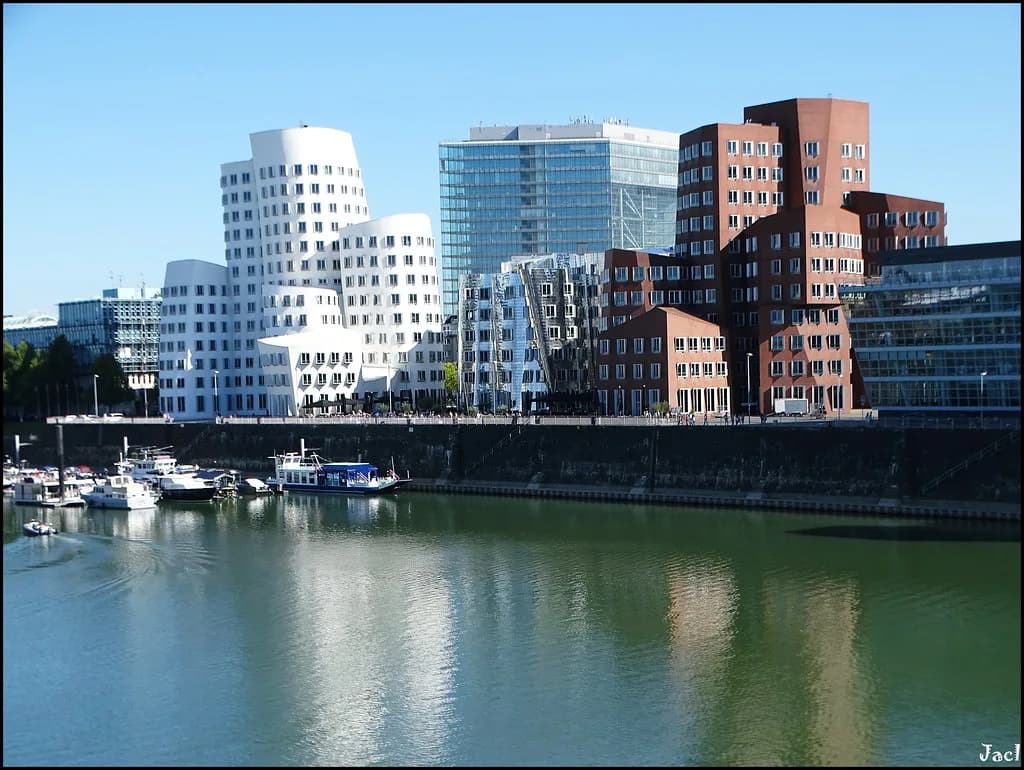
Düsseldorf works as a base because the Rhine-Ruhr region puts very different destinations within a short radius. Essen's industrial heritage, Cologne's neighbourhoods, Duisburg's landscape park and Benrath's palace complex all fit into a single day out. For orientation: Schloss Benrath is a half-day trip, with a suggested allowance of two to three hours for a general look and up to half a day for the interiors, wings and park. That is an editorial allowance rather than an official figure, and the practical detail sits in a dedicated Schloss Benrath visitor guide.
The more useful question is not whether you can reach a place but how the day is structured. Benrath and Cologne suit a half day, while Zeche Zollverein, Bonn and Dyck Castle reward a full one. Grouping two small stops on the same rail line usually beats racing between distant sites, and a transport guide for the city helps you build those pairings without guesswork.
Before you lock in a destination, sketch the shape of the day: how much time in transit, how much on site, and whether the reason you are going is a free park or a ticketed interior. That single distinction prevents the most common planning error in this region, and the landmark guides for Düsseldorf make it easy to check which is which.
How to Choose: Train-Friendly or Car-Friendlier
Train-friendly destinations put you close to the sights once you leave the station. Cologne and Duisburg are straightforward, and Essen works once you add a local tram or bus hop. Benrath is the easiest of all, since a palace guide notes that Benrath station sits just a few hundred metres east of the palace complex and that suburban trains from central Düsseldorf stop there.
A locally written round-up of excursions from the city notes that Benrath is also reachable with a tram whose line ends directly in front of the Schloss, a useful reminder that the district has more than one public transport option. Either way, the mechanics stay simple.
Car-friendlier destinations are the ones without a station at the gate. Dyck Castle is the clearest example, with a train-plus-bus fallback that eats time. The broader seasonal trips follow the same logic: the same locally written guide points out that Burg Eltz is easiest by car, anchored on the nearest town, and that Winterberg in the Sauerland is roughly a two-hour drive from the city.
The frequent mistake is budgeting a full day for a site whose grounds are free and whose museum is the only paid element. Benrath and the Landschaftspark both fit that pattern: you can spend two hours or six, and the difference is entirely what you choose to enter. Decide that before you leave the hotel, not at the ticket desk.
Essen: Zeche Zollverein and the Ruhr Museum
Zeche Zollverein is a former coal mine that closed in 1986 and has since become a cultural complex with art, restaurants and a museum. The grounds are free to walk around, and a number of buildings can be entered without a ticket. This is the most important distinction to grasp before you go, because the complex is large and the paid parts are specific.
The Ruhr Museum, the Portal of Industrial Heritage and the Panorama Roof are described in one day-trip account as a combined 15 euro ticket, reduced to 11 euro for eligible visitors. That is that account's reporting rather than a guaranteed current rate, so confirm with the operator before buying, since inclusions and prices change.
By train, the same account describes a regional service to Essen followed by a local tram or bus to the site, which adds a leg at each end. It reports driving at about 35 to 40 minutes via the A52 and places the site on the outskirts of Essen rather than in the centre. If you pair Essen with Benrath, do Benrath first, since it sits between the city and Essen.
Duisburg: Landschaftspark and the Evening Illumination
The Landschaftspark in Duisburg is a disused coal and steel plant that closed in 1985 and reopened as an art project in 1991. It is free to enter and is at its most striking after dark, when the structures are washed in coloured light. That lighting is why many visitors shift this trip to the evening rather than the morning.
According to the same day-trip account, the illumination runs on Fridays, Saturdays and Sundays. That schedule is worth re-checking on the operator's own page before you build an evening around it, because seasonal timings shift. If the lights are your reason for going, let the day of the week decide the plan.
By train, the account describes roughly 25 minutes direct from Düsseldorf Hbf to Duisburg, then a quick bus or tram. By car, it gives around 25 to 30 minutes via the A59. Because the best experience is at dusk, a car genuinely helps here: you are not watching the clock for the last connection home.
Cologne: The Belgian Quarter Rather Than the Cathedral
Cologne is close enough to treat as a few hours rather than a full expedition, with fast trains running frequently from Düsseldorf Hbf. The Belgian Quarter, just off the main shopping boulevards, is the alternative to cathedral-and-brauhaus tourism. Expect independent boutiques, coffee places and small bars rather than chain retail.
This is the pick for anyone who has already seen the cathedral or who wants a low-effort half day. The area suits wandering rather than a checklist, so a suggested two or three hours is an editorial allowance rather than an official figure, and you can always extend it.
Driving to Cologne is possible but rarely worth it, since you trade a short train ride for motorway traffic and paid parking near the centre. The train also drops you closer to the quarter than most car parks do. On a weekday, the train is the obvious choice.
Benrath Palace: A Half-Day Local Escape
Schloss Benrath is a Rococo palace begun in 1755 and completed in stages up to 1770, and it sits in the southern Benrath district rather than out in the countryside. It was conceived as a summer residence and hunting lodge, which is why it reads as elegant rather than monumental. The soft pink facade and the symmetrical gardens are its signature features; the Schloss Benrath visitor guide covers the interiors, wings and park in more detail. For wider planning, see Neanderthal Museum Visitor Guide.
The complex is not one experience on one ticket. A palace guide states that the park is free to the public year-round and stretches toward the Rhine, while the main palace and the two wing museums are separate visits with their own arrangements. As a planning allowance rather than an official figure, a quick overview circles two to three hours, and a fuller look at the interiors and museums can absorb half a day.
The east wing holds the Museum of European Garden Art and the west wing the Museum of Natural History, so pick one if your time is short. A palace guide advises that the palace museum is closed on Wednesdays and Thursdays, that opening hours vary, and that the schedule should be checked ahead; treat that as reporting and confirm directly before setting out.
The easiest approach from central Düsseldorf, per the same account, is a tram to the stop named for the palace, or an S-Bahn train to Benrath station followed by roughly a ten-minute walk. Spring is the strongest season for the gardens, and a locally written guide treats Benrath as a near-compulsory spring outing. Because it is close to the city, Benrath pairs naturally with Essen on the same day.
Bonn: Former Capital, Museums and a Sweet Detour
Bonn rewards a full day because the city has more substance than its size suggests. It served as the capital of West Germany after the Second World War, and it was the birthplace of Beethoven as well as home to the expressionist painter August Macke. Both former residences have been converted into museums you can visit.
For a lighter stop, a Haribo factory outlet sells the full range, but there is no factory tour, so a visit is a shopping stop rather than a behind-the-scenes experience. Arriving in expectation of a production line leads only to disappointment.
Direct trains from Düsseldorf Hbf take roughly an hour according to the day-trip account, with driving around the same hour depending on traffic. In spring, Bonn is also the destination for the cherry blossom street that turns pink for a short window around mid-April; a locally written guide notes it gets crowded and recommends arriving early.
Seasonal Picks: Blossom, Castles, Pumpkins and Snow
Season is a better first filter than distance. A locally written seasonal guide organises excursions by quarter: spring for Benrath's gardens and Bonn's cherry blossom, summer for castles such as Schloss Drachenburg, autumn for the pumpkin exhibition at Erlebnisbauernhof Gertrudenhof alongside Cochem and Burg Eltz, and winter for Winterberg snow or Monschau.
Cochem and Burg Eltz are the autumn classics, and both are places where flexible timing beats a tight schedule. Cochem sits on the Moselle with a hilltop castle above the half-timbered old town, and the locally written guide notes that Burg Eltz is easiest by car, with the closest town as the practical anchor.
Winter turns the Sauerland into the snow option, with Winterberg roughly a two-hour drive away. Monschau, with its half-timbered houses and narrow river, is the alternative when the snow is unreliable. Both are car trips in practice, and both benefit from checking road and weather conditions the day before.
Dyck Castle: The Car Trip with a Train Fallback
Dyck Castle is one of the best-preserved moated castles in the Rhineland, about twenty-five kilometres west of Düsseldorf. The moat dates back to the eleventh century, and the same family held the property for around nine hundred years until 1999. Since then it has operated as an international centre for garden art and landscape design.
The grounds are the main draw, with themed and model gardens, wooded paths and meadows. There is also a high-rope course for anyone who wants more activity than a garden walk. Because the appeal is spread across the park, this is a destination that rewards a slow half day rather than a rushed one.
By car the day-trip account puts the trip at roughly 35 to 40 minutes via the A46. By train you take a service toward Grevenbroich and then a local bus, which is the reason most visitors drive. If you are relying on public transport, verify the bus connection in advance rather than assuming it is frequent.
Shaping the Day: Half-Day and Full-Day Combinations
Half-day shapes work best for Benrath and Cologne, both close enough that an afternoon covers the essentials. A morning at Benrath followed by an afternoon in Cologne is a reasonable pairing if you accept two short visits instead of one deep one. Neither requires a car.
Full-day shapes suit Essen, Bonn and Dyck Castle. Zeche Zollverein alone can absorb several hours once you add the museum and the viewpoints, and Bonn has enough museums and neighbourhoods to justify the train ride. Do not try to add a third destination to either of those days.
One more local option sits south of the city for anyone who wants a museum rather than a town. The Neanderthal Museum works as a short excursion and pairs well with a slow start, so it fits a half day when the weather is unreliable; the Neanderthal Museum visitor guide covers what is inside.
Plan Your Visit
Pick the destination by what you want to spend on entry, not just by travel time. Essen's grounds and the Landschaftspark are free to walk, while the Ruhr Museum, the Benrath interiors and Dyck Castle's gardens involve paid access. Deciding that up front prevents the classic mistake of arriving with a full-day plan for a two-hour site.
Treat every price, opening time and illumination schedule in this guide as something to confirm before you travel. The official Düsseldorf tourism site is the sensible starting point for city-level information, and individual attractions publish their own hours and tickets. Verify the day of the week for anything time-sensitive, especially evening illuminations and palace closed days.
If you are staying in the city for more than a day, save the further-flung trips for the days when you have the most energy. Build the close ones around them, and keep one flexible slot for weather. The Rhine-Ruhr region rewards that kind of planning more than a fixed itinerary, and one of the city itineraries here can help you slot the excursions into a longer stay.
Frequently Asked Questions
What are some beautiful towns near Düsseldorf?
Monschau, with its half-timbered houses and narrow river, is the prettiest small town within reasonable reach, though the local guide describes it as easiest by car. Cochem on the Moselle is a longer trip but delivers cobbled alleys and a hilltop castle above the river. Closer in, the Benrath district and the old centres of Bonn make pleasant walks without a full day of travel.
What city can I visit in about an hour from Düsseldorf?
Bonn is the clearest hour-away city by train in the day-trip reporting, with museums, a historic centre and a walkable core around the former government quarter. Essen is listed at a similar distance, though you then need a local tram or bus to reach Zeche Zollverein. Cologne is much closer, but it is usually treated as a half day rather than a full excursion.
Are day trips from Düsseldorf better by train or by car?
Train is better for Cologne, Duisburg, Bonn and Benrath, since each has a station within a short distance of the main sights and you avoid city parking. A car is better for Dyck Castle, Cochem, Burg Eltz and Winterberg, where the last leg by public transport is slow or awkward. For an evening at the Landschaftspark, a car is more comfortable because you are not tied to the last connection.


