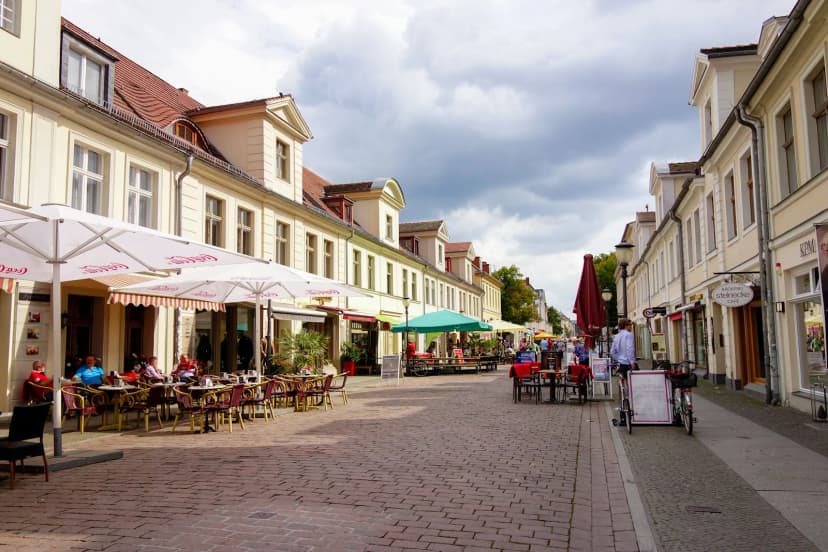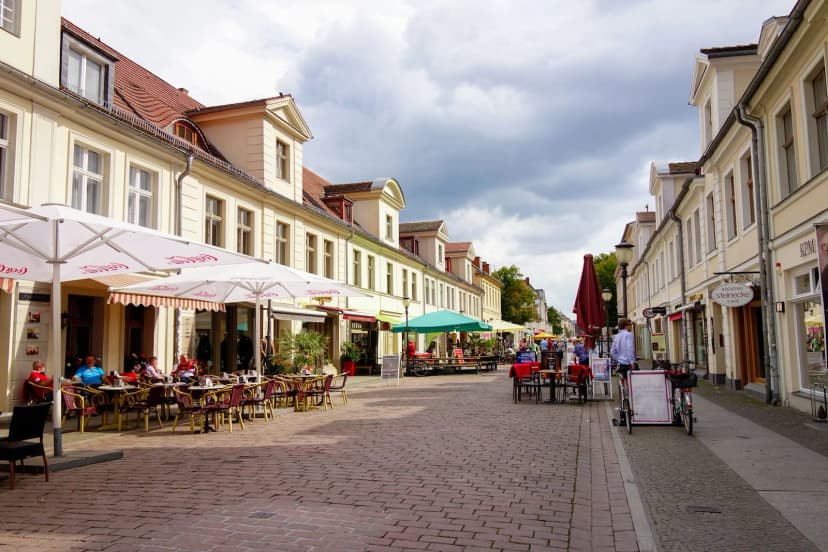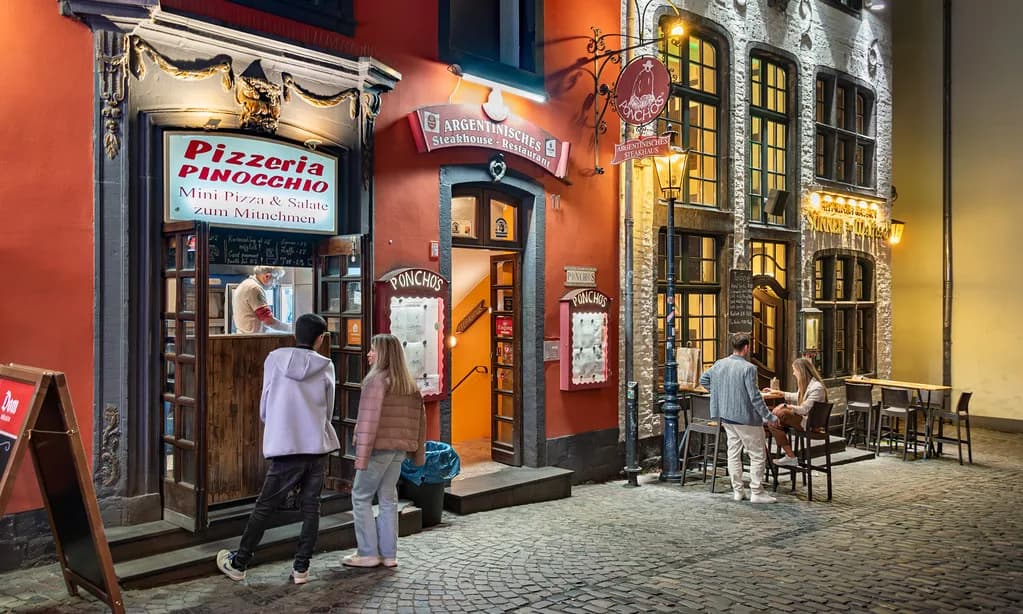
Cologne's Altstadt is one of the rare old towns where the sightseeing logic is almost entirely on foot: the Cathedral sits beside the main station, the shopping spine runs straight into the historic core, and the Rhine closes the eastern edge. That compact layout is why a single walk can cover a Gothic landmark, medieval squares, Romanesque churches and a Kölsch brewery without any transport planning at all. The trade-off is crowd pressure, because the same few lanes absorb most visitors at the same hours.
One concrete starting detail: Cologne Cathedral stands directly next to Köln Hauptbahnhof, which is how most walkers arrive and why stepping out of the station is effectively the first view of the route. The Cathedral is the trailhead for planning purposes, even though the walk officially belongs to the lanes behind it. Before you commit to a long day, it helps to see how the wider city fits together across the Cologne: Itineraries and City Travel Guides hub.
This route is written as a suggested itinerary, not an official signed trail, and the pacing below is our own estimate rather than a published figure. Treat every stop as optional and reorder freely, since the Altstadt rewards wandering more than checklist completion. Guided alternatives exist for walkers who want narration or who are short on time.
Route at a Glance and a Realistic Suggested Duration
The sequence that works best is Cathedral, then the shopping spine toward the historic core, Alter Markt, the lanes around the Rathaus, Gross St. Martin and Fischmarkt on the Rhine, then south to Heumarkt with an optional push toward Severinstorburg. This order keeps you moving roughly north to south with the river on your left, which means you never backtrack against the crowds. It also puts the brewery stop near the end, where a sit-down makes more sense than at the beginning.
As a suggested duration, allow around two to three hours for the highlights loop at an unhurried pace with photo stops, or roughly half a day if you add a museum and a proper Kölsch break. These figures are planning estimates, not an official route length, and the city does not publish a kilometre count for a self-guided Altstadt walk. Walking speed, queue tolerance for the Cathedral and how long you linger on the squares will move that number more than the distance does.
If you would rather hand over the navigation and the storytelling, a Free Tour of Cologne covers the main attractions with a local guide and runs about two hours, which suits first-time visitors who want orientation before exploring alone. The same operator notes that Cologne tours are delivered by a partner company, The Walkings, rather than in-house, so read the meeting details on the booking page rather than assuming a fixed umbrella or start point.
The city's own tourism board maintains a consolidated booking page for public and private guided options, including walking tours, cathedral-themed tours, a mini train and boat excursions. Use it as the authoritative index if you want to compare formats in one place, because individual operator pages rarely show the full range. It is also the safest place to check current availability instead of trusting an old price quoted in a blog post.
Start at Cologne Cathedral and the Station Forecourt
Cologne Cathedral is a UNESCO World Heritage site and the city's most visited landmark, and its position immediately outside the central train station makes it the natural first stop. The grounds are free to enter, which is the key planning distinction: you can walk in, see the nave and the Shrine of the Three Kings, and leave without buying anything. Check the Cathedral's own published hours before you go, since tourist access is restricted at certain times and Sunday in particular behaves differently.
Anything beyond the free interior, such as tower access or a guided cathedral tour, sits in a separate ticketed tier, so do not treat the Cathedral as one all-inclusive admission. The tower notably involves a long staircase rather than a lift, and it is the single most physically demanding optional add-on on this route. If climbing is not for you, the station forecourt and the riverside already give you the postcard view without any ticket.
Two fragrance landmarks sit within a short stroll of the Cathedral and make an easy, distinctly Cologne-themed detour. Eau de Cologne originated in the city in 1709, and the Farina Duftmuseum and the 4711 House of Fragrances both present that history in the Old Town. Both are indoor visits with their own arrangements, so check each site's current visiting terms rather than assuming a walk-in.
Crossing Hohe Strasse and Schildergasse into the Core
From the Cathedral, Hohe Strasse and Schildergasse form the pedestrian shopping spine that funnels you into the historic quarter. Schildergasse is among the busiest shopping streets in Europe, and both lanes date back to the Roman street grid, so the walk is a transition from modern retail to medieval fabric rather than a scenic highlight in itself. Treat them as a corridor: useful for a coffee or a quick purchase, but not where you should spend your Altstadt time.
The practical benefit is orientation, because these streets deliver you to Alter Markt and the lanes around the Rathaus without any turns that can go wrong. Mid-morning is the calmest window; by mid-afternoon the same corridor is shoulder to shoulder, especially on Saturdays and during the Christmas market season. If you are walking on a Sunday, note that the Altstadt's retail rhythm changes and some shops stay closed.
Alter Markt: Fountain, Rathaus Tower and the Crowd Question
Alter Markt was once the centre of medieval trade and public gathering, and today it is a lively square of cafés, restaurants and seasonal events including the Christmas market. The Jan von Werth Fountain anchors one side with its story of a local soldier's unfulfilled love, and the Historic Town Hall, described as the oldest city hall in Germany with a history going back more than 900 years, stands close by. Its Gothic tower carries an unusually dense programme of statues, which is the detail most walkers miss while looking at the square itself.
This is where the Altstadt gets genuinely busy, and the sensible move is to pass through rather than fight for a table at peak lunch. Come back later in the afternoon or early evening, when the square thins out and the brewhouses fill instead. Beyond food and drink, Cologne's own tourism board groups breweries, carnival, Christmas and neighbourhood themes into distinct visitor tracks, which is a useful way to decide what deserves your remaining hours.
Local folklore gives the Old Town a layer that plain architecture tours skip: the Heinzelmännchen Fountain depicts the city's legendary house elves, said to have done the town's chores at night until a curious resident drove them away. The Tünnes and Schäl statues near Alter Markt come from the Kölner Karneval tradition and represent a naive figure and his sharper counterpart. Both are quick, free stops that work well as orientation points when the squares themselves feel overwhelmingly crowded.
Gross St. Martin and the Romanesque Church Map
Cologne's Old Town contains twelve Romanesque churches, several of them more than a thousand years old, and Gross St. Martin is the one you cannot miss because its tower rises directly above the colourful houses by the river. Originally built in the 12th century, it remains one of the city's most recognisable silhouettes and is the best single introduction to the group. From there you can branch to St. Maria im Kapitol, the largest of the Romanesque churches and one built on the site of an ancient Roman temple.
Most of these churches are free to enter, or you can simply admire the architecture from outside, which makes them excellent value within a self-guided walk. A few, however, have been repurposed or now house museums, such as St. Cäcilien, which contains the Schnütgen Museum, so a church label does not always mean a free sacred interior. Check each site individually before planning a church-hopping detour.
If you want breadth rather than depth, pick Gross St. Martin plus one of St. Gereon with its distinctive decagonal dome and mosaics, or St. Maria im Kapitol if you are heading south anyway. Spreading all twelve across one day is not realistic on foot alongside the main sights. The churches are distributed across both north and south Old Town, so choose by direction rather than by ranking.
Fischmarkt and the Rhine Embankment
Fischmarkt is the most photographed corner of the Altstadt, a historic square along the Rhine known for its row of pastel-coloured houses set against the backdrop of Gross St. Martin. In the Middle Ages it served as a working fish market and trading hub; today the market function is gone and the square hosts cafés and restaurants facing the water. It is the natural place to pause, watch the boats and let the walk breathe before turning south.
The embankment between Fischmarkt and Heumarkt is also where the river becomes a practical decision point. Walking north along the Rhine takes you toward the Hohenzollern Bridge and its love locks, with a view back across the water that frames the Cathedral and the river in one shot. If you want an elevated panorama instead, the Cologne Cable Car and the Chocolate Museum sit in that riverside direction and each has its own ticket and opening arrangements to verify.
Heumarkt and the Quieter Southern Altstadt
Heumarkt, the old hay market, is the livelier southern counterweight to Alter Markt, lined with colourful buildings, restaurants and shops and used regularly for festivals and outdoor events. The King Friedrich Wilhelm III equestrian statue is the square's landmark, a reminder of the Prussian period in the city's history. Its proximity to St. Maria im Kapitol makes it a convenient pairing, and it is generally the better square for grabbing a drink because the seating spreads out rather than cramming into one corner.
Severinstorburg is the deliberate outlier: a surviving 13th-century city gate on the southern edge of the Old Town, named after the nearby St. Severin church and remaining from the medieval fortifications. It is significantly quieter than the central squares because it sits well south of everything else. The trade-off is real, so decide in advance whether a quieter, historically significant detour is worth the extra walking rather than drifting into it by accident.
Museums Near the Route and Their Ticket Scope
Museum Ludwig holds one of Europe's strongest collections of 20th and 21st-century art, with works by Picasso, Warhol and Lichtenstein, and it sits beside the Cathedral, making it the easiest museum to bolt onto the start or end of this walk. The Wallraf-Richartz Museum covers European art from the medieval period through the 19th century, including Gothic, Baroque and Impressionist pieces. These are separate institutions with separate admissions, so do not expect one ticket to cover both even though they sit close together.
For city history, the Kölnisches Stadtmuseum moved to a new location at Minoritenstraße 13 in 2024, and the NS-Dokumentationszentrum at EL-DE Haus, housed in the former Gestapo headquarters with preserved prison cells and archives, is roughly a five-minute walk away. That pairing works well as an afternoon block, but EL-DE Haus is a somber, testimonial-driven site rather than a light museum stop, so place it accordingly in your day. Both have their own visitor terms to check before you commit.
The general caveat that matters most here is ticket scope: neighbouring museums in a cluster do not automatically share one admission, and some church-labelled sites now function as museums with their own entry rules. Grouping museums by area saves walking, but it does not save money unless a specific combination ticket says so. For broader landmark context across the city, the Cologne: Landmark Visitor Guides collection is the sensible reference point before you build a museum-heavy day.
Kölsch Stops and Why You Should Not Drive
Brewing culture is woven through the Altstadt rather than concentrated in one venue, which is why a brewery stop belongs inside the walk instead of at the end of a separate trip. Traditional brewhouses serve Kölsch in lively historic settings, and walking between them is part of how the neighbourhood is experienced. For a closer look at the beer tradition itself, see this guide to Cologne breweries and Kölsch before choosing where to sit down.
The transport advice is straightforward: the Old Town is very pedestrian-friendly, with many car-free squares and driving restrictions in the historic centre, so renting a car works against you rather than for you. Arriving by train to Köln Hauptbahnhof puts you at the trailhead with no parking question at all. That makes the no-rental-car decision an easy one to defend, even before you add a Kölsch stop to the day.
Guided Tours, Mini Train and Other Alternatives to Walking
A guided highlights tour makes sense if you want stories, context and someone else handling the route, and Cologne's tourism board lists public and private options spanning walking tours, bus city tours, brewery tours, a mini train and boat excursions. A beer-history tour is the natural pick for drinkers, while a cathedral-focused tour suits visitors whose main interest is the landmark itself. Booking details and departures change, so confirm current schedules through the operator rather than a saved screenshot.
If walking is not an option or time is short, the mini train from the tourism board's list and hop-on hop-off style bus options cover the major sights without the distance. These formats trade depth for coverage, and you see the squares through glass rather than standing in them. Pick one only if you have genuinely ruled out the on-foot version, because the Altstadt's character lives in its lanes, not in a drive-by.
Pacing the Day: Short Loop Versus Half-Day Version
The short version is Cathedral, Hohe Strasse, Alter Markt, Gross St. Martin, Fischmarkt and Heumarkt, taken at a brisk sightseeing pace with one coffee stop. The half-day version keeps that spine but inserts one museum and a proper brewery break, which is where the day starts to feel unhurried rather than rushed. Choosing between them is really a question of whether you want coverage or one good sit-down memory.
The most common planning mistakes are over-scheduling, assuming a single ticket covers a museum complex, and ignoring Sunday and event-day timing. Note also that the KölnCard is a separate purchase with its own transport and discount terms, and the pricing quoted on third-party blogs tends to age badly. Verify any card or combination ticket on the official tourism pages before you build your day around the savings.
Plan Your Visit
Cologne's Altstadt is compact enough to walk in a focused half day and layered enough to justify a slower one, so the honest answer to how long it takes depends on how many interiors you enter. Start at the Cathedral forecourt, follow the pedestrian spine, and let Alter Markt, Gross St. Martin, Fischmarkt and Heumarkt set the rhythm rather than a fixed timetable. Add Severinstorburg only if you genuinely want the quieter southern end.
Before you go, confirm current hours, ticket scopes and any combination offers on the official Cathedral, museum and tourism board pages, because those are the figures that change fastest. Everything else on this route, from the lanes to the river views, is free and available simply by walking. Finish with a Kölsch in the Old Town and the day largely plans itself.
Frequently Asked Questions
How long does a Cologne Old Town walk take?
Plan around two to three hours for the highlights loop at a relaxed pace, or about half a day if you add a museum visit and a brewery stop. These are suggested planning estimates, not an official route length, and no kilometre figure is published for a self-guided Altstadt walk. Cathedral queues, longer stays on the squares and museum time will shift the total more than the walking distance does.
Where should a self-guided Cologne Old Town walk start?
Start at Cologne Cathedral, which stands directly beside the main station, so arriving by train puts you at the first stop without any transfer. From there, the pedestrian shopping streets lead into the historic core at Alter Markt, and the route continues to Gross St. Martin, Fischmarkt and Heumarkt with the Rhine on your left. That order avoids backtracking and keeps the busiest squares early in the day.
Is Cologne Old Town walkable in one afternoon?
Yes, the historic core is pedestrian-friendly with many car-free squares, so the main sights fit comfortably into an afternoon. You can cover the Cathedral, both market squares, Gross St. Martin and the Rhine embankment without any transport. If you want to include one of the larger museums, expect the visit to run into early evening.
Do you need a guided tour to see Cologne Old Town?
No, a self-guided route works well because the landmarks are close together and easy to navigate on foot. A guided tour adds narration, local stories and a fixed schedule, and free or paid options exist in several formats including walking, brewery and cathedral-themed tours. Choose a guide if you value context and orientation, and walk it yourself if you prefer to set your own pace.
Is the Cologne Cathedral free to enter?
The Cathedral's grounds are free to enter, which covers the nave and the Shrine of the Three Kings. Tower access and guided cathedral tours sit in separate ticketed tiers and must be checked with the Cathedral's own published information. Opening arrangements for tourists vary, particularly on Sundays, so confirm current visiting times before travelling specifically for it.
Which Cologne breweries are in the Old Town?
Traditional brewhouses are scattered through the Altstadt, with the highest concentration around Alter Markt and Heumarkt and along the lanes toward the Rhine. They serve Kölsch, the city's light top-fermented beer, in lively historic settings, and several occupy buildings with long brewing histories. Opening hours vary by venue, so check individually rather than relying on a fixed list.