

Last updated September 2026, this guide maps the secret college gardens in Oxford that stay open to visitors but rarely reach a first-day itinerary. Behind heavy oak doors and watchful porters' lodges, quads like Worcester's 26-acre grounds and Trinity's Grade II-listed lawns sit minutes from the High Street crowds. Knowing which gate to approach, and what a porter expects to hear, turns a locked garden into an afternoon of honey-stone walls and quiet lawns.
The Appeal of Oxford's Secret College Gardens
Most Oxford guides send visitors straight to the Botanic Garden and stop there. Working colleges hide dozens of smaller gardens behind unmarked doors, each with its own history and layout. A black-and-gold sign reading Private often guards the entrance, and that sign alone stops most tourists from ever knocking. Garden historian Tim Richardson, author of a book on Oxford's college gardens, describes checking hours online first and then passing that sign as its own small thrill. Stepping past it politely opens onto quads that shift from formal lawns to wooded walks within a few paces. For a first visit, prioritize three colleges: Worcester for its 26-acre grounds and lake, Trinity for its Stuart Gates and sustainable planting, and Magdalen for Addison's Walk and its deer park. Together they span the full range, from landscape-scale grounds to intimate walled quads, and each sits an easy walk from the others. Pair the route with Oxford's quieter corners for a fuller day away from the main sights.
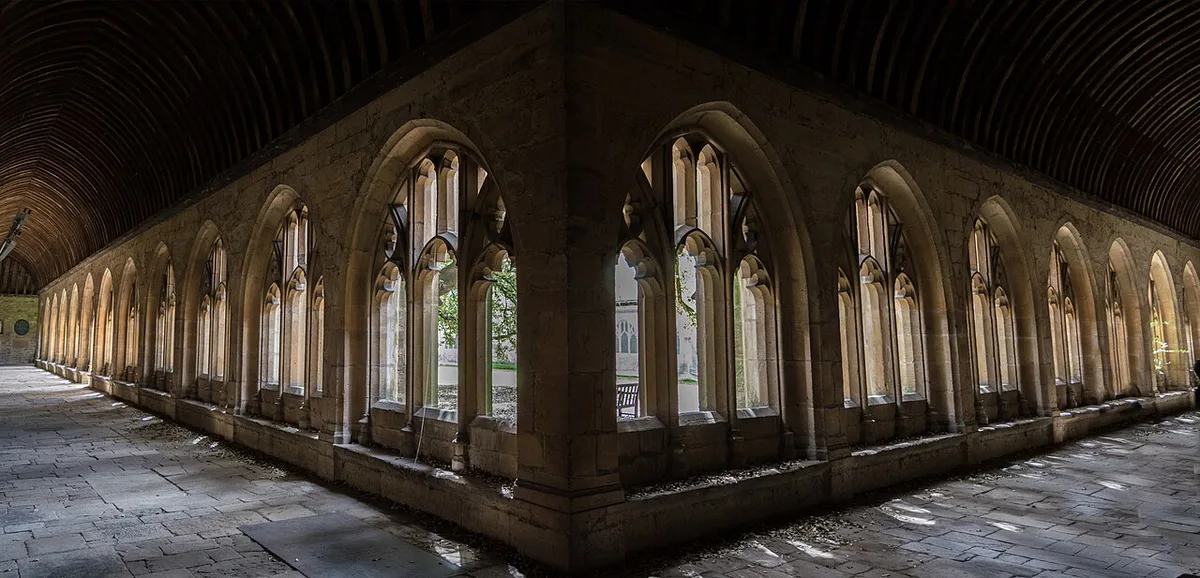
How to Get Past the Porters and Into the Gardens
Every Oxford college gate has a porters' lodge, and the porter on duty decides who passes. Approach the lodge, name the garden or quad, and ask whether it's open to visitors today. Porters wave people through routinely when a college is on its published visiting hours. They turn people away just as routinely when a wedding, exam, or private event is underway. A sign reading Private or Members Only means exactly that; pushing past it is the fastest way to get a garden closed to everyone. Oxford's academic year runs across three terms, and gardens generally see fewer restrictions in the gaps between them than during full term. Vacation weeks, when students are away, generally bring longer opening hours and quieter quads than term time.
Entry costs vary by college and by season. Many colleges that charge admission ask for somewhere between £2 and £8, though fees, hours, and even whether a garden is open at all can change with little notice. Confirm the current fee and opening hours on the college's own website the morning of the visit. Experience Oxfordshire's visitor site lists general opening patterns, though not each college's daily schedule. Travelers working with a tighter budget can pair a garden crawl with Oxford's no-cost sights to offset the fee.
| College | Notable Feature | Access Note |
|---|---|---|
| Worcester | Lake and monastic Pump Quad remains | Entrance near Beaumont Street; often free |
| Trinity | Stuart Gates and Atlantic Blue Cedars | Visible from Parks Road; enter via Broad Street |
| Magdalen | Deer park and Addison's Walk | Entrance via High Street; fee usually applies |
| St Catherine's | Arne Jacobsen modernist design | Near the Science Area; open-plan grounds |
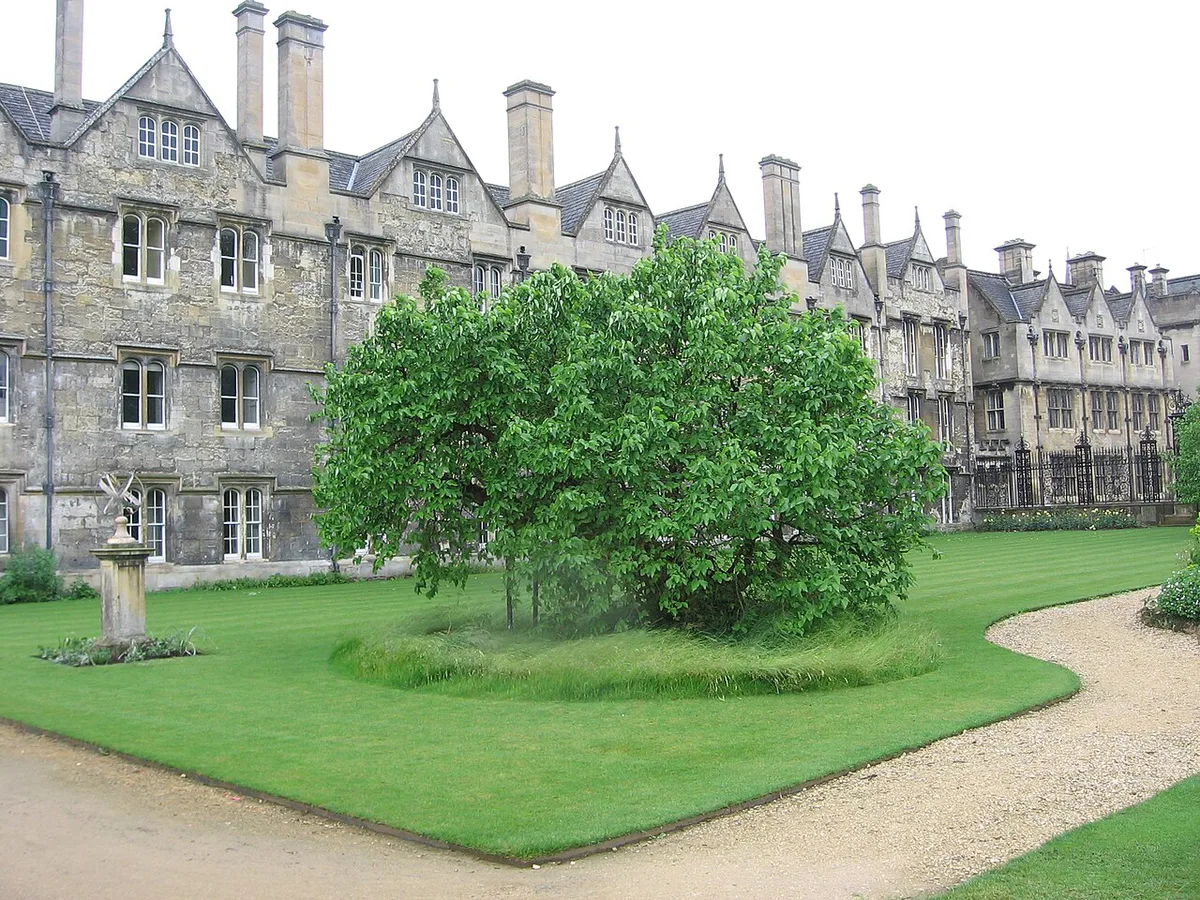
| Corpus Christi | Pelican sundial and mulberry trees | Merton Street entrance; often overlooked |
Worcester College: 26 Acres of Lake, Orchard, and Monastic Quad
Worcester College covers 26 acres, the largest garden of any Oxford college. Grounds unfold in a landscape style favored by 18th-century designers, with winding paths and shifting views replacing the clipped symmetry found elsewhere in the city. A lake sits at the center, dug in the early 19th century from what had been waterlogged ground. Worcester's drama society, the Buskins, formed in 1902. Members once staged productions on the lake itself, with Caliban rising from the water in a 1930s production of The Tempest. Confirm with the college whether lakeside performances still run before planning a visit around one. Pump Quad holds fragments of the medieval buildings that predate the college, part of the old Gloucester Hall. Benedictine monks studied here until the Reformation dissolved the Hall. Look above the stairwells for carved coats of arms from the abbeys that sent monks to study here, including Bury St Edmunds and Glastonbury. Front Quad's lawn has been protected by a by-law since 1785, originally a fine for anyone caught walking on the grass, so stay on the paths. An orchard beyond the lake produces apples and pears pressed into juice that funds the garden's upkeep. Inside the chapel, stained-glass windows by Henry Holiday nod to Lewis Carroll, who was a regular visitor to Worcester. Holiday illustrated Carroll's The Hunting of the Snark, and a longstanding rumor ties a Worcester passage to the rabbit hole in Alice's Adventures in Wonderland. Worcester sits at the edge of Jericho's quieter streets, an easy add-on once the garden gate closes.
Worcester's Front Quad lawn has carried protection since 1785. Trinity began extensive replanting in 2022, showing how heritage gardens balance preservation with modern environmental goals.
Trinity College: Sustainable Gardens Behind the Stuart Gates
Trinity's iron gates open directly onto Broad Street, giving passersby a clear view into the gardens without setting foot inside. Grounds here are Grade II listed on the National Heritage List for England, recognition of their historic layout. Rather than clipped, formal lawns, Trinity's gardeners favor longer grass and leaf litter left in place. Seed heads stay standing through winter too, a deliberate move to boost biodiversity. In Front Quad, two Atlantic Blue Cedars anchor an informal lawn dotted with flowering trees. A meadow planting near 17th-century Kettell Hall replaced a mown lawn there. Trinity's own bug surveys found 30 times more bees visiting that meadow than the plain grass nearby. Levine Building's 2022 arrival reshaped the adjoining Woodland Garden, which shelters yew and lime trees tracing back to 18th-century plantings. Behind the Stuart Gates on Parks Road, Back Lawns stay visible to passersby year-round. By those gates, a steel doorway by sculptor Antony Gormley carries a poem by Trinity Honorary Fellow and Poet Laureate Simon Armitage. A Chris Beardshaw-designed border went in on the north side in 2025. A winter 2023-24 dig under the lawns turned up pathways from an 18th-century Dutch-style garden. Library Quad, planted in 2021 after decades under concrete, now uses a shallow, drought-tolerant scheme. Glimpsed through an iron gate, Trinity's Fellows' Garden reopened in 2024 with new herbaceous beds and scented climbers along its walls.
Most college gardens charge between £2 and £8 for entry. Trinity's Front Quad and Back Lawns admit visitors at no cost, offsetting that typical charge elsewhere.
Magdalen College: Water Meadow, Deer Park, and Addison's Walk
Magdalen pairs a landscape park with intimate courtyard planting closer to the main buildings. Cloisters near the entrance carry hydrangeas and wisteria against the stone. Beds by the New Buildings shift color through the seasons. Addison's Walk follows the River Cherwell through water meadows first laid out in the Georgian era, a route that feels far removed from the High Street a few minutes away. Fritillary flowers spread across the meadow each spring, a seasonal highlight tied to Addison's Walk. A deer park borders the meadow, adding to the sense of distance from the city center just outside the walls. Entry runs via the High Street gate, and a fee usually applies when the college is open to visitors. Travelers following the river further south can continue toward Iffley Village's quieter riverside for an extended walk beyond the college grounds.
Specialized Picks: Modernism, Intimacy, and Hidden Views
Different gardens suit different priorities. For modernist design, St Catherine's stands apart. Danish architect Arne Jacobsen designed the entire site, down to the flower beds and the lampshades in student rooms. Garden historian Tim Richardson called it a total work of art in his book on Oxford's college gardens. Open, geometric grounds near the Science Area back up that claim. For intimacy, Corpus Christi rewards a slower look. Ancient mulberry trees and magnolias shade small quads centered on a pelican sundial, entered from Merton Street and often skipped by visitors who stop at the bigger colleges nearby. Bright, modern floral displays fill the beds beneath those older trees, and Richardson singled out the college's planting design as a personal favorite. For views without full access, several colleges offer glimpses through locked iron gates into Fellows' Gardens reserved for senior members. Trinity's Fellows' Garden is a good example. It stays visible but closed to the public, and its herbaceous beds and scented climbers reward even a brief look from the gate.
Where to Stay and How to Route the Garden Walk
Some colleges rent out student rooms to visitors during vacation periods. Garden writer Tim Richardson has noted the rate lands close to a budget hotel chain. Staying inside a college gate means access to its garden early in the morning and late in the evening, hours day visitors never get. Christ Church and Keble have offered overnight rooms in the past. Confirm current availability and rates directly with each college, since vacation-letting programs change season to season, and book ahead during the busiest summer weeks. Group the gardens by location to cut down on walking. Trinity and St Catherine's sit closer to the Science Area on the east side of the center, while Worcester anchors the West End near Beaumont Street. A short stop at the Bodleian Libraries fits naturally between garden visits. Ashmolean Museum sits within the same central stretch, an easy add-on before or after the gardens. Round off the afternoon with a quiet Oxford pub once the last gate shuts. Travelers combining Oxford with the capital can extend the itinerary using a London add-on guide. A few mistakes are easy to avoid on any garden crawl.
- Walking on Worcester's Front Quad lawn, still protected by an 1785 by-law.
- Visiting during exam weeks in May and June, when colleges tighten garden access.
- Ignoring a Private or Members Only sign — treat it as final, not a suggestion.
- Skipping the morning check of a college's website, since gardens can close without notice for weddings, graduations, or alumni events.
Frequently Asked Questions
Which Oxford college gardens are free to visit?
Several colleges let visitors into their gardens without charge, though this depends on the season and whether the college is hosting an event. Worcester's grounds are often free to enter at the Beaumont Street end. Trinity's Front Quad and Back Lawns can usually be viewed at no cost too. Corpus Christi's Merton Street quads are also often overlooked and rarely charge admission. Check each college's website on the day, since free access can pause during exams or private functions.
Can you visit a college's Fellows' Garden?
Fellows' Gardens are private spaces reserved for senior members of the college, not open for public entry. Most, including Trinity's, can only be seen through a locked iron gate from an adjoining quad. Trinity's Fellows' Garden reopened in 2024 with new herbaceous beds visible from that gate. A handful of colleges post specific viewing times for these private plots on their websites. Treat any Private or Members Only sign as a boundary, not a suggestion.
Is Worcester College's garden worth the walk from the city center?
Worcester sits a short walk west of the main colleges, and the 26-acre grounds reward the detour. Its lake, orchard, and Pump Quad remains cover more ground than any single garden elsewhere in Oxford. Pump Quad's monastic remains and the Buskins' 1902 lake tradition add historical depth beyond the plantings themselves. Visitors with limited time should still prioritize it over a second look at a more central college.
What is the best time of year to see Oxford's college gardens?
Spring brings the most color, including Magdalen's fritillary meadow and the bulb displays under Trinity's Woodland Garden trees. Summer keeps borders in full bloom and colleges on longer opening hours during the vacation. Avoid the exam period in May and June, when several colleges restrict garden access. Vacation stretches after each term typically bring longer hours and thinner crowds.
Do college gardens close during exam term?
Yes, many colleges tighten access or close gardens outright during exams, typically through May and June. Term-time hours also run shorter than vacation hours across most colleges. Vacation weeks, when students are away, are the most reliable window for a relaxed visit. Building work or private functions can also close a garden with little warning at any time of year. Always confirm the current schedule on the college's website before setting out.


