
Last updated July 2026: shopping in Florence divides neatly by neighborhood and budget. Head to Via de' Tornabuoni for luxury flagship stores, or cross the Arno to Oltrarno for hand-tooled leather and marbled paper workshops. This guide maps each district, explains how to spot genuine Florentine craft, and covers VAT refunds and shipping once purchases outgrow a suitcase.
Shopping in Florence by Neighborhood
Florence shopping splits into four working districts, each with a different character and price point. Oltrarno, south of the Arno, holds most of the city's paper, leather, and ceramics workshops. Via de' Tornabuoni and the surrounding historic center carry the flagship boutiques and designer stores. San Lorenzo and San Marco hold the city's market stalls, bookbinding shops, and everyday finds. Santa Croce mixes the historic leather school with smaller perfume and tea shops. Choose a base near Oltrarno or the historic center if shopping is a priority; the best areas to stay in Florence guide breaks down neighborhoods by access to these districts.
- Oltrarno: paper, leather, and ceramics workshops near Santo Spirito and Pitti Palace
- Via de' Tornabuoni and historic center: luxury flagship boutiques and the Gucci Garden concept space
- San Lorenzo / San Marco: market stalls, bookbinding shops, and everyday finds
- Santa Croce: Scuola del Cuoio, AquaFlor perfume, and the relocated Mercato delle Pulci flea market
Leather Goods: The Gold Standard
Leather is the specialty Florence is best known for, and Scuola del Cuoio is the reference point. Franciscan friars and the Gori family founded the school in 1950 to teach leatherworking to war orphans. The workshop now belongs to the founder's three daughters and their children. It sits behind Santa Croce, through an archway to the left of the church facade. Shoppers browse inside the monks' former dormitory, designed by Michelozzo, under frescoes from the school of Ghirlandaio and a Medici coat of arms. Students still cut, stitch, and gild leather at worktables in view of customers. Genuine Florentine leather is easy to separate from imported, mass-produced goods once you know the cues.
Founded in 1950 to train war orphans, Scuola del Cuoio still runs its Santa Croce workshop where leather students work at visible worktables. Visitors can order personalized pieces embossed with gold leaf or colored foil, though custom work needs advance notice.
- Smell: genuine vegetable-tanned leather has an earthy, tannic scent, not a plastic or heavy-dye smell
- Stitching: look for tight, even stitching close to the edge, not loose or glued seams
- Edges: finished, burnished, or painted edges signal quality; raw, unfinished edges often mean a cheaper import
Marbled Paper and Bookbinding Workshops
Marbled paper and hand-bound books are Florence's other signature craft, rooted in centuries-old family workshops. Beyond the well-known names, several lesser-known Oltrarno workshops reward a slower wander through the neighborhood.
- Il Papiro (Oltrarno, near Pitti Palace): traditional marbled paper in blue and green swirls, plus leather-bound notebooks
- Alberto Cozzi (Via del Parione): marbled sheets displayed with the wooden tools used to make them, books still bound by hand
- Giulio Giannini e Figlio (near Pitti Palace): a family bindery running since the 1800s, using the same marbled patterns
- La Casa della Stampa (across from Pitti Palace): hand-watercolored prints on antique ledger pages
- L'Ippogrifo Stampe d'Arte: a printmakers' gallery with a working press visible at the back
Perfume, Ceramics, and Other Florentine Crafts
Florence's perfume and ceramics workshops range from a centuries-old pharmacy to contemporary ateliers.
- Officina Profumo-Farmaceutica di Santa Maria Novella (Via della Scala, near the train station): a 13th-century former Dominican pharmacy with vaulted ceilings and hand-carved wood cabinets
- AquaFlor (Borgo Santa Croce, near the Pazzi Chapel): scents developed around individual skin chemistry
- Ginori 1735 flagship (Via de' Rondinelli): hand-painted ceramics and tableware, including a collaboration with designer Luke Edward Hall
- Bottega Lastrucci: della Robbia-style glazed tiles; ships larger pieces internationally
- Mudmoiselle (Santa Croce): a ceramics studio that teaches classes and fires students' hand-painted work
The Best Markets in Florence
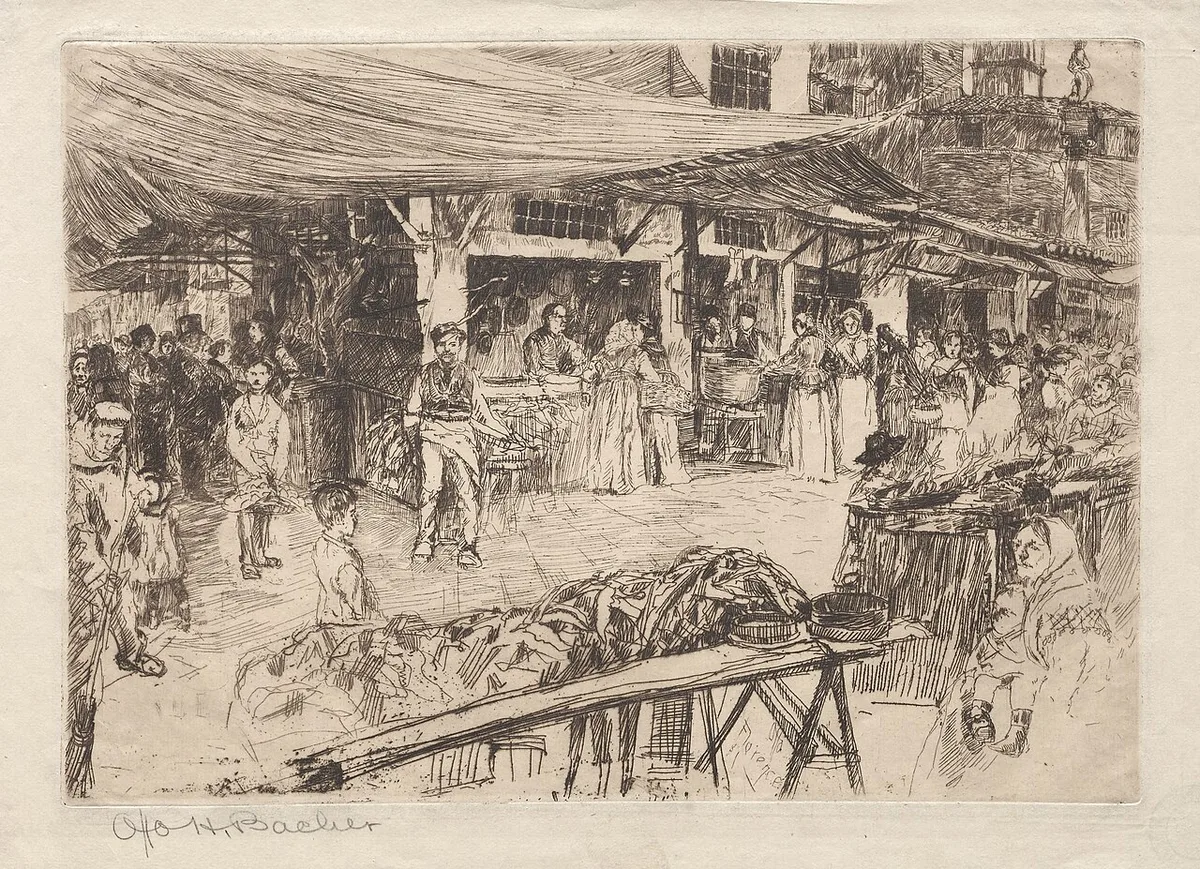
Florence's markets range from everyday leather stalls to a relocated flea market. Pair a market visit with the indoor options for rainy days guide if the forecast turns. Check the official Feel Florence tourism site for current stall days and hours.
- San Lorenzo: the city's main outdoor leather and general-goods market
- Mercato Centrale: the covered market hall, a useful option on a wet afternoon
- Mercato delle Pulci: the flea market, now at Largo Annigoni after moving from Piazza dei Ciompi
- Santo Spirito Market (Oltrarno): antiques, crafts, and local food stalls
Luxury Shopping on Via de' Tornabuoni and Beyond
Via de' Tornabuoni and the surrounding historic center hold Florence's designer flagship stores, including the Gucci Garden concept space. For fine gold jewelry, Ponte Vecchio's historic goldsmith shops remain the city's best-known address. For something different, a market stall in Piazza della Repubblica, run by Rinascimento Fiorentino di Ladisa Patrizia, sells vintage-style jewelry in bright colors at lower prices. Store windows here favor recognizable global brands, the opposite of Oltrarno's handmade workshops.
Luxury vs Artisan Shopping: Which Fits Your Trip
Both districts reward a visit, but they suit different priorities and budgets. Use this comparison to decide how to split time between Via de' Tornabuoni and Oltrarno.
Oltrarno artisan workshops close from 1:00 PM to 4:00 PM for the midday riposo, so visit in the morning. Flagship Via de Tornabuoni stores stay open through afternoon—a sequence that covers both artisan and luxury shopping in one day.
| Factor | Via de' Tornabuoni (Luxury) | Oltrarno (Artisan) |
|---|---|---|
| Price | Higher, fixed retail pricing | Mid-range, workshop-direct pricing |
| Uniqueness | Recognizable global brands | One-of-a-kind, handmade pieces |
| Experience | Polished flagship browsing | Watching artisans work in real workshops |
Shop Hours and the Midday Riposo
Smaller Florentine shops, especially family workshops in Oltrarno and San Lorenzo, often close for a midday riposo. Expect many to shut from around 1:00 PM to 4:00 PM before reopening for the evening. Larger flagship stores on Via de' Tornabuoni tend to stay open through the afternoon. Plan workshop visits for the morning or after 4:00 PM to avoid a closed door. If shopping is a priority, block out time deliberately; the a two-day Florence schedule shows how to fit workshop visits around sightseeing.
VAT Refunds and Shipping Purchases Home
Non-EU residents can typically reclaim Italian VAT on qualifying purchases through the Tax-Free shopping system. Thresholds and paperwork change, so confirm current rules directly with Global Blue or Italian Customs before you shop. For anything heavy or fragile, ask about local shipping instead of packing it yourself. Bottega Lastrucci ships larger glazed pieces internationally rather than requiring hand-carry. A local courier such as Mail Boxes Etc. can also pack and ship bulkier or delicate purchases. Lighter buys, like marbled paper goods or small leather items, generally pack safely into carry-on luggage.
- Ask the shop for a tax-free form at the time of purchase
- Keep the form, receipt, and goods together while traveling
- Present everything at customs before departure to process the refund
Mistakes to Avoid When Shopping in Florence
A few missteps are easy to avoid with some planning.
- Skip stalls with obviously fake designer logos; buying counterfeit goods can carry legal risk for the purchaser
- Compare prices across a few San Lorenzo Market stalls before buying; prices are more negotiable there than in fixed-price ateliers
- Check hours in advance, since many family workshops close entirely on Sundays
- Visit Oltrarno workshops in the morning, before the midday riposo, and save flagship boutiques for the afternoon
Where to Find Custom and Personalized Florentine Goods
Florence offers more than ready-made souvenirs. Several established workshops personalize purchases or create pieces to order, although bespoke work may require appointments and later shipping.
- Scuola del Cuoio can emboss initials on selected leather goods. Artisans may apply the lettering with colored foil or gold leaf at their Santa Croce worktables.
- Il Papiro personalizes selected notebooks, desk accessories, and leather-covered items. Ask about monogramming before purchase because availability varies by product and location.
- Stefano Bemer creates made-to-measure and bespoke shoes at its workshop near San Niccolò. The process requires fittings, so contact the workshop well before a short Florence visit.
- Giulio Giannini e Figlio near Pitti Palace accepts commissions for hand-bound albums, journals, and decorative paper goods. Discuss dimensions, paper, binding style, and delivery time directly with the bindery.
For same-day personalization, arrive early and bring the exact initials or wording in writing. Confirm production time before paying. Fully bespoke shoes, bags, and bindings usually cannot be completed during a brief city break.
Further reading: Florence on Wikivoyage · Florence on Wikipedia
Frequently Asked Questions
What is Florence best known for when it comes to shopping?
Florence is best known for hand-tooled leather goods, marbled paper and bookbinding, perfume from historic apothecaries, and gold jewelry. Oltrarno holds most of the artisan workshops, while Via de' Tornabuoni carries the luxury boutiques.
Where can you find genuine leather goods in Florence?
Scuola del Cuoio, behind Santa Croce, is the best-known leather school and shop. Elsewhere, check smell, stitching, and edges to separate genuine Florentine leather from mass-produced imports.
Where is the Florence flea market now?
The Mercato delle Pulci flea market has moved from its former home in Piazza dei Ciompi to Largo Annigoni. Confirm current opening days locally, since market schedules shift.
Can visitors get a VAT refund on purchases in Florence?
Non-EU residents can generally reclaim VAT on qualifying purchases through Italy's Tax-Free shopping system. Ask for the form at the point of sale and confirm current thresholds with Global Blue or Italian Customs before shopping.
Are Florence shops open on Sundays?
Many smaller family workshops close on Sundays and for a midday riposo, often from around 1:00 PM to 4:00 PM. Larger flagship stores on Via de' Tornabuoni typically keep longer hours.