
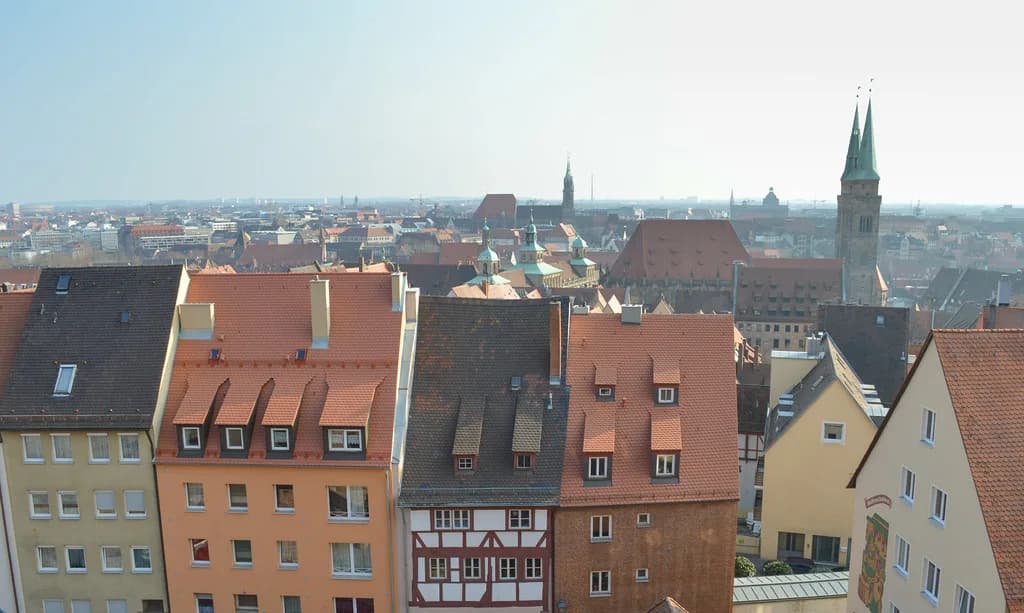
Nuremberg rewards travellers who step off the sightseeing circuit and into its green belt. The city pairs a compact old town with riverside paths, historic castle grounds and larger parks that locals use as everyday backyards. This guide sorts those spaces by mood and walking distance so you can pick the right one for a spare hour or a full afternoon.
One concrete planning anchor: the Castle Gardens at the Imperial Castle are open from 26 March to 1 November, from 8 am at the earliest until nightfall, and admission to the garden is free. The Bavarian Palace Administration lists the Maria Sibylla Merian Garden separately, next to the Heathens' Tower, so do not assume one visit or ticket covers both. The city's other parks are public green spaces; check any specific facility you need before travelling.
Historic Gardens and Castle Grounds
The Castle Gardens sit on bastions built between 1538 and 1545 on the north and west side of the Imperial Castle. The layout is formal rather than wild: a square parterre with roses framed by trees including pagoda trees, and a lower southern section with a circular bed surrounded by clipped maples. Because the grounds are on the castle hill, expect some climbing and uneven footing rather than a level stroll.
For a visiting day at the castle complex, a reasonable suggestion is to allow roughly two to three hours combining the castle courtyards, the gardens and the climb up and down. That is a planning estimate, not an official figure. The palace administration publishes the garden's opening window and free admission, so treat those as the authoritative facts and check the castle's own pages for anything else.
Away from the castle, the Tucherschloss Garden is a historic garden in the middle of the city, and the Baroque Hesperidengärten in the St. Johannis district are described as a group of formal gardens worth visiting in any season. Do not assume a single ticket or pass covers all of these historic gardens. Opening arrangements for the Tucherschloss Garden and the Hesperidengärten are not published consistently in the sources used here, so check each site's own pages before you go.
Old Town and Riverside Walks
The Pegnitz river splits the old town into the St. Sebald and St. Lorenz halves, and riverside paths let you stitch the two together on foot. Insel Schütt, with its green areas and riverside path, is listed by the Nuremberg tourist office as a place to stroll and linger, and the Kontumazgarten sits just west of the old town in front of the Hallertor along the river. Treat these as one contiguous walk rather than separate stops.
A self-guided route that follows the river and the old town walls naturally links the sculpture garden of the Neues Museum, the Henkersteg and Kettensteg bridges, the Weißgerbergasse and the castle gardens before continuing into St. Johannis. A published version of that walk estimates about four hours, which is a useful benchmark if you want to combine gardens with sightseeing. Two to four hours is a sensible personal allowance depending on how many stops you actually make.
If your priority is old town architecture rather than greenery, pair this riverside stretch with the lanes around the Hauptmarkt and the castle approach. The wider city guide for Nuremberg groups these walks with other central sights, and the round-up of free things to do in Nuremberg is worth consulting if you want to keep costs down while covering the same ground. Both routes work best on foot, since the Pegnitz islands and stairways do not reward detours by vehicle.
The Big City Parks
Stadtpark Nürnberg lies north of the city wall and is described by the tourism board as a nineteen-hectare city park with flower beds under mature trees. Rosenau Park is a public park of roughly three hectares, and Hummelsteiner Park serves the southern part of the city. These three are the practical choices when you want a proper park rather than a garden or a river path.
Rosenau Park and the adjacent Kontumazgarten are close enough to combine on one loop, which is useful because the Kontumazgarten itself is a smaller strip in front of the Hallertor. Hummelsteiner Park makes more sense if you are already in the southern half of the city, since crossing the centre just to reach it wastes time. There is no single published ranking of these parks, so choose by location and by whether you want open lawns or shade.
Luitpoldhain and Volkspark Dutzendteich
South-east of the centre, Luitpoldhain and Volkspark Dutzendteich form an adjacent green area around the Dutzendteich lake. The tourism board describes Luitpoldhain as a large park close to the lake, while Volkspark Dutzendteich is presented as a place to relax by the water. Because the two sit next to each other, a single visit can cover both without repeating transport.
This area carries heavy twentieth-century history, and the lake park is also where the city's larger open-air gathering spaces are located. The tourism board notes that Luitpoldhain hosts large gatherings twice a year, but no event dates are published in the sources used here, so check the city's current events calendar if you want to avoid or coincide with a crowd. The historical context is worth acknowledging without letting it dominate a simple afternoon walk.
Northern Escapes: Marienberg and Hainberg
Volkspark Marienberg is the largest park in the city according to the Nuremberg tourist office and lies to the north, where it is easily reached by car and has ample parking. That makes it a realistic option if you have a vehicle or want a longer walk away from the centre. The same source does not publish opening hours, so treat it as an open public park and verify any specific facility separately.
The Hainberg conservation area is a former military practice area that is now protected for its plant and animal life. It suits visitors who want a quieter, nature-focused walk rather than manicured lawns, and the terrain reflects its past use. As with the other northern spaces, published facilities and transport details are thin, so plan your own route and check the city's green-space pages before setting out.
Wöhrder Lake and Wöhrder Meadow
The green belt around Wöhrder Lake and Wöhrder Meadow is one of the most convenient large green spaces in the city, with shady trees, grassy areas and frequent benches along the riverbank. The tourism board describes it as extensive and idyllic, which makes it a good default when you want water, trees and space without leaving the urban area. It also works well as a loop rather than an out-and-back walk on the same path.
The tourism board mentions activities such as paddleboating, inline skating and sailing in connection with the lake and the wider leisure pages, but it does not confirm current rental availability or costs. Plan around the water and the paths, and check locally for any equipment you want to hire. That way you are not building a day around a service that may not be operating when you arrive.
Lorenzer Forest and Southern Nature Areas
The Lorenzer Forest lies south of the Pegnitz and is the right choice when you want a longer walk rather than a quick city break. The Nuremberg Zoo is located in the Lorenzer Forest and is a favourite local attraction, so the area can be combined with a zoo visit if you are travelling with children. Because the forest is large, plan a route rather than wandering; the city lists it among its green areas without prescribing a single trail.
The Fuchsloch is described as an idyllic natural space within the city, better for a short exploratory pause than a full day out. If you are building a family day, pairing the zoo with forest paths makes more sense than trying to combine several unrelated parks in one afternoon. For indoor alternatives when the weather turns, the Nuremberg Toy Museum is a practical fallback nearby in the centre.
How to Choose: Free Grounds vs Paid Interiors
The most useful distinction in Nuremberg is between free public grounds and ticketed interiors. The city's parks, riverbanks and forests are public green space, while the castle gardens' free admission is documented by the Bavarian Palace Administration and applies to the garden itself. Museums and historic interiors follow their own ticket rules, so never assume a castle or garden ticket carries over to a separate site.
The Maria Sibylla Merian Garden is listed separately from the Castle Gardens by the same garden administration, next to the Heathens' Tower. That separation is the reason to check each site individually rather than buying one ticket and expecting access to all castle-related gardens. For a decision framework across the city's paid and free sights, the landmark visitor guides for Nuremberg pull these options together in one place.
Practical Tips for a Green Day in Nuremberg
Spring through early autumn is the most reliable window for gardens and riverside walks, since the Castle Gardens close from 2 November to 25 March and the city's other green spaces are at their best in leaf. Summer evenings are long and mild, which suits Wöhrder Lake and the Pegnitz paths, while the forest areas stay cooler on hot days. Winter visits are still possible in the public parks but the formal castle gardens are shut.
The Pegnitz routes and the old town gardens fit naturally into a one-day city visit, while Wöhrder Lake, Marienberg and the Lorenzer Forest need more time. A one-day itinerary can absorb the river and castle gardens, whereas a three-day visit is the realistic span for adding the lake and forest without rushing. For additional walking and cycling ideas beyond the city limits, the surrounding-area pages published by the tourist office cover options in the region.
Plan Your Visit
Nuremberg's green spaces divide neatly into riverside walks, formal historic gardens, and larger parks and forests, and that structure makes planning straightforward. Start with the free castle gardens for the view and the old town river paths for convenience, then add Wöhrder Lake or the Lorenzer Forest if you have a spare half-day. Confirm opening windows and any ticketing directly with the site that operates each garden, since those are the details most likely to change.
Check the Nuremberg tourist office for the current list of parks and green areas, and the palace administration for castle garden opening and admission details. Facilities such as boat hire and lake activities are best verified locally, as availability varies by season. With those checks done, the city's green belt is one of the easiest ways to slow down between museums and market squares.
Frequently Asked Questions
Are the Nuremberg Castle Gardens free to enter?
Yes. The Bavarian Palace Administration lists admission to the Castle Gardens at the Imperial Castle as free, with the garden open from 26 March to 1 November, from 8 am at the earliest until nightfall. It is closed from 2 November to 25 March. The Maria Sibylla Merian Garden is listed separately by the same administration, so check each site's own page before assuming a shared arrangement.
What is the best time of year to visit Nuremberg's parks and gardens?
Late spring through early autumn is the most practical window, since the formal Castle Gardens operate on a seasonal opening between late March and early November and close over winter. Public parks and riverside paths remain accessible year-round, but the gardens and river walks are at their most comfortable when the days are long and mild. For the castle gardens specifically, check the palace administration's page before you travel.
Which Nuremberg park is best for a relaxing walk by the water?
Wöhrder Lake and Wöhrder Meadow offer an extensive greenbelt with shady trees, an idyllic riverbank, benches and grassy areas, making them easy to combine into a loop. The Pegnitz riverside through the old town, including Insel Schütt and the Kontumazgarten near the Hallertor, is the better choice if you want water alongside historic streets. For a lake setting with more space, Volkspark Dutzendteich is the other main option.
Can you walk from the old town to Nuremberg's main parks?
The Pegnitz riverside paths and the old town gardens are within easy walking distance of the centre, and a published self-guided route linking the river, the old town lanes and the castle gardens estimates about four hours. Larger green spaces such as Volkspark Marienberg and the Lorenzer Forest are further out and call for a different plan. Treat walking times as your own estimate and confirm local transport if you decide to ride instead.


