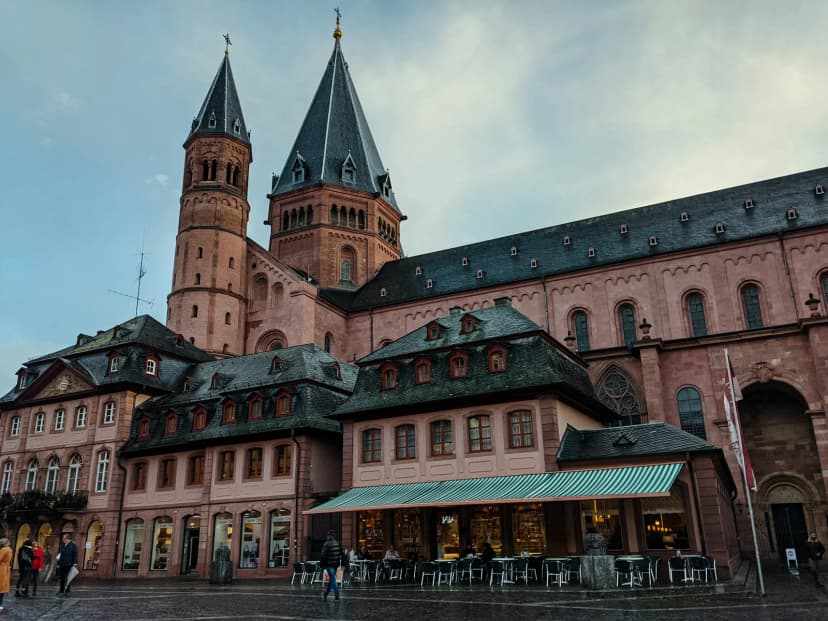
Nuremberg packs most of its historic centre into a walkable strip between the castle hill and the Pegnitz river, which makes a cheap day out realistic. The pattern repeats across the city: squares, courtyards, riverfront paths and the castle's outer grounds are open to walk through, while museums, towers and cellar tours are separate paid visits. One concrete example that shapes a day here: the operator page for St. Sebald's Church states admission for visitors aged 18 and over is five euros, with a reduced rate of 2.50 euros for schoolchildren, students, seniors aged 65 and over, and groups, while children and young people are admitted free. Treat those figures as the operator's published prices and re-check before you go, since both opening hours and prices shift by season and year.
This guide follows the hill downward so you climb once and finish by the water. Use the official Nuremberg tourism site for city-wide visitor information, and each individual operator's page for the details that actually change: opening times, admission and tour schedules.
Quick Answer: The Free Core of Nuremberg
You can build a satisfying day almost entirely from free stops: the castle's outer grounds and gardens, Tiergärtnertorplatz, the market square with its fountain and facade clock, the Pegnitz riverfront and Weissgerbergasse. Expect to pay only if you choose a museum, a tower or a guided cellar tour. The free sights are not consolation prizes; several are the reason people come to Nuremberg at all.
The medieval centre is concentrated rather than spread out, so a walker covers a lot of ground without needing public transport. That compactness also means the same street works at different times of day, and you can revisit a square in better light without losing an afternoon. Treat the map as a loop rather than a checklist.
For a fully structured version of these streets, compare the Nuremberg Old Town walking route before you set out.
Start at the Castle: Free Grounds, Paid Interiors
Begin high. One widely read blog account describes the castle surroundings and gardens as free to visit, with views over the rooftops, while the interiors and the Sinwell Tower are accessible for a fee or with the Nürnberg Card. Treat that as the structural rule for the hill: courtyards and exterior views cost nothing, the collections and towers are ticketed. Because ticket structures and inclusions can be revised, confirm the current arrangement for your dates rather than relying on older trip reports.
A self-guided approach works well here: walk the outer areas, note the views you want, then descend into the town instead of queueing. Walking down rather than up is the single most useful routing decision in Nuremberg, and it puts the busiest sites behind you before the crowds thicken.
Tiergärtnertorplatz and the Dürer Hare
Descending from the castle brings you to Tiergärtnertorplatz, a square of colourful facades and half-timbered houses. Albrecht Dürer's house stands here; the museum inside charges admission, but the building's exterior and the square itself cost nothing. The bronze hare sculpture nearby, a modern tribute to Dürer's Young Hare watercolour, has become a free photo stop in its own right.
This is also a good place to slow down rather than rush to the next church. Because the square sits directly below the castle, you can return in the evening for different light without extra travel. If you are planning something longer than a day, use this area as your daily starting anchor and vary the routes outward from it.
St. Sebald's Church: What the Operator Publishes
St. Sebald's is described by the Nuremberg tourist office as the city's oldest parish church, built around 1215 as a three-aisled Late Romanesque basilica, widened in the Gothic style from 1309 and reconstructed after wartime destruction. Its reliquary shrine, the tomb cast in bronze by Peter Vischer and his sons, is the work most visitors come to see, and the virtual museum of Nuremberg art dates that tomb to 1508 to 1519.
The operator page also states that children and young people are admitted free, visitors aged 18 and over pay five euros with a reduced rate of 2.50 euros for schoolchildren, students, seniors aged 65 and over, and groups, that an annual pass costs 15 euros, and that prayer, devotions, worship services and pastoral care remain free of charge. The same page lists public guided tours and tower tours in German, and states that the building is fully wheelchair accessible. Those figures are the operator's own published prices, so check the page again before travelling in case they have been updated.
The practical takeaway is to separate the nave visit from the tower climb: one is a short, inexpensive stop, the other needs a scheduled German-language tour and a head for stairs. Budget your time around the tour slot rather than the other way round. If you want the church's own landmark context alongside this city-level article, the St. Sebaldus Church visitor guide covers visiting the one building.
Hauptmarkt: Market Square, Fountain and Clock
The Hauptmarkt is the functional heart of the old town and costs nothing to walk through. The tourism office notes that on weekdays you can buy regional and international specialities from the stalls and enjoy the medieval flair of the centuries-old square, and that from the Friday before the first Advent the square is entirely given over to the Christmas Market, opened by the Nuremberg Christmas Angel with the prologue spoken from the balcony of the Frauenkirche. The same page links the Gothic Frauenkirche and the Beautiful Fountain to the reign of Emperor Karl IV in the 14th century.
Because market layouts and seasonal arrangements can change, treat any photograph you have seen as an indication rather than a guarantee. Arrive around midday if the Frauenkirche's mechanical clock figures are your priority, and otherwise come early for the emptiest square. Buying nothing here is entirely acceptable.
The square sits on the route between the castle and the river, so it works best as a pass-through stop in the middle of your walk. If you want a dedicated look at the square itself, the Nuremberg Hauptmarkt guide covers that single location.
St. Lorenz: The Second Gothic Church
St. Lorenz is the other great medieval church in the centre, a short walk from the main station along the pedestrian shopping street, and its pair of spires is hard to miss. One travel blog calls it the most impressive church in Nuremberg for its scale and interior light. Treat the two Gothic churches as different stops rather than substitutes, since their architecture, setting and visitor arrangements differ.
No source used here establishes that St. Lorenz offers a paid tower tour equivalent to the one at St. Sebald's, so do not plan around that assumption. If a climb is on your list, check the individual church's own information rather than extrapolating from its neighbour. Entry conditions in particular can differ between churches, and that is a detail worth verifying locally.
The church sits beside a shopping street, which makes it an easy insertion into a walking day without a detour. Because it is close to the station, it also works as a first or last stop if you are arriving or leaving by train.
The Pegnitz, the Bridges and the Hospital View
One of Nuremberg's most photographed views is the Heilig-Geist-Spital apparently floating over the Pegnitz, taken from one of the river bridges. Walking the banks, crossing the pedestrian spans and pausing on the Museum Bridge costs nothing and requires no planning. One blog account singles out the Hangman's Bridge, also called Henkersteg, as a historic pedestrian crossing, and notes that the view of it from the Maxbrücke takes in two historic bridges at once.
Several bridges cross the water within a few minutes of each other, so the natural method is simply to zigzag rather than follow a fixed route. Late afternoon light on the water is the reason photographers linger here, and it costs you nothing to wait. If you need a quieter alternative to the busiest squares, this is the section to choose.
For a longer stay, the river corridor connects naturally to the city's greener edges. The Nuremberg parks and gardens overview is a sensible add-on if you have a half-day spare and want to leave the stone streets.
Weissgerbergasse: The Half-Timbered Lane
Weissgerbergasse is regularly described as the most photogenic street in the old town, a short cobbled lane of half-timbered houses with small shops and cafes at ground level. One writer who lived in the city for three years calls it the prettiest street in Nuremberg and notes the coffee and ice cream to be found along it. Its popularity means the light and the crowds change dramatically through the day, so early morning tends to be quieter.
The lane is short, so plan to combine it with the riverfront and the market rather than treating it as a standalone outing. That clustering saves walking and keeps you in the photogenic part of the city for the best hours. It is also the sort of place that rewards a second pass in different weather.
Handwerkerhof and the City Walls
The Handwerkerhof is a small craft courtyard beside the main station at the edge of the old town, with workshops selling leather goods, toys, gold jewellery and ceramics, plus a few cafes and restaurants serving traditional food. Wandering through the cobbled lanes and admiring the buildings is free; anything you buy, eat or drink is not. One blog account describes getting there late in the evening when most places had closed, and finding that even just walking around was worthwhile, which makes it a sensible first or final stop on a station-based day.
Nuremberg's city walls wrap around the old town, and one blog account notes that there is also an extensive path along the old city moats, with the walls described as roughly four kilometres encircling the centre and preserved and restored after the wartime bombing. This is the stop where the free-versus-paid rule is clearest: the setting is free, the shops are not. Allow time to sit rather than merely pass through.
Way of Human Rights and Open-Air Memorial Stops
The Way of Human Rights is a public work of art in the walled city, created by the Israeli artist Dani Karavan, consisting of a large white gate, 27 round pillars, two bottom panels and an oak tree with engravings of the Universal Declaration of Human Rights in various languages. It stands right in front of the Germanisches Nationalmuseum and can be walked through at any time, making it one of the city's most thought-provoking free stops.
Nuremberg also has an unusual concentration of memorial and documentation sites. One blog account describes an educational trail at the former Nazi party rally grounds with more than 20 information panels passing sites such as the Zeppelintribune, the Große Straße and the Kongresshalle, while a second account notes that the site itself is enormous and has no signboards of its own, so a guided tour is worth considering if you want structure. The grounds can be walked; indoor exhibitions are the paid, contextual upgrade. If you want these sites grouped into a single plan, the Nuremberg WWII history sites overview pulls them together.
Build Your Own Free Loop
A logical order is castle grounds first, then down to Tiergärtnertorplatz, on to St. Sebald's and the market square, across to St. Lorenz, and finally down to the Pegnitz and Weissgerbergasse. That sequence follows the hill downward and keeps the river as a reward at the end of the day. Reverse it if you prefer to finish with a rooftop view instead of water.
One full walking day covers the free core comfortably; a second day lets you add a museum or an underground tour without rushing the streets. If you only have an afternoon, cut the memorial sites and concentrate on the castle-to-river axis. The Nuremberg itineraries and city travel guides hub collects alternative day structures if you want to compare options before committing.
Comfortable shoes matter more than a perfect plan here, because cobbles and slopes do the work that distance normally would. Carry water in summer and expect the castle hill to be the only real climb of the day. Building in one sitting break keeps a free day from feeling like a forced march.
Where Free Ends: Paid Upgrades Worth Considering
The cleanest paid upgrade in Nuremberg is a municipal museum day ticket. The Fembo House visitor information page states that adult admission is 7.50 euros and that for a supplement of 4.00 euros you can use your admission ticket as a day ticket, letting you visit the other municipal museums free of charge on the same day. The same page lists opening hours of 10 am to 5 pm Tuesday to Friday and 10 am to 6 pm Saturday and Sunday, with different hours on several holidays and closures on 24 and 25 December, and notes that guided tours, the medieval dungeons and the historic art bunker are not included in those prices. Confirm current details on the operator page before you travel, since exhibitions close for renovation and hours shift.
Tower climbs, the historic rock-cut cellars beneath the old town and the castle interiors are the other obvious additions, and each is ticketed separately rather than bundled into one building's entry. The cellars are described by one writer as a maze of corridors and storage rooms that also served as air-raid shelters, now explored on guided tours with audioguide options at other times, and that account stresses booking ahead on the official website. If you are weighing a Nürnberg Card, compare its included sights against the free core you intend to walk anyway. A card only pays off if it covers things you would genuinely have paid for.
Day trips are another way to extend a Nuremberg base without spending on city attractions; the Day Trips from Nuremberg by Train guide covers options. If you have already toured other German cities on a budget, the same free-first logic applies elsewhere, as in this guide to free things to do in Munich.
Plan Your Free Nuremberg Day
Nuremberg's value for a budget traveller lies in how much of its famous centre is simply open to walk through. Plan around the castle grounds, the market square, the river and the half-timbered lanes, and treat every museum, tower and cellar as an optional upgrade rather than a requirement. That framing turns a potentially expensive city break into a cheap one without cutting the highlights.
Check current details for anything with a door, a ticket desk or a fixed schedule before you travel, since exhibitions and access arrangements are revised from time to time. Then walk downhill, keep some change for a pretzel, and let the free parts of the city do the rest.
Frequently Asked Questions
Which Nuremberg sights can you actually visit for free?
Free options include the castle's outer grounds and gardens, the market square, the Way of Human Rights, the city walls and moat paths, the Pegnitz riverfront and Weissgerbergasse. The two main Gothic churches sit in a different category: St. Sebald's operator page publishes seasonal opening hours and an admission charge for adult visitors, with free entry for children and young people, so check the individual church's information rather than assuming every church in the city is free.
Is Nuremberg Castle free to visit?
Only the outer parts. One blog account describes the castle surroundings and gardens as free to visit, with the interiors and the Sinwell Tower accessible for a fee or with the Nürnberg Card. Many visitors find the free exterior views are the main reward, so decide about the paid sections only after you have seen what the outside offers, and confirm current ticket details with the operator.
Are St. Sebald's and St. Lorenz churches free to enter?
They should not be treated as identical. St. Sebald's operator page lists seasonal opening hours, an admission charge for visitors aged 18 and over, a reduced rate, free entry for children and young people, and separately offered German-language tower tours. No equivalent paid tower offer for St. Lorenz is documented here, so confirm that church's own current terms before planning a climb.
How much time do you need for the free sights in Nuremberg?
A suggested full walking day covers the free core from the castle down to the river comfortably. A second day lets you add a museum, a cellar tour or a slower pass through the same streets in better light. The routes are short, so the limit is usually your energy rather than the distance.
What can you do in Nuremberg for free in the evening?
Evening walking is the simplest free option: the castle hill, the market square and the river bridges are atmospheric after dark and cost nothing. Outdoor festival and market programming varies year to year, so check the official city tourism listings for what is actually running during your dates instead of relying on previous years.
What can you do for free in Nuremberg when it rains?
Sheltered church naves and short dashes between covered passages are the only truly free rainy options, and a wet walk usually pushes visitors indoors. That is the moment to consider a municipal museum day ticket or a guided cellar tour rather than trying to stay outside. Check the individual museum's own page for current hours and admission, and note that exhibitions may close for renovation.
Sources
- 9 Instagram-mable spots & (free) things to do in Nuremberg - capturing the heritage of Germany
- 30 Fun Things to Do in Nuremberg — LAIDBACK TRIP
- Best Things to Do, See, and Eat in Nuremberg: The Ultimate Travel Guide - Into the Bloom
- Official event website
- Sebalduskirche (St. Sebald's Church) - Congress- und Tourismus-Zentrale Nürnberg
- St. Sebaldus Tomb | Work of art | Virtual museum of Nuremberg art
- Hauptmarkt (Main Market Square) - Congress- und Tourismus-Zentrale Nürnberg
- Nuremberg Old Town: a Local’s Guide | That’s What She Had
- Informazioni per il pubblico | Stadtmuseum im Fembo-Haus