Frankfurt's Christmas market is often described as a single market, but in practice it behaves like a route. It begins at Roßmarkt, stretches along the Zeil shopping street toward Hauptwache, and continues through the old town to Römerberg and the Mainkai riverbank, where a children's Christmas market is being introduced this season. Knowing that layout before you arrive is the difference between wandering aimlessly and moving through the centre in a sensible order. More context on how the centre fits together is in the Frankfurt am Main landmark guides.
For 2026 the market is scheduled from 23 November to 22 December, according to the city's official tourism organisation. Those dates are the fixed anchor for planning; daily opening times and any changes to individual squares should be confirmed closer to your trip, because they can shift between seasons.
The sections below work through the zones in walking order, then explain how to split your visit between daylight and evening, what Frankfurt's own Christmas foods taste like, and how to handle the small practical frictions of mugs, cash and dense crowds. Suggested timings are advice for structuring a day, not official recommendations. For wider planning, see Frankfurt am Main landmark visitor guides.
When the Frankfurt Christmas Market Runs in 2026
The 2026 edition runs from 23 November to 22 December, right up to the last days of Advent rather than ending mid-month. That window matters because the final week before Christmas is when local shoppers and visitors overlap most heavily, particularly on weekends and after dark. If your dates are flexible, arriving in the first week after opening gives you the same stalls with noticeably more breathing room.
Because the market is spread across public squares and streets rather than contained in a ticketed site, entering and walking through the grounds is free. You pay for what you consume: food, drinks, rides and souvenirs. Budgeting is therefore about appetite and shopping rather than an entrance fee, and you can sample the atmosphere at no cost before deciding where to spend.
The market reads as a single event, but the squares behave differently, and a handful run as separate small markets with their own character, such as Pink Christmas, Frankfurt's LGBTQ+ market on Friedrich-Stoltze-Platz, and CityXmas at Konstablerwache. Not every stall deserves the same amount of your time, so checking which squares host the arts-and-crafts element and which are mainly food and drink helps you allocate an afternoon properly.
How the Zones Connect, and Where to Start
The strongest way to orient yourself is to begin at Römerberg. It is the central square, framed by half-timbered buildings, and it holds the tourist information office, which in December distributes free market maps. Picking up a paper map is genuinely useful here, because mobile signal can be unreliable in the most crowded stretches, making a phone-based map frustrating exactly when you need it. For wider planning, see Römerberg and Frankfurt's Old Town.
From Römerberg the market unfolds in two directions: north through Paulsplatz, then east via Hauptwache along the Zeil to Roßmarkt; and south and slightly west to the Mainkai riverbank. Treating the route as a loop rather than a checklist lets you drift through several squares in one walk, which matches how the sections merge with no clear border between them.
Teams arriving by train typically come into the main station and continue by public transport into the old town, since the market squares sit within the central zone. Rather than committing to a specific route or service in advance, check current connections in the RMV journey planner on the day you travel, as construction and timetable changes are common in December.
Zone by Zone: What Each Square Is Actually For
Römerberg is the postcard. The oversized Christmas tree, the traditional nativity scene beside it, the carousel and the old-town backdrop are concentrated here, and it is where first impressions are made. It is also the busiest square once the lights come on, so use it for photographs and orientation early, then move on rather than trying to eat dinner in the thickest of the crowd.
Paulsplatz, immediately north, is the shopping zone. It hosts the Frankfurt artists' market, where you find more handmade and regional work: jewellery, ceramics, beeswax candles and honey. Two useful filters apply here. Look for signs reading Handgemacht or aus der Region, meaning handmade or locally produced, and treat the two-storey honey house and the ceramics stands as examples of what this square does well rather than fixtures guaranteed every year.
Roßmarkt is the social square and the best place to sit down. It has generous seating, a large Christmas pyramid, a Ferris wheel at the far end and a different visual signature from the old town: wooden stalls silhouetted against the glass office towers. Order a Glühwein, a hot apple wine or a non-alcoholic spiced punch here, then stay put rather than carrying a cup through the narrowest streets.
Hauptwache is mostly a pass-through with a purpose. Stalls here lean toward food and small gifts rather than crafts, and the square sits directly beside the Zeil, Frankfurt's main shopping street, which makes it a natural link between browsing the market and browsing actual shops. It is also where the market bleeds into surrounding side streets, so expect the stalls to keep going after the square ends.
Mainkai is the pressure valve. Sitting south of Römerberg on the riverbank near the Eiserner Steg footbridge, it is more spread out, quieter and geared toward eating and drinking rather than gift shopping. Some visitors find the stalls here lean toward imported trinkets and skip the area entirely; if you value elbow room over atmosphere, it is the better bet, especially once Römerberg becomes shoulder-to-shoulder.
Day or Evening? Timing Your Visit Around the Crowds
Daylight browsing is the practical choice. Markets operate from morning into the late evening, and during the day you can inspect stalls, read ingredient signs, compare prices and photograph the architecture without being pushed along by the flow of people. The trade-off is obvious: the festive lighting, the most photogenic atmosphere and the liveliest drinking squares all belong to the hours after dark.
A workable compromise is to shop and eat in the afternoon, then return briefly at night to see the lights and the tree rather than attempting a full second circuit. On weekends, and especially in the final days before Christmas, the evening crowds at Römerberg can be dense enough that moving as a group becomes difficult. If that happens, retreat to Mainkai or Roßmarkt, where the open squares absorb crowds far better.
December weather in Frankfurt is cold and changeable: temperatures often hover around freezing, days range from crisp and dry to damp, and snow is possible but never something to count on. Warm layers, gloves, a scarf and shoes you can stand in for hours matter more than any other packing decision. Buildings and churches around the squares also offer short warm breaks when you need to reset.
What to Eat and Drink: Frankfurt's Own Specialities
Start with Bethmännchen, the small marzipan sweets topped with three almond slivers, which are specific to Frankfurt rather than a generic German market item, and are singled out by the city's tourism organisation as a must during Advent. Brenten are closely related but use flour alongside the marzipan, and are often pressed with images of the city's landmarks, which makes them easy gifts to carry home. Buy a few first rather than a large box, because marzipan is sweet and opinions divide.
For something savoury, Frankfurter Würstchen is the regional sausage, typically grilled and served with mustard and bread, and it pairs well with a mug of something warm. Beyond the local staples, the same squares offer the familiar German market repertoire: potato pancakes with applesauce, thin Flammkuchen, crêpes and waffles, chocolate-dipped fruit skewers, and even pasta stirred inside a cheese wheel. Portions are large, so sharing two or three items across a group is usually enough to eat well without overcommitting.
Drinks are where Frankfurt diverges most. Hot apple wine, a warm version of the city's sour cider, is the local order, and the tourism organisation describes it as an essential on cold winter days. Glühwein and non-alcoholic Kinderpunsch are everywhere for anyone who wants something milder. Quality varies by stall more than by square, so judge on what you can see: whether food is cooked to order, whether a stall advertises regional or handmade goods, and how busy it looks with locals rather than only with tour groups.
Practical Logistics: Mugs, Cash and Getting Around
Hot drinks are served in mugs that carry a refundable deposit, known in German as Pfand. You either return the mug at the end of the evening to get the deposit back, or keep it as a souvenir; visitors who plan to keep one often ask for a clean mug so it does not leak or stain on the way home. The deposit is refunded in cash by the stall you bought from, so keep track of which one that was after a few rounds.
Carry some cash. Visitor reports consistently describe most food and drink stalls as preferring cash even where card payment exists, and a queue that stops while someone finds a working terminal is a small but avoidable annoyance. Withdraw before you enter the market area rather than hunting for a machine mid-circuit, and keep small notes and coins handy for snacks and deposits.
Public transport is the sensible way in, since the market squares sit in the middle of the old town and city-centre parking is limited. Buy a valid ticket for the zone you are travelling in and validate it where required, and check the current rules and connections with RMV rather than relying on anything you read in advance. Walking between squares is the real transport here: nearly all of the zones sit within a comfortable stroll of one another. Further visitor details appear in Best Frankfurt Christmas Markets: A Complete Guide.
A Suggested One-Day Plan (Advice, Not an Official Itinerary)
Allow roughly a full day if you want to see the zones properly rather than sprint through them, and treat that figure as advice for pacing, not an official recommendation. Begin in the early afternoon at Römerberg for the tree and the old-town setting, pick up a map at the information office, then work north through Paulsplatz for gifts and Roßmarkt for a seated drink. Finish the daylight stretch at Hauptwache, where the Zeil gives you a natural exit for shopping or a warm break.
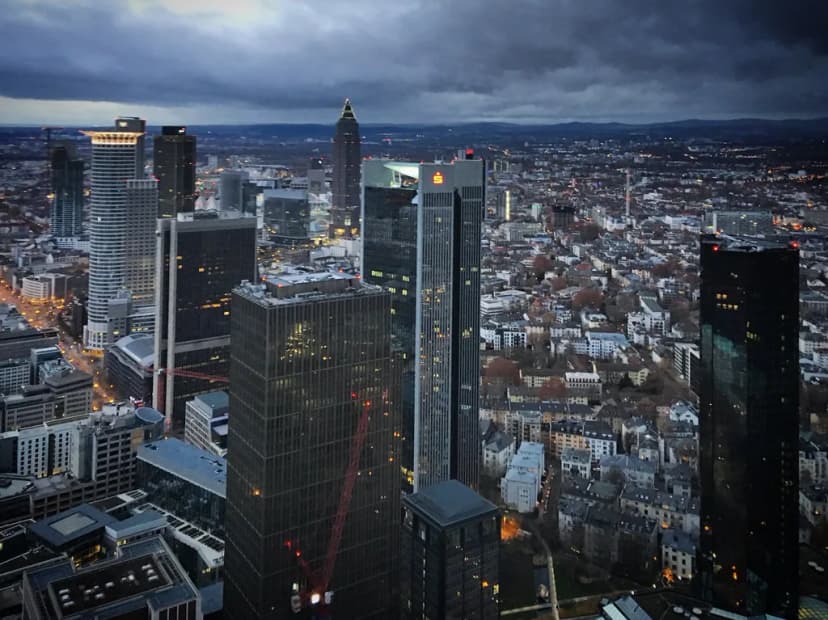
In the late afternoon, have a proper meal rather than grazing: potato pancakes, Flammkuchen or a sausage with bread will hold you through the evening far better than sweets. Then return to Römerberg after dark for the lights, accept the crowd for twenty minutes or so, and retreat to Mainkai for a final warm drink by the river. If you still have energy, the skyline is worth seeing lit up after the stalls close.
If one day is not enough, the centre rewards a second visit on a weekday morning, and there is plenty to do beyond the market, including free walks along the river, the old town churches and the city's museums. Our Frankfurt landmark visitor guides cover the individual sights in more depth than a market day allows.
Plan Your Visit
The key to a good visit is accepting that this is a route, not a single square. Decide in advance which zones get your time: Römerberg for orientation and photos, Paulsplatz for handmade gifts, Roßmarkt for sitting and eating, and Mainkai as your escape when the centre becomes uncomfortable. Confirm the current opening times, any changes to individual squares and the full 2026 dates on the official tourism website before you travel.
Bring layers, cash, and patience for the evening crowds, and treat the one-day plan above as scaffolding you can rearrange. Arriving earlier in the season and starting in daylight gives you the same stalls with far more room, which is usually worth more than any single recommendation.
Frequently Asked Questions
When does the Frankfurt Christmas market take place?
The 2026 edition is scheduled from 23 November to 22 December, running through the final days of Advent. The market is spread across public squares in the city centre rather than a single fenced site, so there is no entry fee and you can walk between the zones freely. Because daily opening times and any changes to individual squares can vary between seasons, confirm the current details on official city and tourism channels shortly before your trip rather than relying on older listings.
Which part of the Frankfurt Christmas market should I visit first?
Start at Römerberg. It is the central square, framed by the old town and the Fountain of Justice, and it holds the tourist information office, which distributes free market maps in December. Those maps are worth taking because mobile signal can be unreliable in the densest parts of the market. From Römerberg you can head north through Paulsplatz toward Roßmarkt, or south to the quieter Mainkai stretch by the river.
Is the Frankfurt Christmas market better during the day or in the evening?
Both, for different reasons. Daylight is better for browsing, comparing stalls and photographing the architecture without being pushed along, while the evening brings the lights, the atmosphere and the liveliest drinking squares. A practical approach is to shop and eat in the afternoon, then return after dark for a short look at the illuminated Römerberg before retreating to a more open square such as Roßmarkt or Mainkai if the crowds become difficult.
What food is Frankfurt's Christmas market known for?
Frankfurt's own specialities are the ones to prioritise. Bethmännchen are small marzipan sweets topped with three almond slivers, and Brenten are a related marzipan cookie often pressed with images of the city's landmarks. Frankfurter Würstchen is the local grilled sausage, usually served with mustard and bread, and the drink to try is hot apple wine, a warm version of the city's sour cider. Alongside these you will find the familiar German market staples such as potato pancakes, Flammkuchen, crêpes and waffles.
How long do you need for the Frankfurt Christmas market?
A full day is a comfortable allowance for seeing the main zones without rushing, though this is a pacing suggestion rather than an official recommendation. Half a day is enough if you focus on Römerberg, Paulsplatz and Roßmarkt, and an evening alone suits travellers who mainly want food, drinks and the illuminated old town. Because the squares are close together, much of your time goes on eating, browsing and lingering rather than on getting between them.