Last updated August 2026, this guide separates the genuinely free things to do in Bruges from the paid attractions that other lists quietly mix in. Markt, Burg, three historic churches, Rozenhoedkaai's canal view, and Minnewater park all cost nothing to visit, and together they fill a full day on foot. Where a free experience carries a catch, such as a tip-based walking tour, this guide flags it upfront so the budget stays predictable.
Quick Answer: Best Free Things to Do in Bruges
Bruges packs most of its landmark sights into a walkable core, and a surprising number of them charge nothing at all. Below is the short list of genuinely free things to do in Bruges, with the paid attractions that sit right next to them called out separately. Use this as a checklist, then read each section below for timing, access notes, and current caveats worth checking before a visit.
- Markt (Market Square) — free to walk and photograph any time of day; the Belfry Tower and Historium on it charge separate admission
- Burg Square — free to explore; City Hall and the Old Courthouse next door charge for interior access
- Basilica of the Holy Blood — free entry to view the interior; relic viewing happens at set times, so check current hours
- Church of Our Lady — free nave and parapet views; the attached museum charges a small separate fee
- St-Salvator's Cathedral — free to step inside, even on a quick stop between other sights
- Rozenhoedkaai canal viewpoint — free, and best around sunset when day-trippers thin out
- Vismarkt (Fish Market) — free to browse the stalls and canal views
- Minnewater (Lake of Love) and Minnewater Park — free lakeside walk, lit after dark
- Wednesday Market at the Markt — free to browse weekly; confirm the current day and hours locally
- Lace-making demonstrations in shop doorways — free to watch, with no purchase expected
- St-Anna windmills — free exterior views along the ramparts; only one mill offers a paid interior visit
- Beguinage courtyard — free to enter during daytime hours; confirm current access locally
- Bruges free walking tour — no ticket price, but guides work for tips at the end
Free Historic Squares: Markt and Burg
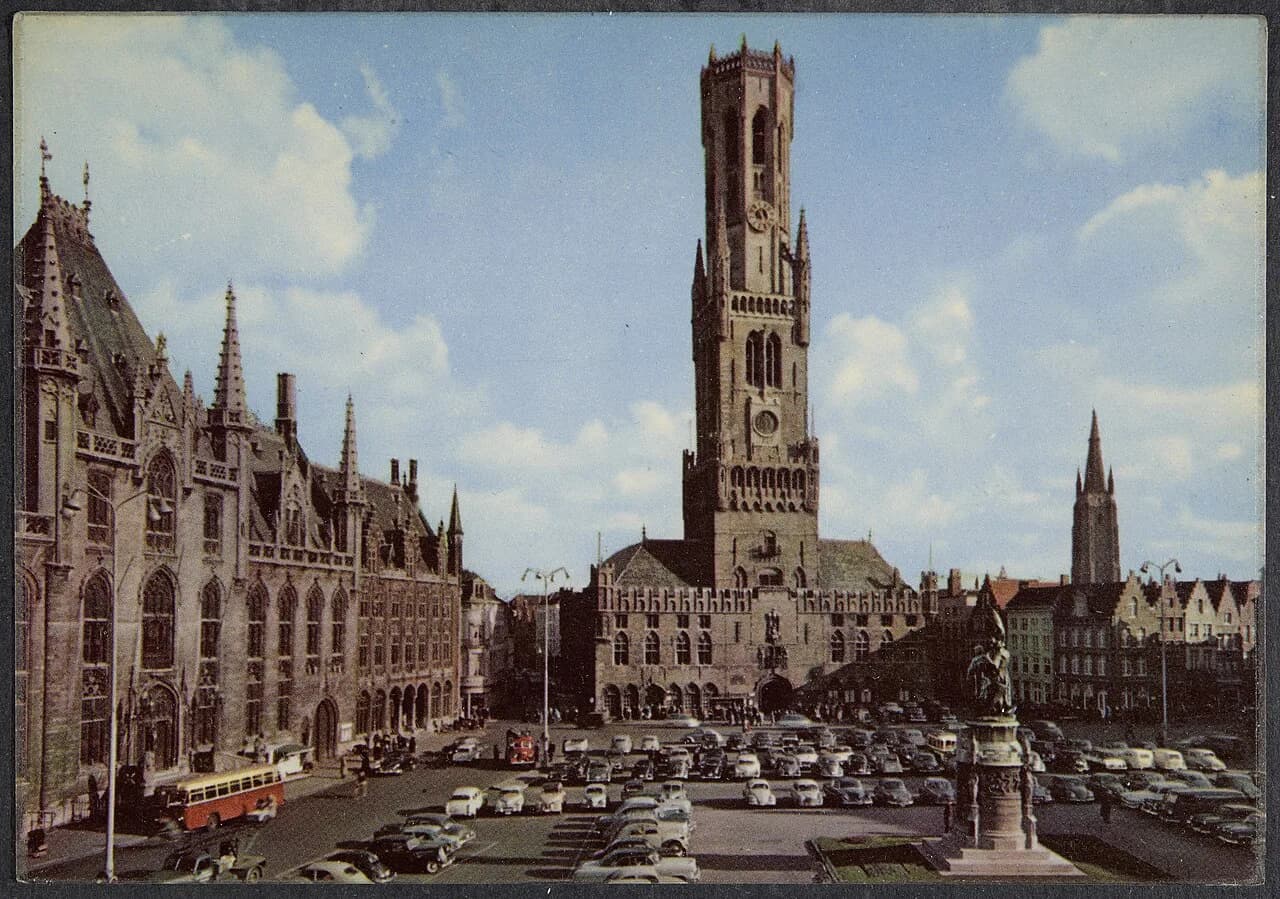
Markt, Bruges' central square, has functioned as a marketplace since 958, and standing in it costs nothing. Both the Belfry Tower and the Historium building face the square, though each charges admission. See the paid add-ons section below for current pricing. Horse-drawn carriages queue here too, offering paid rides from around €55 per carriage. Watching them arrive and depart, however, is free. Even without a ticket, step into the Belfry's courtyard entrance for a quieter angle on the tower. Many visitors skip this free perspective entirely. Photographers gather at both squares through the morning and again near dusk, when the low light suits the gabled rooftops. None of this costs anything beyond the time spent standing there. A short walk away, Burg Square is calmer and equally free to explore. City Hall and the neighboring Old Courthouse frame the square with a mix of Gothic and Baroque facades. Viewing those exteriors and standing in the square costs nothing. Stepping inside City Hall runs €8, though it is free with a Musea Brugge Card. Occasionally, the Brugse Vrije building beside City Hall hosts a free exhibition, worth a glance if the doors happen to be open.
Free Churches: Basilica of the Holy Blood, Church of Our Lady, and St-Salvator's Cathedral
Three churches anchor the free list, and each lets you inside at no charge. The Basilica of the Holy Blood sits on Burg Square. It holds a relic said to contain blood linked to Christ, brought to the city during the Second Crusade. Entry to view the ornate upper chapel is free. The relic itself is displayed for veneration at set times each day. Check the basilica's posted schedule for current times, since these can shift. Photos of the relic are not permitted during veneration, though visitors can light a candle and sign a guestbook. Church of Our Lady, a short walk south, began construction in 1220 and took roughly 200 years to complete. Its nave and parapet views are free to see. A separate museum inside charges a small entrance fee and sits outside this free list. St-Salvator's Cathedral, on one of Bruges' main shopping streets, costs nothing to step into. It offers a quieter break from the crowds outside. All three churches allow quiet visits outside of active services, and dress expectations stay casual for a daytime stop. Photography inside is generally fine, though flash and photos during an active service are usually discouraged.
Free Canal Views: Rozenhoedkaai and Vismarkt
Rozenhoedkaai is the canal corner that appears in most Bruges photography, and standing at the railing costs nothing. Sunset is the best time to visit, since many day-trippers have already left by then. Early morning offers a quieter alternative to sunset, with soft light and far fewer people crossing the bridges. The view pairs the Belfry's silhouette with the canal and the surrounding stepped-gable buildings, all visible without paying for a boat ride. Vismarkt, the old fish market a few minutes away, still runs a couple of produce and craft stalls. Browsing its stone arcades and the canal views around it is free, any time of day. Both viewpoints work equally well on foot, so no boat ticket is needed to see them.
Minnewater: The Lake of Love and Its Park
Minnewater, known locally as the Lake of Love, sits at the quiet southern edge of the historic center. Walking its banks and through Minnewater Park costs nothing. Swans, weeping trees, and old stone bridges line the route. Benches around the lake make it an easy, no-cost spot for a packed lunch break. After dark, the lake area is lit, and it is worth a return visit. This after-dark canal and park route covers timing for that in more detail. Families pacing a free day around open space often use the park as a natural midpoint stop.
Free Markets and Street Life: Wednesday Market and Lace-Making
Every Wednesday, a market takes over the Markt with regional food and craft stalls, and browsing it costs nothing. Confirm the current day and hours locally before planning around it. Regional producers sell cheese, bread, and produce at the market, giving a working sense of local life beyond the souvenir shops. Lace has been made in Bruges for centuries using the bobbin method, and it remains one of the city's best-known crafts alongside chocolate. In several streets, you can still watch women working lace in shop doorways and windows. Watching is free, and no purchase is expected. Families building a no-cost morning around the market can add a few kid-friendly stops nearby without much extra walking.
St-Anna Windmills and Bruges' Quiet Side
Four windmills remain along the ramparts near the St-Anna neighborhood, survivors of what was once a much longer row. Only Sint Janshuis Mill is open for paid visits inside. Viewing all four from the canal path outside is free. Coming by bike shortens the walk considerably, though the route is just as manageable on foot for most visitors. St-Anna's streets stay noticeably quieter than Markt or Burg, with fewer visitors and a slower pace. Gabled houses, small churches, and corner statues line the walk, making it worth the extra ten minutes from the center. Readers who want more of that quieter, less-touristed side of the city can continue with quieter courtyards and local workshops beyond the windmills.
The Beguinage Courtyard
The Beguinage is a walled cluster of white, gabled houses that once held a community of beguines, lay religious women who lived here together. The courtyard and its gardens are free to enter during daytime hours. Confirm current opening hours locally before visiting, since access rules can change over time. Spring visits often bring daffodils blooming across the inner garden. The hush inside contrasts with the activity at Markt, and it is worth building a few quiet minutes into the day for it.
The Bruges Free Walking Tour: What Free Really Means
Several companies run walking tours of Bruges advertised as free, and it is worth knowing what that means before joining one. There is no upfront ticket price, and anyone can show up and join. Guides work for tips at the end, so the real cost is whatever amount you choose to hand over. Budget some cash for this if you plan to join one, since walking away without tipping is possible but not the norm. Group sizes vary by company and season, so arrive a few minutes early to confirm the meeting point. Treat it as a low-cost add-on rather than a strictly zero-cost activity on this list.
Worth the Splurge: Low-Cost Paid Add-Ons in Bruges
Bruges is not a cheap city, and the free list above will not cover everything worth doing. Published prices for the most popular paid attractions vary by source. Belfry admission is listed at both €12 and €15 for adults depending on the source, and Groeningemuseum shows the same €12–€15 spread, with conflicting closing days reported too. Treat the figures below as a range to budget against, not a fixed number. Confirm the current rate on the official Musea Brugge site before you go. This table lines up cost, time, and notes for the add-ons readers ask about most.
Horse-drawn carriage rides cost €55 per carriage, not per person, allowing groups to split the fare. Watching them queue and depart from Markt is free, providing a classic Bruges experience without paid admission.
| Activity | Cost | Time Needed | Notes |
|---|---|---|---|
| Belfry Tower climb | €12–€15 (sources differ) | 30–45 min, 366 steps | 83m tower; leans about 87cm to the east |
| Groeningemuseum | €12–€15 (sources differ) | 1–2 hours | Closed one weekday; confirm which day before visiting |
| Canal boat tour | €8–€15 (sources differ) | About 30 min | Runs roughly March–November; no evening departures |
| De Halve Maan Brewery tour | €8 | 45 min | Includes a glass of Brugse Zot beer |
| Horse-drawn carriage ride | €55 per carriage | About 30 min | Price covers the whole carriage, not per person |
| Musea Brugge Card | €33 | Valid 3 days | Covers the Belfry plus several other museums |
| City Hall entry (Burg Square) | €8 (free with Musea Brugge Card) | 20–30 min | Includes the neighboring Old Courthouse |
A Suggested Free Day in Bruges: Walking Route and Timing
These free sights sit close enough together to link into a single walkable route, roughly a half-day to a full day depending on pace. Start early to catch Markt and Burg before tour groups arrive, then work outward toward the quieter edges of the city. This order can flex around opening hours or weather, since every stop on it is outdoors or free to enter regardless of time. Budget roughly five to six hours total, including stops for coffee or a waffle break along the way.
- Markt — start here for the square and its surrounding architecture (30–45 min)
- Burg Square — a short walk away; view City Hall and the Old Courthouse exteriors (20–30 min)
- Basilica of the Holy Blood — step inside on Burg Square (15–20 min)
- Church of Our Lady and St-Salvator's Cathedral — two more free interiors a short walk south (30–40 min)
- Vismarkt — browse the old fish market stalls (15 min)
- Rozenhoedkaai — the classic canal view, best saved for late afternoon or sunset (15–20 min)
- Minnewater Park — finish at the Lake of Love as the light fades (30–45 min)
Mistakes to Avoid When Planning a Free Day in Bruges
A few planning mistakes turn an intended free day into a budget surprise. Watch for these before you set out.
- Assuming the free walking tour has no cost — it is tip-based, and guides expect payment at the end
- Assuming Belfry Tower or Groeningemuseum admission is included in a free Bruges trip — both charge separately, and published prices vary by source, so confirm current rates first
- Skipping verification on the Wednesday Market's current day and hours — markets can shift schedule without much online notice
- Treating the Church of Our Lady's interior as entirely free — the nave and parapet views cost nothing, but the museum portion charges its own entrance fee
- Assuming Beguinage courtyard access never changes — confirm current opening hours locally rather than relying on older trip reports
- Underestimating how paid extras add up — a Belfry climb, a canal boat ride, and a brewery tour together can add roughly €30–€40 per person to a day that started free
Planning Logistics: Getting Around and How Many Days You Need
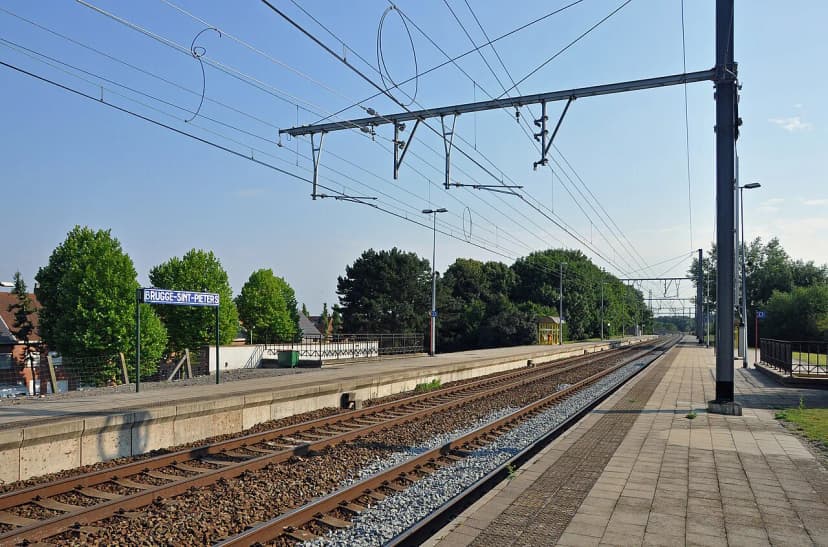
Bruges' historic center is compact and largely car-free, so walking covers everything on this list without needing public transit. From the train station, the center is about a 20–25 minute walk, or a short bus ride from the station's bus hub. Most travelers cover the highlights above in a single day, though two to three days allow a slower pace with room for a paid add-on or two. A structured single-day route works well for a first visit, sequencing these same free stops in order. Bike rental is a paid but low-cost way to cover more ground, since the historic center's flat terrain suits a half-day loop beyond the walking route above. Shoulder-season months such as spring and fall tend to bring thinner crowds and lower accommodation prices than peak summer. That matters even on a free-sightseeing trip, since lodging is usually the largest single cost. Comfortable, broken-in walking shoes matter more than any single attraction on this list, since the entire route above is done on foot.
Three popular add-ons—a Belfry climb, a canal boat tour, and a brewery visit—together cost roughly €30–€40 per person, so even a "free day" adds up quickly. Budgeting for these extras alongside accommodation keeps the trip cost predictable.
Frequently Asked Questions
How many days do you need in Bruges?
Most travelers see the free highlights above in a single day. Two to three days work better at a slower pace, especially with a paid add-on or two mixed in. For a set order to follow, pair this guide with a one-day Bruges itinerary.
Can you see Bruges in one day?
Yes. Doing the full free list above, in the suggested order, fits into roughly five to six hours of walking. Add meal breaks and a paid stop or two, and a single day still works, though it will feel busy rather than relaxed.
What are the top free things to do in Bruges?
The top free things to do in Bruges are wandering Markt and Burg squares, stepping into the Basilica of the Holy Blood and Church of Our Lady, walking the Rozenhoedkaai and Vismarkt canal views, relaxing in Minnewater Park, and watching the St-Anna windmills and lace-making demonstrations along the way.
Is Bruges expensive to visit?
Prices in Bruges can run high, similar to other popular European cities, but the free list above keeps sightseeing itself at zero cost. Budget accommodation and pacing any paid extras with a Musea Brugge Card, priced at €33 for three days, helps control the rest of the trip cost.
Is the Bruges free walking tour actually free?
Not entirely. There is no upfront ticket price, so anyone can join. Guides are paid through tips at the end, so budget a tip if you plan to take one.
Do people in Bruges speak English?
Yes, English is widely spoken alongside Dutch and French, especially around the main sights and in shops and cafes.
What is the best time of day to see the free sights?
Early morning suits Markt and Burg, before tour groups fill the squares. Late afternoon or sunset works best at Rozenhoedkaai, once many day-trippers have left for the day.
Can you do a day trip to Bruges from Brussels?
Yes, Bruges works well as a day trip from Brussels or as a base for exploring farther afield. With extra time beyond the free list here, pair it with Best Day Trips from Bruges: Damme, Ghent, Ypres, and the Belgian Coast to nearby Belgian cities, though transport and any paid stops add to the budget.