

Standard adult admission to the Krakow Barbican is 22 PLN in 2026 (around €5), with a reduced rate of 16 PLN and a family ticket covering up to four people at 44 PLN, and the same ticket covers the City Defence Walls. The fortress opens seasonally: in 2026 it was open from 10 May to 30 October, Tuesday through Sunday, 10:30 a.m. to 6 p.m., and it is closed outside the season. Out of season, the exterior can be seen from Basztowa Street and the Planty, and the Town Hall Tower on the Main Market Square, another Museum of Krakow branch, stays open (Monday 11 a.m.–4 p.m. with free admission, Tuesday–Sunday 10 a.m.–6 p.m.).
This guide covers what your 2026 ticket actually buys, how the Barbican's hours and closures work, how long to budget for a visit that's genuinely short, and how to reach it from the Main Market Square. For the rest of the city's landmarks, see our Krakow attractions guide.
What Is the Krakow Barbican?
The Krakow Barbican (Barbakan) is a circular brick fortification built around 1498 as an outwork defending St. Florian's Gate, the main northern entrance to the medieval city. Polish authorities built it after a string of military setbacks left them wary of an Ottoman attack, and it functioned as a forward checkpoint on the approach to the city walls — as well as on the royal coronation route that entered Kraków through Florian's Gate. A covered passageway originally connected the Barbican directly to the gate, so defenders could move between the two without stepping outside the fortifications.
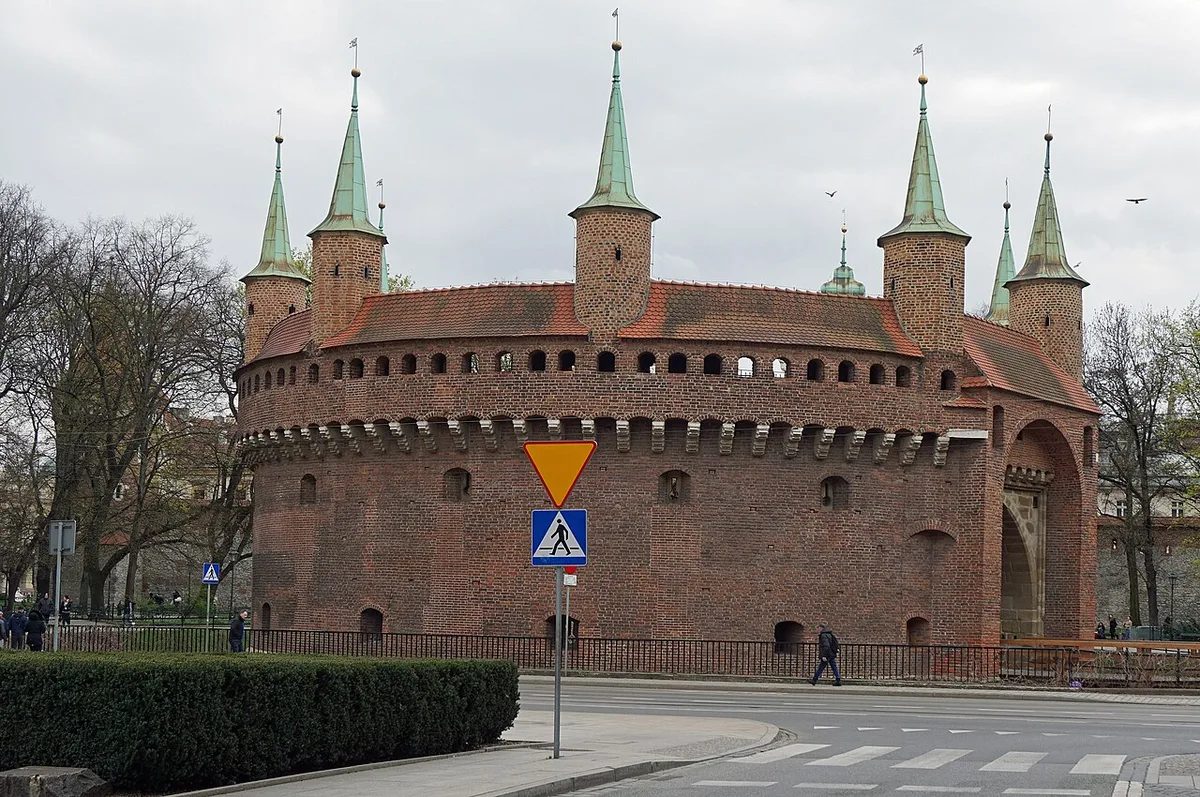
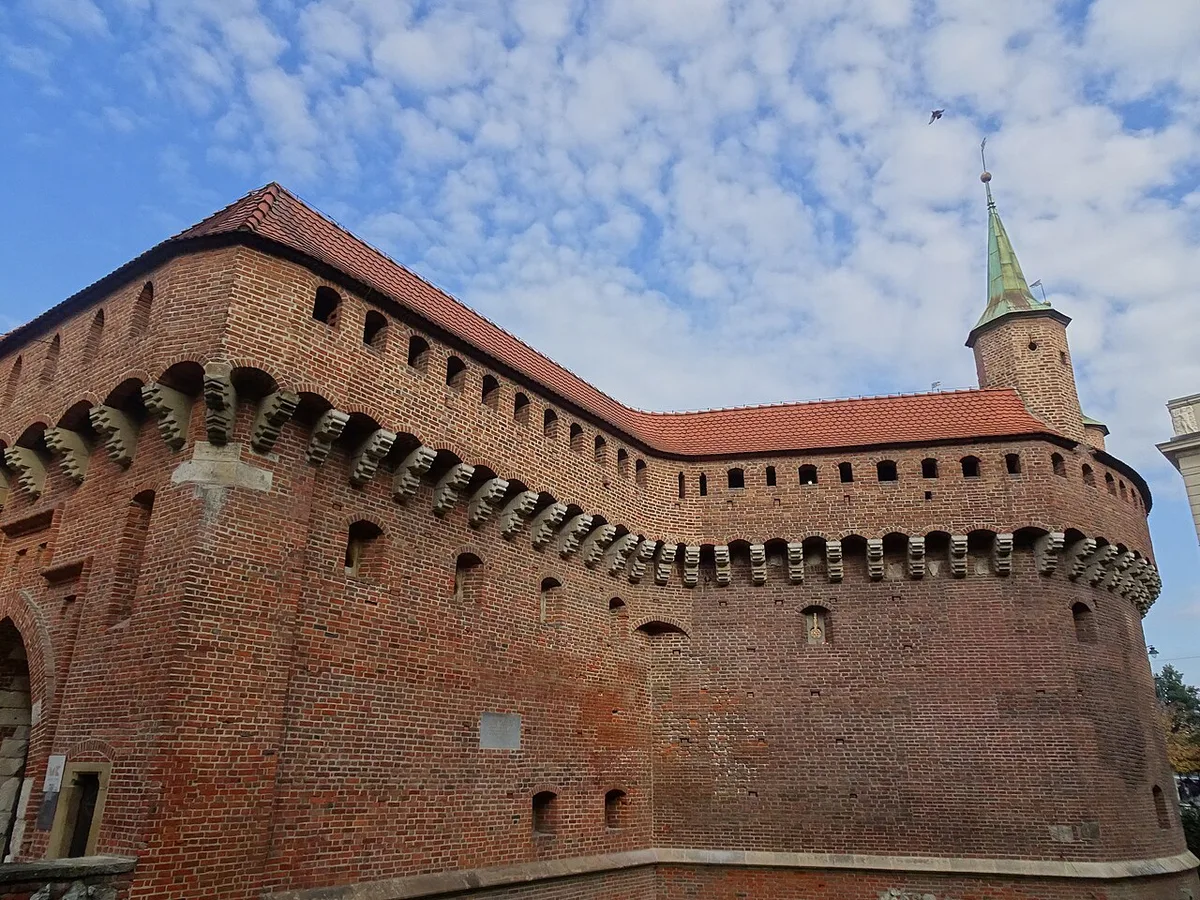
Structurally, it's one of the largest defensive works of its type still standing: an inner courtyard 24.4 meters across, walls up to 3 meters thick at the base tapering to about 0.5 meters near the top, seven turrets, and 130 embrasures for firing on attackers. A moat roughly 26 meters wide and 6 meters deep once surrounded the whole structure. The Barbican held through sieges in 1587, 1655, and 1657, and saw further action against Russian troops in 1792. It came close to demolition in the early 19th century as the city dismantled much of its medieval wall circuit, but preservation efforts in 1817 saved it — one of the only sections of Kraków's fortifications to survive that period intact.
Today the Barbican is a branch of the Museum of Krakow and sits within the Historic Centre of Kraków, which UNESCO inscribed as a World Heritage Site in 1978. It's also listed separately as a Historic Monument of Poland. Inside, a modest exhibition covers the fortress's construction and its role in the city's medieval and early-modern defenses, and the elevated wall walk gives a close-up look at the turrets and embrasures that made the design effective.
Krakow Barbican Tickets & Prices 2026
The Museum of Krakow charges 22 PLN for standard adult admission, 16 PLN reduced and 44 PLN for a family ticket covering up to four people; group visits are 16 PLN per person. One ticket covers both the Barbican and the City Defence Walls, and the second site can be visited within three days of the date on the ticket. There is no free-admission day. New ticket prices apply to visits from 1 March 2027.
A guided group tour of the Barbican, the City Defence Walls and the Celestat costs 280 PLN per group plus each visitor's entrance ticket. That's worth knowing if you also want to walk the remaining stretch of city walls near Florian's Gate. If you're weighing a city-wide pass instead of paying per site, our guide on whether the Krakow Pass is worth it is a useful check before assuming a bundle saves money on a ticket this cheap.
Opening Hours & Best Time to Visit
The Barbican and the City Defence Walls open seasonally. In 2026 the season ran from 10 May to 30 October, Tuesday through Sunday, 10:30 a.m. to 6 p.m., with last entry 30 minutes before closing for individual visitors; both are closed on Mondays and outside the season. Since 17 August 2026 the roof and its seven turrets have been under conservation, with part of the building behind scaffolding until the end of 2027; the whole visitor route stayed open during the 2026 season. Outside the season, the exterior is visible from Basztowa Street and the Planty, and the Town Hall Tower on the Main Market Square, another Museum of Krakow branch, stays open (Monday 11 a.m.–4 p.m. with free admission, Tuesday–Sunday 10 a.m.–6 p.m.).
Weekday mornings shortly after the 10:30 a.m. opening are the quietest window, before Old Town's tour groups build up around the Main Market Square and Florian's Gate. July and August bring the heaviest foot traffic through this part of the Old Town; April–May and September–October offer milder weather and noticeably thinner crowds along the same walking route.
How Long to Plan for Your Visit
Budget 20 to 30 minutes for a typical visit — the Barbican is compact by design, and most of that time goes to walking the elevated wall circuit, reading the exhibition panels, and taking photos from the turrets. Visitors who also want to walk the adjoining stretch of preserved city wall near Florian's Gate should add another 15–20 minutes. It's a natural short stop rather than a half-day anchor, which makes it easy to fit at the start or end of an Old Town walk.
How to Get to the Krakow Barbican
The Barbican sits at ul. Basztowa, just outside St. Florian's Gate at the northern edge of the Planty park that rings Kraków's Old Town. It's a 5–7 minute walk from the Main Market Square — head north up Floriańska Street and the Barbican comes into view right past the gate. From Kraków Główny, the city's main train station, it's roughly a 10-minute walk across the Planty. Several tram lines running along Basztowa stop within a couple of minutes of the entrance if you're coming from further out. From Kraków Balice Airport, take the train or bus into Kraków Główny and walk the rest of the way; there's no dedicated visitor parking at the site itself, and the surrounding Old Town streets are heavily restricted for cars.
Visit Tips: Queues, Booking & Common Mistakes
Because the Barbican is small and inexpensive, walk-up tickets are rarely a problem outside of the busiest summer weekends. The most common mistake is buying separate tickets for the Barbican and the City Defence Walls: one ticket covers both, and the second site can be visited within three days of the date on the ticket.
The structure is entirely open-air along its wall walk, so check the forecast — there's limited shelter if it rains. The route includes stone stairs, so take care going up and down. It's also an easy site to underestimate: because it takes 20–30 minutes rather than a few hours, some visitors skip it in favor of longer sights, but its position directly on the walk between the train station and the Main Market Square makes it a low-cost addition to almost any Old Town itinerary.
Nearby Attractions
The Barbican's location at the northern gateway to the Old Town puts it within easy walking distance of Kraków's core sights. The Main Market Square is a 5–7 minute walk south down Floriańska Street, and St. Mary's Basilica on the square's corner is worth timing around its hourly trumpet call from the tower. For a longer Old Town day, Wawel Castle anchors the southern end of the same walking route, roughly 20–25 minutes further on foot. Our 2-day Krakow itinerary shows how to sequence the Barbican with these and the rest of the Old Town in a single visit.
Frequently Asked Questions
How much are tickets to the Krakow Barbican?
Standard adult admission is 22 PLN (around €5), with a reduced rate of 16 PLN. A family ticket for up to four people is 44 PLN and group tickets are 16 PLN per person. The same ticket covers the City Defence Walls. New prices apply to visits from 1 March 2027.
What are the Krakow Barbican's opening hours?
The Barbican opens seasonally, Tuesday through Sunday, 10:30 a.m. to 6 p.m.; the 2026 season ran from 10 May to 30 October. It is closed on Mondays and outside the season, when the exterior can still be seen from Basztowa Street and the Planty.
Is the Krakow Barbican worth visiting?
Yes, for most visitors it's a worthwhile short stop given how cheap and quick it is — 20 to 30 minutes and a 22 PLN ticket buys a walk along a genuinely rare surviving piece of Kraków's medieval fortifications, with turret and embrasure views that give a clear sense of how the city's defenses worked. It pairs naturally with a walk into the Old Town rather than standing as a destination on its own.
Is the Krakow Barbican free to enter on any day?
No, the Barbican has no free-admission day. Every visitor needs a paid ticket at the standard, reduced, family, or group rate. The Monday free admission at the Town Hall Tower, another Museum of Krakow branch, doesn't apply here.
How do I get to the Krakow Barbican?
The Barbican is at ul. Basztowa, just outside St. Florian's Gate, about a 5–7 minute walk from the Main Market Square along Floriańska Street. It's roughly a 10-minute walk from Kraków Główny train station, and several tram lines along Basztowa stop within a couple of minutes of the entrance.
The Krakow Barbican is one of the easiest additions to make to an Old Town day — cheap, quick, and positioned right on the walking route most visitors already take between the train station and the Main Market Square. It doesn't need the advance planning that Wawel Castle or Schindler's Factory do; a 22 PLN ticket and 20–30 minutes cover it.
Go on a weekday morning if you want the quietest turret views, remember it's closed on Mondays and outside its May–October season, and treat it as a short stop at the start or end of a longer Old Town walk in 2026 rather than a standalone destination.
For the latest official information, see the Museum of Krakow's Barbican page and the Krakow Barbican overview on Wikipedia.


