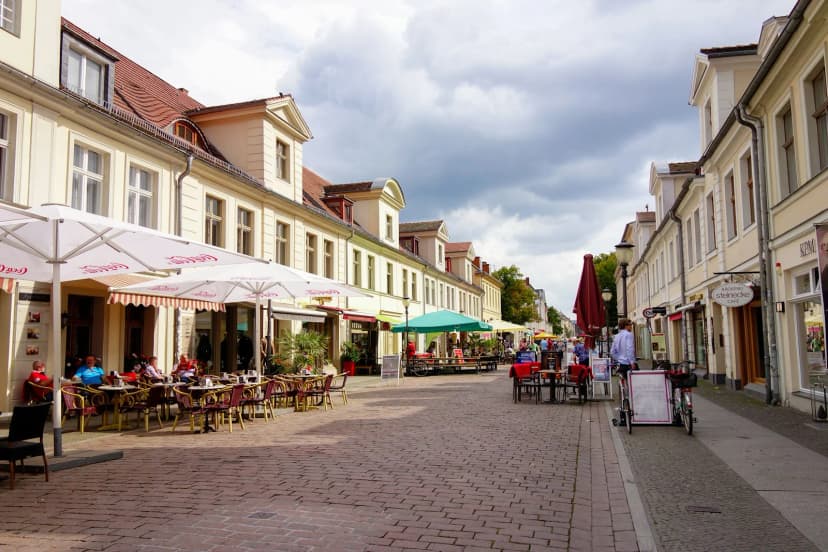
The Filmmuseum Potsdam is not part of the working Studio Babelsberg complex, and that distinction shapes the day. The museum sits in the Marstall on Breite Strasse 1a beside the Brandenburg state parliament in Potsdam's historic centre, while the studio itself lies around five kilometres away and still operates as an active production site. Treat the museum, the studio and the Filmpark as three separate operations with separate access.
A suggested two to three hours covers the permanent exhibition, the foyer display and a look into the cinema at an unhurried pace; that is an editorial estimate rather than an official duration. The museum was founded in 1981 and describes itself as the oldest film museum in Germany, and since 2011 it has operated as an institute of the Filmuniversität Babelsberg KONRAD WOLF. The operator states that the cinema programme runs daily except Monday, while the museum's own opening days should always be checked before you travel.
Before setting out, confirm the day's opening times and current prices on the operator's own contact and prices page, because partner listings can disagree with each other. The cinema programme changes constantly and is not the same thing as exhibition admission, so treat any third-party schedule as provisional until you have checked the museum's own pages.
Why the Filmmuseum Is in the City Centre, Not at the Studio Site
The museum moved into the stables of the Potsdamer Stadtschloss in 1981, opening as a GDR film museum, and since 1990 it has presented the film history of a reunified Germany. Its interiors were modernised in 1993, but the baroque shell survived, which is why the building reads as a palace outbuilding rather than a purpose-built museum. The Marstall address places it a short walk from the Landtag and the old town rather than out at the studio gates.
Studio Babelsberg lies about five kilometres from the museum and remains an active production site rather than a museum piece. That distance is exactly why one visit cannot substitute for the other: the museum interprets the studio's output, while the studio site is where films are still made. The Filmpark Babelsberg and the 4D-Action Cinema next door are separate attractions with their own admission.
If your Potsdam trip already includes the Babelsberg park landscape, keep the museum day separate from the studio day, because the two sit in different parts of the city. A Park Babelsberg guide covers the water-edged park with the Flatowturm viewpoint, which pairs more naturally with a studio-site excursion than with a Marstall morning. Splitting the two halves of the film city across two half-days avoids a lot of backtracking.
The Marstall on Breite Strasse: A Baroque Setting Next to the Landtag
The museum's address is Breite Strasse 1a, Marstall, in Potsdam's historical centre, a site the Berlin WelcomeCard partner listing describes as the royal stables next to the rebuilt city castle that today houses the Brandenburg state parliament. That location is the practical reason to pair the museum with central Potsdam rather than with the studios. The entrance faces the street, and the building's identity becomes clearer once you see the Landtag beside it.
Inside, the museum combines a permanent exhibition, changing exhibitions and a foyer display, with collections and a research department behind the scenes. That mix rewards a slower walk-through than the building's modest size suggests. If you arrive close to closing time you will likely see the permanent exhibition only, so budget your arrival deliberately.
TRAUMFABRIK: Ufa, DEFA and Contemporary Babelsberg
The permanent exhibition, TRAUMFABRIK, traces a century of filmmaking in Babelsberg. It covers Ufa, DEFA and contemporary film and organises the story around the filmmaking process from idea to premiere, using selected studio productions from 1912 to 2010 as examples. That process framing is what distinguishes it from a memorabilia hall: you are following the workflow, not just the famous faces.
The exhibition spans five political periods, presenting a studio that realised the dreams of both creatives and the powerful, from the German Empire through the Nazi era and the GDR to globalisation. The current TRAUMFABRIK is described as the fourth edition of a permanent exhibition on Studio Babelsberg, so it was designed as an evolving interpretation rather than a fixed collection. Expect graphic panels and clips to carry much of the story.
The scale of the material is substantial: the operator describes more than 1,000 photos, about 350 film clips and more than 500 objects in the permanent exhibition. A separate visitBerlin description of the exhibition cites more than 700 props, including costumes, furniture and vehicles such as a car from Around the World in 80 Days. Because those figures come from published descriptions rather than a live inventory, treat specific objects as examples rather than guarantees.
Inside the Seven Theme Rooms: Casting Box, Props and Sound
The exhibition is laid out across seven theme rooms that follow the stages of production: screenplay and casting, costumes and make-up, set design and construction, filming, editing, sound design and cinema presentation. That structure gives you a natural route through the floor and tells you where to linger if you have a specific interest. A scriptwriter will spend longer in the first rooms, while an editor will want time at the cutting table and sound station.
The casting box is the most interactive stop, letting visitors audition for a film or be digitally inserted into well-known scenes, with castings of actors such as Marlene Dietrich, Christoph Waltz and Kate Winslet shown nearby. The props room follows, filled with original objects and film trophies in glass cases, including a cutting table from 1965 that tends to draw attention. In the acoustically shielded sound room you can sing a duet and hear how individual sound sequences change a scene.
Guided tours use the permanent exhibition in different formats and are pitched at varied audiences, from school groups and international students to families and adult-education participants. If you want the process explained rather than read, a guided format is the more efficient route, though tour language and timing need checking with the museum directly. Independent visitors can still follow the seven-room logic without a guide.
The In-House Cinema: Welte Organ and Silent-Film Events
The museum's cinema is a destination in its own right rather than a final exhibit, with velvet seating and historic projectors that give it a distinct character. Its programme includes film series with international guests and silent-film screenings accompanied live on the Welte cinema organ. Because that programme rotates, check the current schedule on the museum's cinema pages before you build an evening around it.
The operator states that the cinema programme runs daily except Monday, while the Berlin WelcomeCard partner listing gives Thursday to Sunday opening hours for the museum. Those two statements are not the same thing, and the safest reading is that the venue and the cinema can follow different rhythms. Confirm both the museum's open days and the specific screening you want on the operator site rather than relying on a third-party summary.
Collections, Schaudepot and the Filmuniversität Connection
Beyond the exhibition halls, the museum maintains its own collections of film and film-related material and a depot display, the Schaudepot, offering a selection of objects from a century of film history in Babelsberg and beyond. The Journal of Film Preservation article summarised by the museum notes that the depot display was planned to open at the end of 2024 with insights into the collection's holdings and working methods. Because such displays can rotate or close for conservation, confirm current access before treating it as a fixed stop.
Membership of FIAF since 2023 places the museum within the international network of film archives, and the FIAF journal published a feature on its permanent exhibition in April 2024. Being an institute of the Filmuniversität Babelsberg KONRAD WOLF means research projects run alongside the public programme, which is why some material appears as scholarly output rather than visitor display. For anyone interested in film heritage as a discipline, that institutional layer is part of the appeal. For wider planning, see Visiting Schloss Babelsberg.
Tickets and the Berlin WelcomeCard Discount
The Berlin WelcomeCard partner listing states a 40 percent discount off a combined ticket for single use covering the permanent and special exhibitions, granted on site for both the Classic card and the Museum Island variant. That is the scope to plan around: one combined ticket, redeemed in person, not an online booking benefit. A separate visitBerlin page has advertised a 29 percent discount on the permanent exhibition and special exhibitions, so treat the partner page as the more specific statement and confirm at the desk.
The museum publishes its own opening times and prices, and that page is where you should check the current admission figure rather than relying on older listings or travel summaries. If you hold a WelcomeCard, the discount is applied at the counter, so there is no need to pre-purchase a museum ticket to secure it. If you do not hold one, the standard ticket is the straightforward option.
Filmmuseum vs Studio Babelsberg and Filmpark: Three Different Experiences
Think of the three sites as one film city split into three products. The Filmmuseum is the interpretive, city-centre option, housed in a baroque stable block and focused on the history of the studios; Studio Babelsberg is an active production site about five kilometres away; Filmpark Babelsberg is a separate attraction aimed at a broader day out. No single ticket covers all three, and assumptions to the contrary are the most common planning error here.
Is the museum worth it if you already plan a studio visit? Yes, if you want the stories, objects and editing and sound displays that a working lot cannot show, and if you value indoor, weather-proof time in the city centre. Studio tours and Filmpark admission are operated separately, so check directly with each operator for current tour schedules and ticket availability rather than assuming they run on your dates.
If silent-film history is your priority, the museum's organ-accompanied screenings are the element with no equivalent at the other two sites. If you want to see where contemporary productions are made, the studio site is the relevant destination, subject to its own visitor arrangements. Deciding which of those two interests matters more will settle the itinerary faster than comparing ticket types.
Getting There and Pacing Your Visit with Central Potsdam
The Marstall address on Breite Strasse puts the museum within walking distance of the Landtag, the rebuilt Stadtschloss and the rest of the historic centre, so it slots into a city-centre day rather than a separate excursion. Arrive by public transport or on foot and plan the rest of the day around the old town rather than around the studio district. Confirm your specific route with local transport information on the day.
For pacing, a suggested two to three hours covers the permanent exhibition, the foyer display and a look into the cinema, with extra time if a screening or temporary show is running. Adding a second indoor museum nearby makes sense in poor weather and keeps the day compact. If you want to extend into the park landscape instead, the Alexandrowka district and its Russian colony lies on the northern side of the centre and works as a half-day walk.
Check the operator's page for the day you intend to visit, since the museum has published a Monday closure while the Berlin WelcomeCard partner listing shows Thursday to Sunday hours. Build a fallback into the plan, whether that is another central Potsdam museum or a walk through the old town. That way a changed opening day costs you an hour rather than the whole outing.
Plan Your Visit
The Filmmuseum Potsdam works best as a city-centre stop: a baroque stable building beside the Landtag, a permanent exhibition that walks you through how Babelsberg films were made, and a cinema with an organ that still accompanies silent film. It answers the history question, while the studio site and Filmpark answer the production-day and family-day questions separately. Treat all three as distinct bookings.
Before travelling, check the museum's own opening times and prices page for the day you plan, confirm any cinema screening separately, and check the Berlin WelcomeCard partner page for the current discount scope. If you want a studio or Filmpark visit too, contact those operators directly, because their schedules and ticket availability are not published on the museum's site. Build the day around the Marstall and let the rest follow.
Frequently Asked Questions
Is the Filmmuseum Potsdam the same place as Studio Babelsberg?
No. The Filmmuseum occupies the Marstall on Breite Strasse 1a in Potsdam's historic centre, next to the Brandenburg Landtag building. Studio Babelsberg is an active production site roughly five kilometres away, and Filmpark Babelsberg is a separate attraction in its own right. The three are separately operated and separately ticketed, so one visit does not include another.
What can you see in the TRAUMFABRIK permanent exhibition?
TRAUMFABRIK traces a century of filmmaking in Babelsberg across Ufa, DEFA and contemporary film, organised around the process from idea to premiere. It spreads across seven theme rooms covering screenplay and casting, costumes and make-up, set design and construction, filming, editing, sound design and cinema presentation. Highlights include an interactive casting box, a props room with original objects and a 1965 cutting table, and a sound room where you can test how audio changes a scene.
Does the Berlin WelcomeCard cover the Filmmuseum Potsdam?
It provides a discount rather than free entry. The Berlin WelcomeCard partner listing states a 40 percent reduction off the combined ticket for single use covering the permanent and special exhibitions, applied on site. The discount is granted at the counter, so there is nothing to pre-book through the card. Check the partner page and the museum's own prices page before your visit, because terms and percentages can change.
Can you watch a film at the museum's cinema?
Yes. The museum runs its own cinema with velvet seating and historic projectors, and the programme includes film series with international guests and silent-film screenings with live accompaniment on the Welte cinema organ. The schedule changes regularly, so check the current listings on the museum's cinema pages before planning an evening around a screening.
How long should you allow for a Filmmuseum Potsdam visit?
A suggested two to three hours covers the permanent exhibition, the foyer display and a look into the cinema at an unhurried pace. This is an editorial estimate, not an official duration. Add more time if a temporary exhibition or a screening is running, and allow extra if you join a guided tour, since tour formats and lengths vary.