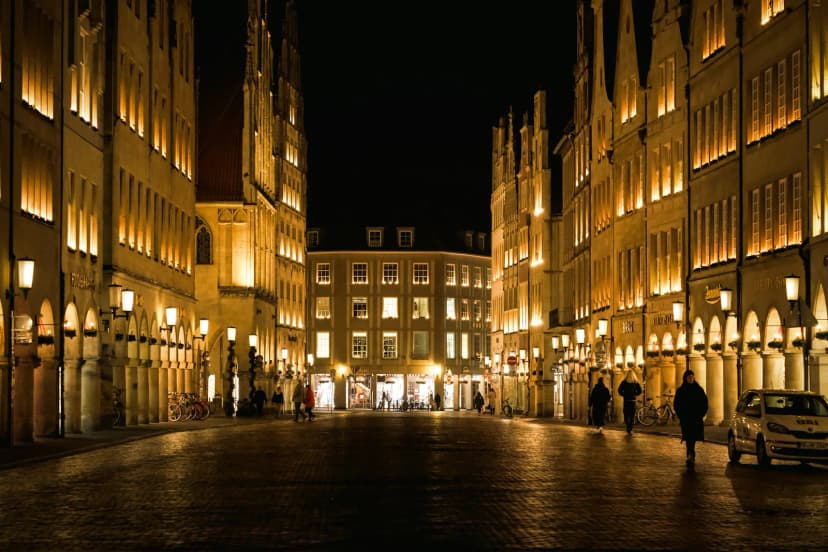
St. Lorenz Church, locally called Lorenzkirche, stands on Lorenzplatz at the southern end of Königstraße, the pedestrian spine of Nuremberg's old town. For planning, the single most useful fact is the parish's regular viewing schedule: Monday to Saturday from 9 to 17:30, Sunday from 13 to 15:30, and visits on holidays ending at 15:30.
That asymmetry between weekday and Sunday hours is the most common planning mistake, because a Sunday morning arrival will find the doors closed. Build the church into a weekday or a Sunday afternoon, and confirm the day against the parish calendar before you travel in case services or concerts shift the pattern. This guide describes what the parish publishes, with a separate audio-guide source for architectural detail, and labels every duration as a suggestion rather than an official figure.
What St. Lorenz Church Is and Where It Sits
The church was founded in 1235, when Nuremberg's southern bank was growing quickly enough to need a large parish church of its own. Its two 81-metre towers sit on the western facade because the altar inside is oriented east, a layout that also lets you read the city's compass from the square outside. The building is Gothic in its bones but was enriched over the centuries, which is why the interior feels less austere than many churches of the same era. Further visitor details appear in Lorenzkirche - Church of St. Lorenz and St. Lorenz square – Audio guide by Travel Communications | tmatic.trav.
The Pegnitz river splits the historic centre into two halves, and St. Lorenz gives its name to the southern side. That matters for sequencing: if you are working through the Nuremberg: Landmark Visitor Guides, treat the church as the anchor of a southern-altstadt walk rather than a standalone stop. Crossing the river on the Museumsbrücke moves you from the Lorenz side into the Sebald side almost immediately, and the Nuremberg Old Town walking route shows how the two halves connect.
Is Entry Free, and Where Ticketing Starts Nearby
The parish presents the church as open for viewing during its posted windows rather than as a ticketed attraction, and it does not publish a specific interior admission price on its own site. Do not plan around a figure you have read elsewhere. Donation boxes and organ sponsorship exist precisely because upkeep and restoration work are expensive, and the parish solicits support for both. Further visitor details appear in St. Lorenz | Lorenzkirche.
This is where Nuremberg gets confusing, because nearby attractions do charge. The city's tourism office publishes St. Sebaldus Church pricing of 5 euros for visitors aged 18 and over, 2.50 euros reduced, and 15 euros for an annual pass, while noting that prayer, devotions, worship services, and pastoral care remain free of charge there. Do not carry that tariff across to St. Lorenz: they are separate institutions with separate policies, so check each one on its own terms.
Regular Opening Hours and How to Use Them
The parish posts viewing times of Monday to Saturday 9 to 17:30 and Sunday 13 to 15:30, with visits on holidays ending at 15:30. In practice this makes St. Lorenz a straightforward weekday stop and a distinctly awkward Sunday one: you get a two-and-a-half-hour afternoon window and nothing before it. If Sunday is your only free day in Nuremberg, put the church after lunch and save the morning for the castle or the Hauptmarkt.
Midday on a weekday is workable but busy, because Königstraße traffic funnels past the doors and the nave briefly becomes a thoroughfare of tour groups. Late morning or the hour before the weekday close usually gives you a quieter nave. Because services, devotions and concerts take place inside the same building, treat the posted window as the default and confirm the day you plan to visit against the parish calendar.
Highlights Inside the Church
The Engelsgruß, carved by Veit Stoss in 1517, is the piece most visitors come for: a wooden composition weighing around 800 kilograms, hung above the chancel with the Virgin and Archangel Gabriel inside a ring of roses. Beneath it hang seven medallions showing scenes from the lives of Mary and Jesus. Because it is suspended rather than set on a plinth, it is meant to be seen from below, so position yourself under the chancel rather than beside it. Further visitor details appear in Lorenzkirche - Church of St. Lorenz and St. Lorenz square – Audio guide by Travel Communications | tmatic.trav.
Between the towers on the west front is a rose window roughly ten metres across, whose tracery forms two overlapping crosses and gives it the popular name Star of St. Lorenz. The audio guide notes that the original glazing dates to 1360, which is why the light through it reads differently from the surrounding windows. The interior also holds a substantial organ and hosts concerts, so on some days you are looking at a working concert venue rather than a silent monument.
The Autumn 2026 Engelsgruß Restoration
The parish ran a restoration and study programme for the Engelsgruß from 29 September to 12 October 2026, during which the sculpture was lowered so it could be cleaned, examined and viewed up close, with open viewing of the lowered figure advertised in a 9 to 17 window on the final day. That period has now passed and the carving is back in its usual high position above the chancel. Further visitor details appear in St. Lorenz | Lorenzkirche.
The practical takeaway is not the dates themselves but the pattern: the parish announces conservation work on its own site, and such projects temporarily change how close you can get. Check the news section of the parish website before you travel if seeing the carving up close is a priority. Otherwise, plan on viewing it from the nave floor, which is how it is normally seen.
Services, Quiet Visiting and the Cool Interior
St. Lorenz is an active Lutheran parish, not a museum. The parish describes a daily rhythm of services, short devotions, concerts and deliberate silence inside what it calls its Gothic dream, and its calendar lists main services on Sundays at 10, short devotions Monday to Thursday at 17, services with communion on Thursdays at 18:30, and peace prayers on Fridays at 17. Personal blessings are offered on Thursdays from 17:30 to 18:30. Because these are parish times rather than tourist opening hours, check the current listing instead of a schedule copied from an older guide, and stay out of the nave while worship is in progress.
One practical detail the parish mentions directly is temperature: the church is described as rather cool in summer and in winter, and visitors are advised to dress for it. That is a real packing decision, especially if you plan to sit through a concert or a devotion in a thin summer shirt. Treat the building as a place of worship first and a sight second, keep voices low and phones away.
How Long to Spend
As an editorial suggestion rather than an official figure, allow around 30 to 45 minutes to see the nave, the Engelsgruß, the rose window and the side chapels without rushing. Add time if you want to sit with the organ, read the explanatory material, or catch a short devotion. If you are simply ticking off the highlights, fifteen minutes is enough to walk the length of the church and look up. The parish does not publish a recommended visit length, so adjust freely.
Because the city's three main churches sit close together within the old town, many visitors plan them as one sequence rather than three separate outings. St. Sebaldus Church sits on the northern bank near the castle, and both are easily paired in a half-day loop that also takes in the Hauptmarkt. Spreading the three across a single morning keeps each one from blurring into the next.
Beyond the Church: Lorenzplatz and the Walk South
Standing on the square with your back to the twin-tower facade, a corner tower house called the Nassauer Haus sits diagonally to the right, an example of a late thirteenth-century residential tower. Its name is connected with King Adolf von Nassau, whose family owned property around the church, though the building itself was never his. It is a five-minute detour at most and worth the look if you like domestic medieval architecture.
The fountain on Lorenzplatz, originally the Fountain of Virtues, keeps a form it has held since the end of the sixteenth century, with figures including Faith, Hope, Love, Courage, Moderation and Patience. From the square, Königstraße runs toward the Pegnitz at the Museumsbrücke, which is the natural continuation if you are following the Nuremberg Old Town walking route toward the river. Treat the square and its tower house as a short add-on, not a separate destination.
Plan Your Visit Around the Parish Hours, Not the Hype
St. Lorenz rewards a simple plan: come on a weekday between morning and late afternoon, come on a Sunday only after lunch, and check the parish calendar the week you travel. Free walking access is the parish's own presentation, and its published viewing windows are more reliable than any aggregator listing. If you want a slower day in the city, the Nuremberg: Itineraries and City Travel Guides collection shows how to sequence the church with the rest of the old town.
Pair the visit with the northern bank so you see how the two halves of the old town differ, and consider adding the Albrecht Dürer House if you are heading toward the castle afterwards. None of these stops requires a fixed schedule, which is exactly why St. Lorenz works well as a flexible anchor rather than a timed appointment.
Frequently Asked Questions
Is St. Lorenz Church free to enter?
Walking in during the posted viewing windows is how the parish presents the church, which is described as open for viewing rather than as a ticketed attraction. The parish website does not publish a specific interior admission price, so treat any firm figure you find elsewhere with caution. If you want certainty before travelling, check the parish website directly, since it is the organisation that would set any policy. Support for upkeep and restoration is welcomed through donations and organ sponsorship.
How long should I spend at St. Lorenz Church?
As an editorial suggestion, plan on roughly 30 to 45 minutes to see the nave, the Engelsgruß, the rose window and the side chapels at a comfortable pace. If you only want the highlights, a fifteen-minute walk-through is realistic. This is a suggestion rather than an official figure, and the parish does not publish a recommended visit length, so adjust it to how much time you want to spend sitting or reading.
What are St. Lorenz Church's opening hours for visitors?
The parish publishes regular viewing times of Monday to Saturday from 9 to 17:30 and Sunday from 13 to 15:30, with visits on holidays ending at 15:30. The Sunday window is the one that catches people out, because there is no morning access that day. Services, devotions and concerts also take place in the building, so confirm your specific date against the parish calendar before travelling.
What happened to the Engelsgruß in autumn 2026?
The parish ran a restoration and examination programme for the Veit Stoss carving between 29 September and 12 October 2026, lowering it from its usual position so it could be cleaned and studied, with the final open viewing of the lowered figure advertised for 9 to 17 on the last day. That window has passed and the sculpture is not currently in its lowered state; any future conservation work would be announced by the parish.