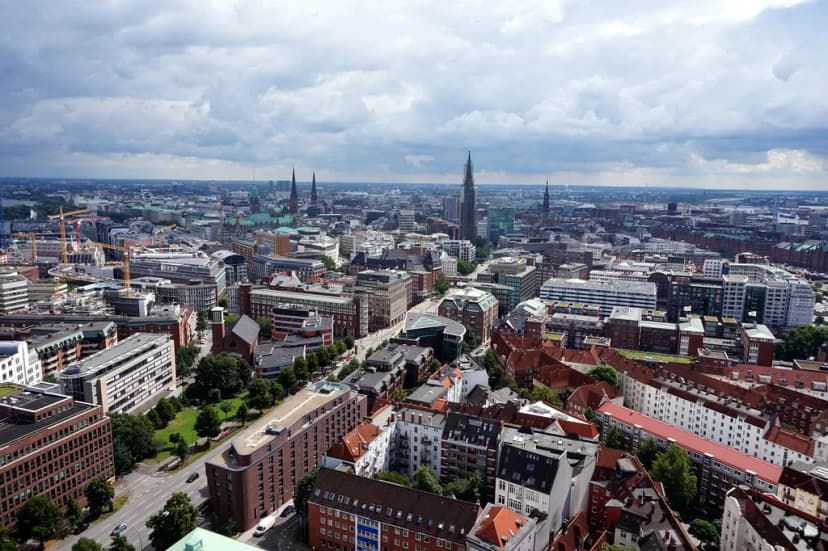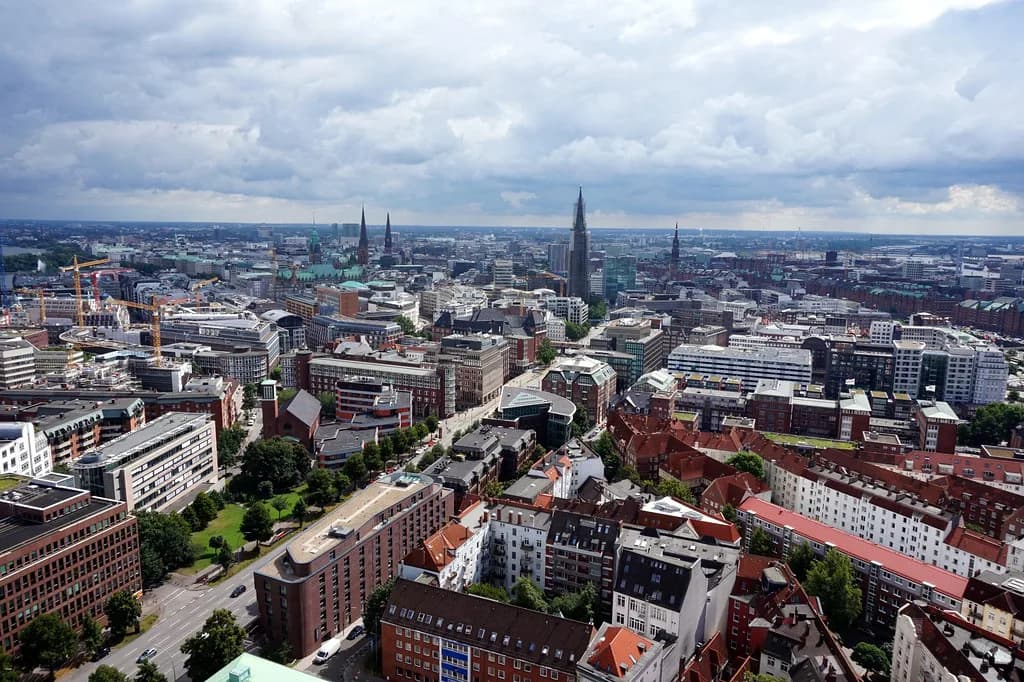
St. Michael's Church, known across Hamburg as the Michel, sits in the city centre with its tower oriented toward the Elbe and the harbour. That position explains why locals treat it as an orientation point: it appears over rooftops and between buildings long before you reach the entrance. The visit itself comes down to one early decision, whether you go up or go down.
Going up means buying a tower ticket and climbing to the viewing platform for the panorama, while going down means a crypt ticket and a ground-level experience that suits anyone who dislikes heights or stairs. Both are ticketed, and neither is a free add-on to walking into the church for a service. The church runs a dedicated ticket section on its own website, which is the page to trust for current scope and any combined offer.
Build your day around a flexible window rather than a fixed minute, because worship, devotions and concerts can occupy the building during visitor hours. A suggested duration of about an hour covers the tower climb, the platform and a look around the church interior at an unhurried pace; the crypt version usually runs shorter. Treat that as a planning suggestion, not an official figure.
Why the Michel Reads as Hamburg's Landmark
The Michel's landmark status comes less from any single measurement than from where it stands: west of the centre, overlooking the Elbe and the harbour, so it works as a visual anchor for the whole waterfront. Travel writing consistently describes the baroque building and its copper-clad tower as the symbol Hamburg residents point to when orienting visitors. That framing is more useful to a visitor than a statistic.
If you want to understand the skyline first and the church second, start with a broader look at Hamburg viewpoints and note what each one shows you, then decide whether the Michel belongs in your shortlist. The tower platform gives you the harbour and the river; other vantage points frame the Alster or the warehouse district instead. Comparing them first prevents a wasted climb on the wrong day.
The building you see today is the third church on the site, which matters when you read older descriptions. A seventeenth-century church here was destroyed by lightning, and its successor burned in a fire during restoration work at the start of the twentieth century; construction of the present church followed. Sources do not agree on the opening year of the current building, so treat any specific date you see in a travel blog with caution.
What the Tower Climb Actually Involves
The climb ends at an open lookout platform rather than an enclosed gallery, which is why the reward is the panorama over Hamburg and its harbour. One widely repeated travel figure puts the climb at 453 steps, and another describes the tower as 132 metres high; the church's own website does not publish either number, so treat them as third-party claims rather than official facts. Pace yourself accordingly and expect a working staircase, not a lift.
Halfway up, the carillon level works as a genuine rest point rather than a piece of trivia. That matters on a warm day or when you are carrying a bag, because it breaks the climb into two manageable stretches. Use it to catch your breath, then continue at a steady rhythm.
Check the operator's Michel tower page before you commit to a time, since tower access runs on its own ticketing and the church also publishes a live tower view feed that tells you what the platform looks like right now. Cloud, haze or rain at platform height can flatten the view even when the street below looks clear. Confirm opening hours and ticket scope on the church site rather than on a blog post that may be years old.
The Crypt as the Alternative for Non-Climbers
The crypt is the right answer for anyone who dislikes heights, cannot manage a long staircase, or is visiting with someone who would rather not split the group. It sits below the church and is reached at ground level, so the whole visit stays on one floor. Travel sources describe it as the natural counterpart to the tower for visitors who skip the climb.
Think of it as a distinct space with its own atmosphere rather than a checklist of famous names. Third-party accounts mention burials of Hamburg families and guild members from the late eighteenth and early nineteenth centuries, including composers; the church's own pages do not confirm named graves, so do not plan the visit around a specific tomb. What you get is the scale and quiet of an underground chamber beneath a working church.
Crypt admission is ticketed alongside the tower rather than free, and the church groups both under its ticket heading, so check what each ticket covers before you buy. If you want both the climb and the crypt, confirm on the operator's page whether a combined option exists for your date. Buying at the visitor centre on the day is a common route, but availability is the church's to state, not ours.
Interior, Organs and Music During Your Visit
Inside, the church is a working congregation with a substantial musical programme, which is the single biggest reason your visit can be interrupted or enriched depending on the day. Travel sources describe several organs distributed around the building, and the church runs concert series, choir activity and organ presentations under its music programme. Check the events calendar before choosing a slot.
One travel source describes a short midday organ performance, but the operator schedules organ events on specific dates rather than confirming a daily fixture, so do not build your day around an assumed noon recital. The church does publish a regular midday devotion with organ music in its listings. If music is the point of your visit, look up the dated programme on the operator's site and pick that day.
Because services, devotions and concerts take priority over sightseeing, treat any visitor window as provisional. If you arrive and find the nave in use, the tower and crypt routes may still be running, and the visitor centre can tell you what is open. That flexibility is worth more than a tightly scripted schedule.
Tickets, Opening Hours and What to Verify
Everything volatile about this visit lives on one page: the church's own opening hours and prices section, which also links to tower and crypt tickets, guided tours and the visitor centre. Blog posts and third-party guides age badly, and a figure that was accurate when written can be wrong by the time you travel. Make the operator page your last check before you leave for the church.
The church also publishes dedicated pages for accessible visiting and for evening openings, which is where to look if you need step-free information, hearing support or a specific after-dark slot. Do not assume a general admission covers guided formats or special evening access; the operator distinguishes these. Where the church has not published a detail, such as a step count or a platform capacity, do not treat a travel blog's number as binding.
Since the church references tickets for both the tower and the crypt, assume paid admission and budget for it without anchoring on any quoted amount. Prices, concessions and any family rates are the operator's to publish and can change by season or event. Verify on the day of booking, not weeks in advance.
Night Views and Seasonal Light
Climbing after dark is one of the most frequently recommended variations of this visit, because the platform looks out over lit streets, the harbour and the river rather than a grey daytime grid. The operator runs evening opening formats under its own schedule, so the practical question is whether an evening slot is running on your date, not whether night is better. Check the church's listing before planning a late finish.
In winter, daylight is scarce enough that a late-afternoon climb can tip from a hazy view into full darkness within the same slot. That is not necessarily a loss, but it changes what you are climbing for, so decide whether you want the city's shape or its lights. If you want both, aim for the shoulder of the day and accept whatever the weather gives you.
If evening views are the goal, pair the climb with the rest of your evening rather than treating it as a standalone trip, and read up on what stays open after dark so you are not stranded with nothing to do. The Michel sits close enough to the centre that the walk back is part of the experience. Build in time for it.
Pairing the Michel With the Rest of a Hamburg Day
The Michel works best as one anchor in a half-day loop rather than a full day on its own. A self-guided route through the old town can take you past the Rathaus and the surrounding streets before or after your tower slot, keeping the walking distances short. Check the route first so you are not doubling back across the centre.
If you want a second indoor stop with a different theme, the emigration museum near the harbour district pairs well with a waterfront walk and gives you a reason to end the day closer to the Elbe. It also works as a wet-weather substitute when the platform is likely to be fogged in. Confirm its own opening arrangements separately.
For a fuller city plan, the broader Hamburg itineraries and city guides are the place to check how the Michel fits with the harbour, the warehouse district and the Alster. One anchor plus two nearby stops is a realistic day; three major sights plus a climb usually is not. Choose the version that matches your energy, not the version that looks best on paper.
Reading Earlier Descriptions of the Michel
Older descriptions of the Michel are worth reading for context but not for planning, because they mix eras freely. The church's own history includes lightning damage and a later fire, and different accounts place the rebuilding and the present building's completion in different years. Use those accounts to understand why the tower dominates the skyline, then use the operator's pages for anything you intend to act on.
Some travel sources give directions by bus line or metro station, and those details change with network revisions; treat them as illustrative and check a current journey planner for the day you travel. The church publishes its own arrival page, which is the better starting point. Confirm the last leg on the ground rather than trusting a printed route.
Plan Your Visit
Decide first whether you are climbing or staying at ground level, because that choice determines your ticket, your timing and how much of the church you see. Then check the operator's pages for opening hours, ticket scope and any event that might occupy the building on your date. Ten minutes of verification prevents a wasted trip across the city.
Leave the platform decision to the day itself: the church's live tower view is a better guide than a forecast, and a flexible slot lets you swap a fogged-in climb for the crypt or the interior without losing the visit. Build in a nearby second stop so the trip still works if the weather turns.
Frequently Asked Questions
How many steps are there to the top of St. Michael's Church tower?
Travel sources commonly cite a figure in the hundreds, but the church's own website does not publish a step count, so treat any specific number you read as a third-party claim rather than an official one. What matters for planning is that the route to the platform is a staircase rather than a lift, so allow time to climb at your own pace and to stop at the carillon level on the way. If the exact figure affects your decision to climb, ask at the visitor centre on arrival.
How long does a visit to St. Michael's Church take?
A suggested duration is around an hour for the tower climb, the viewing platform and a walk through the church interior, with the crypt version usually taking less. That is a planning suggestion rather than an official figure, and it assumes you are not waiting in a queue or stopping for a concert. Add time if a service or musical event is running, since the building takes priority over sightseeing.
Is the tower climb worth it if the weather is bad?
A clear day gives you the harbour and the river; haze, rain or low cloud can flatten the view even when conditions look fine at street level. The church publishes a live view from the tower, which is a more reliable check than a general forecast before you buy a ticket. If the platform looks closed in, the crypt and the interior are the sensible alternatives for that slot.
Can you visit the crypt instead of climbing the tower?
Yes. The crypt is reached at ground level, which makes it the natural option for anyone who dislikes heights or cannot manage a long staircase, and travel sources describe it as the counterpart to the tower climb. It is a separate ticketed area rather than a free add-on, so check what your ticket covers on the church's own pages. Third-party accounts mention historic burials, but the operator does not confirm named graves, so do not plan around a specific tomb.
Do you need a ticket for the tower and crypt?
The church's website references tickets for both the tower and the crypt, so treat admission as paid rather than free. Ticket scope, any combined option and current prices sit on the operator's own pages, and those can change by season or event. Check there before you travel, and buy through the church or its visitor centre rather than relying on a blog post.