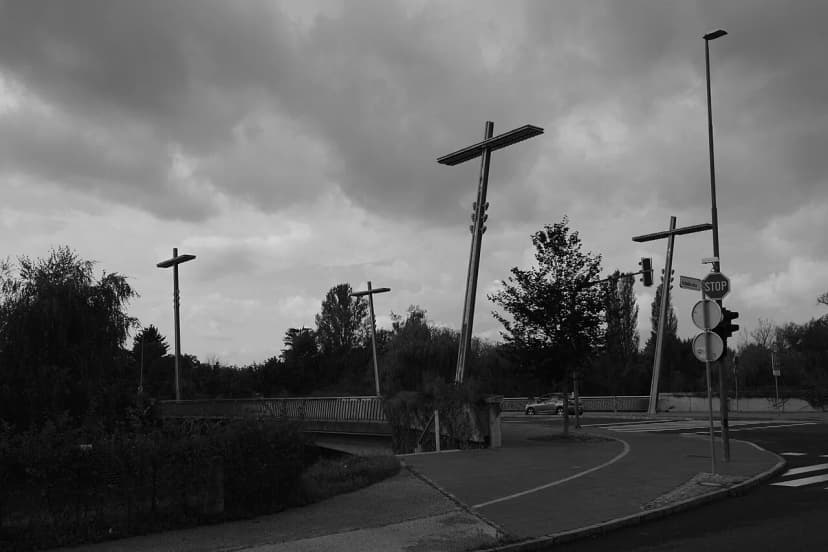

Last updated October 2026: this guide turns Plecnik Ljubljana into a self-guided walk of about 3–4 hours. Most stops are bridges, embankments and facades you can see for free from the street. Interiors, such as the National and University Library and Plečnik House, follow separate access rules, so this route marks which stops are exterior-only.
Why Plecnik Ljubljana works as a walking route
Jože Plečnik reshaped the city between 1921 and 1957. He worked inside an already built-up grid, so he redesigned and upgraded what existed instead of starting fresh. Ljubljana had already received a first modern urban design from Maks Fabiani after the 1895 earthquake. Plečnik layered a second, more personal vision on top of it.
In 2021, his works in Ljubljana were inscribed on the UNESCO World Heritage List as "The works of Jože Plečnik in Ljubljana – Human Centred Urban Design." The listing covers specific sites, not the whole city. Check Visit Ljubljana's Plečnik pages for the current list of stops.
Plečnik's approach is easy to read on foot. He used modest materials such as concrete, recycled stone and wood to create monumental effects. He treated trees as architectural tools, almost like columns. Look for both on every stop below.
Three axes organise the city, and this route follows two of them:
- Water axis: the Ljubljanica embankments, Cobblers' Bridge, Triple Bridge, market and sluice gates.
- Land axis: the cultural avenue from his house in Trnovo to Congress Square and Zvezda Park.
- Third axis: Jakopič Promenade in Tivoli Park up to Ljubljana Castle (covered separately below).
The water axis along the Ljubljanica
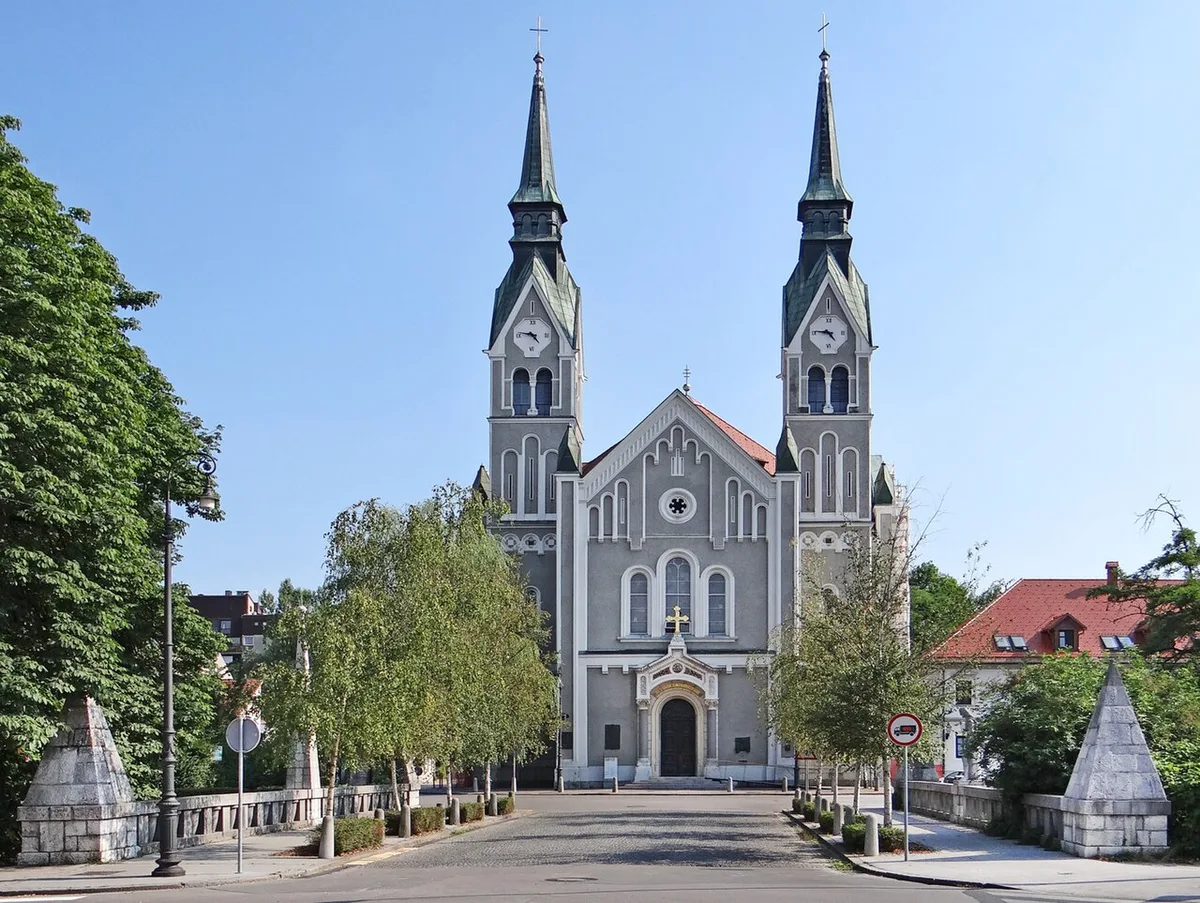
Start at Prešeren Square, where the Triple Bridge (Tromostovje) crosses the river. Plečnik added two pedestrian side bridges to the existing 1842 stone bridge. That is why the crossing feels like a plaza. Allow about one minute to cross and as long as you like to look at the balustrades.
Plečnik's Central Market (1939 and 1942) embodies his modest-materials philosophy; weekday morning visits reveal authentic market trading, while Sundays show only arcades.
Walk along the embankment to the Central Market. Built between 1939 and 1942, its arcades curve gently with the river. They run in a sequence from Tromostovje to the Dragon Bridge. Plečnik wanted the architecture to complement the river instead of competing with it.
The market has two levels. The upper level, lined with arcades, was meant for small shops, artisans and local producers. The lower level opens onto the riverbank and was designed as a fish market. The arcades also give shelter from rain, which makes this a sensible stop on a rainy day in Ljubljana.
At the centre of the market stands a two-storey loggia. Its upper floor was conceived as the start of a new Butchers' Bridge across the Ljubljanica. That bridge was never built to his plan. A modern bridge was added in 2010, leaving his loggia as a path that began and never finished for decades.
Continue to the Cobblers' Bridge (Čevljarski most). Its symbolic pillars are the point, and it has no roof. That keeps the views open along the river. Stand mid-span and look both ways.
The water axis ends at the sluice gates, the Zapornica. Many visitors skip it because it sits past the busy centre. It is a good reward for walking further. It also fits the quieter side of the city described in our guide to lesser-known Ljubljana corners.
The land axis: library, Križanke and Trnovo Bridge
Turn inland for the cultural avenue. The land axis links Plečnik's house in Trnovo with Congress Square and Zvezda Park. It holds some of his best-known work.
The National and University Library (NUK) is the anchor. Look at the facade first: brick and stone, with windows designed to read like open books. Look up before you enter anywhere. Stand across the street in late afternoon to catch the light on the facade.
Interior access is the main trade-off. The famous black marble staircase is inside, and the brief for this guide notes that entry is restricted but possible for a small fee. Rules change, so check NUK's current visitor arrangements before you plan around the interior. Treat the exterior as the guaranteed part of the stop.
Next is Križanke. Plečnik transformed a former monastery into an outdoor theatre and festival venue. You can view the courtyard architecture from the entrance area when it is open. Event days may restrict access, so confirm before you go.
End this section at Trnovo Bridge. Trees grow on it, which makes it unusual among bridges and a clear example of Plečnik's green tool. The Trnovski pristan embankment, where the water axis begins, is nearby. That gives you a neat link back to the river.
Plečnik House in Trnovo: an optional separate visit
Plečnik's own house and studio are in Trnovo. The Museum and Galleries of Ljubljana (MGML) manages it, and the MGML site is the place to check current visiting details. Treat the house as a separate visit from the street walk. You see exteriors for free. You see the interior only through the museum's arrangements.
Per the brief, the house is accessible only on guided tours. Groups are small. Tours often run on the hour, but verify the current frequency with MGML before relying on it. Booking ahead is the safer plan, especially in peak months.
Because tours are timed, build the walk around your slot. Many visitors walk the loop in the order below and finish in Trnovo. If you book a morning tour, reverse the route and walk toward the centre afterwards.
Žale Cemetery: the outlier worth a detour
Žale, the Garden of All Saints, sits outside the centre. It is a quieter and more sombre piece of Plečnik's work. The brief describes it as an expression of his respect for the people of Ljubljana, with chapels for different styles and faiths.
Žale requires 30 minutes walk from the centre; this distance embodies Plečnik's design philosophy—isolating a solemn space expressing respect for community and spiritual diversity.
Plan it as a dedicated trip, not a quick add-on:
- Walk from the centre: about 30 minutes.
- Public transport: a short LPP bus ride. Check current routes and stops before you go.
- Time budget: allow about 1.5 hours for the whole detour.
The Plecnik loop: a suggested self-guided route
The loop below covers the core of Plecnik Ljubljana in about 3–4 hours with stops. It begins at Prešeren Square and ends in Trnovo. Add Žale only if you have a separate half-day.
- Prešeren Square and Triple Bridge: cross once, then look back from the embankment.
- Central Market arcades: walk the upper level and look down to the river level.
- Sluice Gate (Zapornica): the end of the water axis.
- Cobblers' Bridge: stop mid-span for the open views.
- National and University Library: facade first, interior only if access is open.
- Križanke: the former monastery turned theatre.
- Trnovo Bridge: note the trees growing on it.
- Plečnik House: join a pre-booked guided tour, or view the exterior.
Practical logistics: costs, tickets and timing
Most Plečnik sites are exterior viewing, so the walk itself costs nothing. Two interiors carry fees: the NUK interior and Plečnik House tours. The sources supplied for this guide do not give current prices, so check the NUK visitor page and MGML's site for the 2026 fee before you go. Expect the house tour to cost more than a quick library look because it is a guided slot with a small group.
Timing matters more than money. Go early for the Central Market, when stalls are active. The brief notes that the market is closed or very quiet on Sundays, so a Sunday walk will show you the arcades but not the trade. Save the land axis for late afternoon, when light hits the NUK facade.
This route is mostly flat and walkable. Wear shoes for cobbles and bring a rain layer. If you want a green finish, continue to the Jakopič Promenade, which our Tivoli Park walk covers in detail.
Mistakes to avoid in Plečnik's Ljubljana
A few small errors cost visitors the most. Avoid them and the walk feels complete.
- Skipping the Sluice Gate. It is the most underrated end point of the water axis.
- Forgetting to book Plečnik House. Small groups fill up and walk-ups may find no slot.
- Not looking up at the NUK windows, which were designed to look like open books.
- Treating Žale as a quick stop. It needs the full 1.5 hours.
- Assuming the NUK interior is open. Confirm the current access arrangements first.
The Roman Walls at Mirje: Plečnik’s Green Monument
For a quieter Plečnik stop, walk to the Roman Walls at Mirje, southwest of the centre. These are remains of Emona, the Roman settlement that preceded Ljubljana. Plečnik redesigned the preserved section in 1929 rather than reconstructing it as an archaeological replica.
He framed the old masonry with new brickwork, stone details and pyramid-like entrance elements. The treatment makes the ruins feel like part of a living neighbourhood instead of a fenced-off monument. Trees planted along the wall are central to the design. They act as vertical architectural elements and soften the heavy masonry.
- Location: Mirje Street, near the Trnovo and NUK area.
- Time needed: allow 15–20 minutes as part of the land-axis walk.
- Best approach: visit on foot between NUK and Plečnik House.
Look for the contrast between the irregular Roman remains and Plečnik’s deliberately ordered additions. It is one of the clearest examples of his habit of combining history, modest materials and greenery.
Frequently Asked Questions
How long does a Plečnik walk in Ljubljana take?
Plan about 3–4 hours for the core loop with stops. That runs from Prešeren Square to Plečnik House in Trnovo. Add roughly 1.5 hours if you want to include Žale.
Is the Triple Bridge worth a stop?
Yes. Crossing takes about a minute, but it anchors the whole route. Plečnik added two pedestrian side bridges to the 1842 stone bridge.
Can I go inside the National and University Library?
Interior access is restricted but has been possible for a small fee. Check NUK's current visitor arrangements before you go. Exterior viewing is always available from the street.
Do I need to book Plečnik House?
Yes, booking ahead is wise. The house is visited by guided tour only, in small groups. Confirm the current schedule on the MGML website.
How do I get to Žale Cemetery?
You can walk from the centre in about 30 minutes. A short LPP bus ride is the other option. Check current routes before you go.
Which Plečnik sites are UNESCO listed?
His works in Ljubljana were inscribed in 2021 under the title "Human Centred Urban Design." The listing covers specific sites, not the whole city. Verify the exact list on the Visit Ljubljana page.