Last updated August 2026. Grótta Lighthouse sits at the tip of the Seltjarnarnes peninsula, about a 20-minute drive or a short bus ride from central Reykjavík. Open sea views and minimal artificial light have made it a popular choice near the capital for watching the northern lights. This guide to Grótta Lighthouse and the northern lights in Reykjavík covers access, timing, the causeway tide, and how the site compares to Perlan, the Sun Voyager, and Reynisvatn.
Is Grótta Lighthouse Worth It for the Northern Lights in Reykjavík?
Grótta Lighthouse works well for the northern lights when three quick checks line up. You need a clear sky, an active aurora forecast, and a low enough tide to cross the causeway safely. Its position at the western edge of the Seltjarnarnes peninsula keeps artificial light behind you and opens a wide view over Faxaflói Bay toward the horizon. Countryside spots hours from the capital still offer darker skies overall. Among places reachable from central Reykjavík in under 30 minutes, though, this stretch of coastline consistently ranks among the better options for aurora hunters without a rental car.
Why Grótta Works for Aurora Viewing
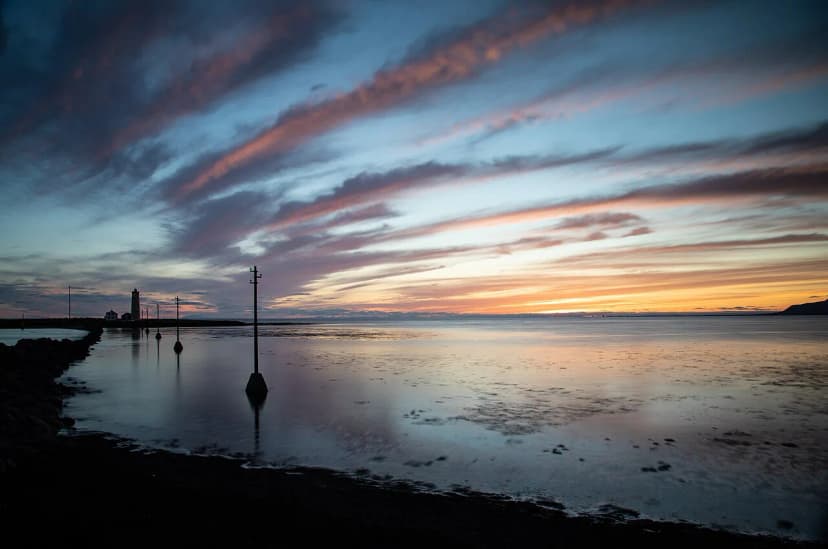
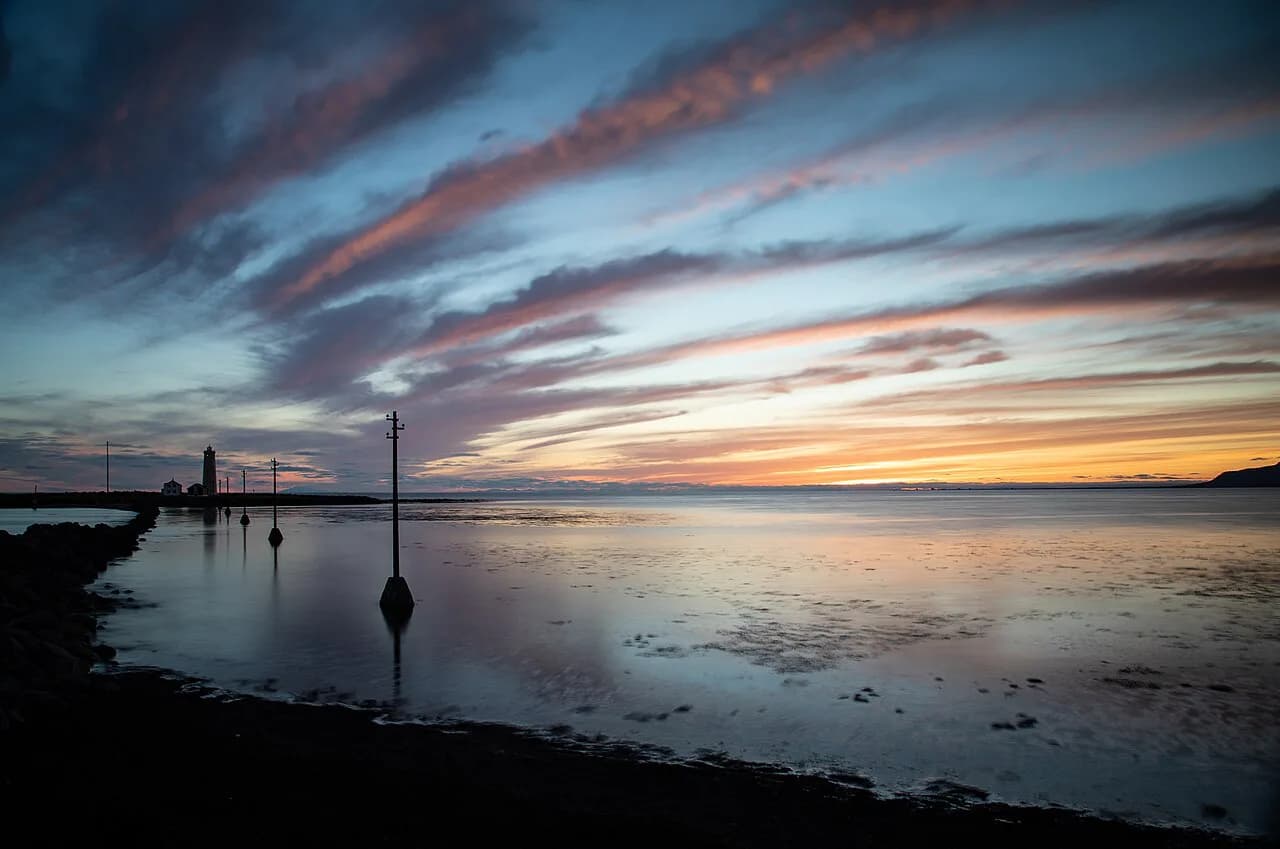
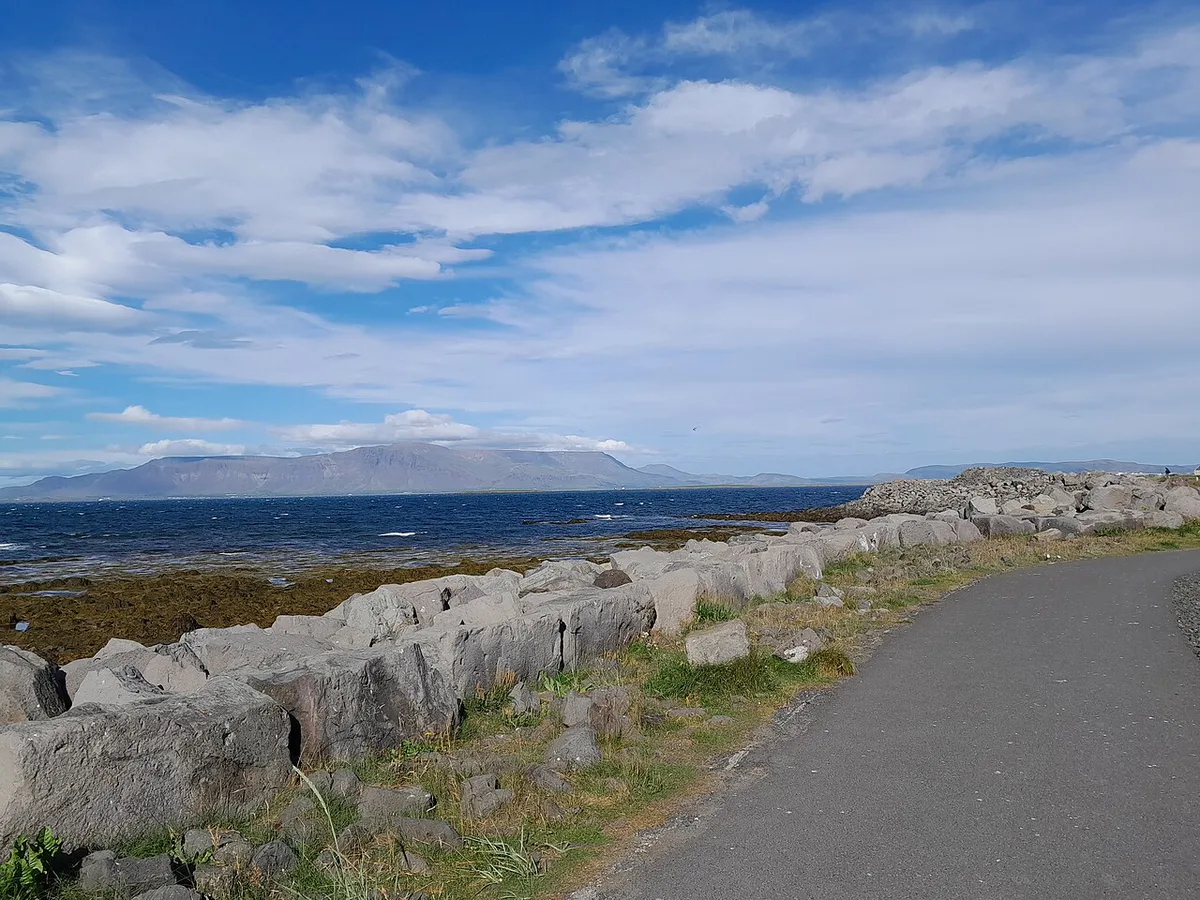
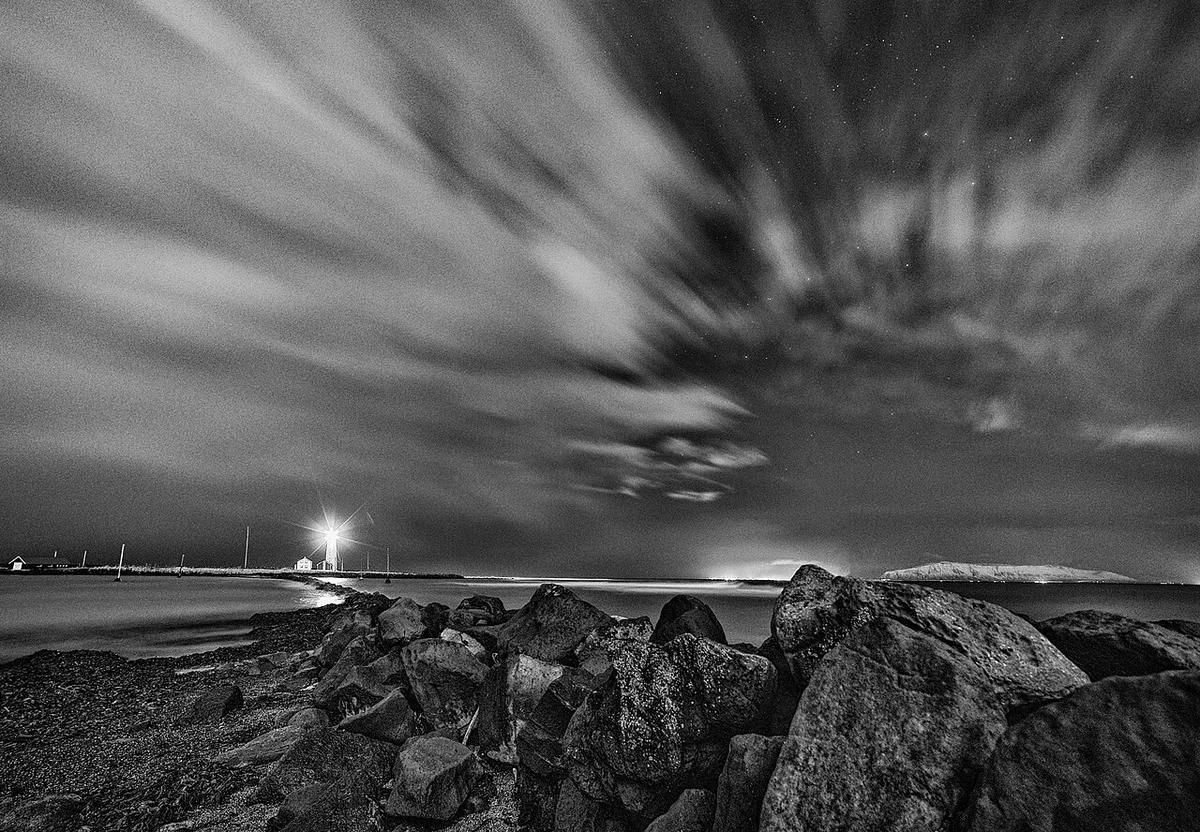
Grótta sits at the westernmost tip of the Seltjarnarnes peninsula, with open water on three sides and Faxaflói Bay stretching toward the horizon. Central Reykjavík runs at roughly Bortle class 7 to 8 on the international dark-sky scale, similar to typical inner-city glow elsewhere. Moving out to the edge of the peninsula strips away most of that ambient light without requiring a drive into the countryside. On a clear night, you can often pick out Mount Esja's silhouette across the bay, adding a dark, layered backdrop to any aurora display. This makes the lighthouse one of several quieter Reykjavík viewpoints locals suggest once the obvious downtown spots feel too bright.
How to Get to Grótta Lighthouse
Reaching Grótta doesn't require a tour booking; a car, a public bus, or your own feet all work. Strætó route 11 serves Seltjarnarnes, though schedules shift periodically, so confirm the current timetable before relying on it for a late-night trip. Build in extra time on aurora nights either way, since arriving before your eyes fully adjust to the dark is worth the buffer.
- By car: about a 20-minute drive from downtown Reykjavík out to the Seltjarnarnes peninsula.
- By bus: take Strætó route 11 toward Seltjarnarnes, get off near the Lindarbraut and Hofgarðar stop, then walk roughly half a mile, about 15 minutes, to the lighthouse.
- On foot: from parts of central Reykjavík, plan on a 20 to 30 minute walk out along the coast.
Best Time to Visit: Aurora Season and the Causeway Tide
Aurora season in Iceland runs roughly from late August through early April, when nights are dark enough for a real chance at seeing the lights. Many aurora hunters treat March and September as the strongest stretch, since geomagnetic activity around the equinoxes tends to run higher than in the depths of midwinter. Outside that window, the sky simply doesn't get dark enough, regardless of how active the forecast looks. Timing at Grótta also has to account for the tide. The causeway out to the lighthouse island floods at high water and is only safely walkable when the tide is low. Visit Reykjavík's own listing notes the causeway crossing depends on tide conditions, so pair a tide table with your travel plans before settling on a specific night.
Reading the Forecast Before You Go
Two separate forecasts matter for a Grótta visit, and treating them as one checklist is the easiest way to avoid a wasted trip. The Icelandic Meteorological Office publishes an aurora forecast that combines a Kp index reading, on a 0 to 9 scale, with a cloud cover map for the same night. A high Kp number means little if thick cloud sits over Seltjarnarnes. A clear sky means just as little if the Kp reading is flat. Run through all four checks below before leaving your accommodation, not just the one figure that happens to look promising.
- Tide: confirm low tide timing for the evening, and plan the causeway walk around it rather than the reverse.
- Cloud cover: check the forecast map for clear skies specifically over the western side of the peninsula.
- Kp index: readings from about 2 upward are worth watching from Grótta's dark position, while Kp 4 and above should show even with some residual light.
- Moon phase: a new moon or thin crescent gives a faint aurora its best chance of standing out against the sky.
Grótta vs. Other Reykjavík Aurora Spots
Grótta is one of several places near Reykjavík where locals and visitors go looking for the aurora, and each option trades off distance, cost, and darkness differently. For the darkest sky within a 30-minute radius of downtown, Grótta and Reynisvatn are the two real contenders, while Perlan and the Sun Voyager win on convenience and backup options instead.
A 20-minute drive puts Reykjavík's light pollution at your back, making Grótta significantly darker than downtown or harborside viewing spots.
| Spot | Distance from city center | Approx. cost | Light-pollution edge | Best for |
|---|---|---|---|---|
| Grótta Lighthouse | ~20 min drive, or bus 11 plus a 15-min, half-mile walk | Free, open access | Best of the four - open peninsula, sea on three sides | Visitors without a car who want the darkest sky reachable on transit |
| Perlan (Öskjuhlíð) | In the city, on a hill about 200 ft high | Paid admission for the observation deck and museum | Some elevation helps, but still inside the city's light dome | Travelers who want an indoor backup if the sky doesn't perform |
| Sun Voyager (Sólfar) | Downtown harborfront, walkable from most central hotels | Free, public sculpture | Weakest of the four - full city-center glow | Photographers who want a floodlit landmark as foreground |
| Reynisvatn | Short drive to the Grafarholt area | Free, public lake | Darker than downtown, not as dark as Grótta | Drivers wanting a quiet spot away from tour groups |
What to Expect On-Site
At low tide, a short causeway connects the mainland to the small island holding the lighthouse, and you can walk out for a close view of the tower and the surrounding tidal flats. Visit Reykjavík's own listing dates the current tower to 1897, with a reconstruction recorded in 1947, and describes the beacon as still operational, guiding ships across Faxaflói Bay today. Treat those build years as a general history rather than a precise fact sheet until confirmed locally. The wider peninsula is a protected nature reserve, home to nesting Arctic terns, eiders, and various gulls, along with coastal meadows and rocky shoreline.
For photos, treat the white lighthouse tower the way photographers treat the Sun Voyager downtown: as a solid foreground shape that gives the aurora scale and context against the sky. A low angle from the tidal flats, with the tower off to one side, usually works better than shooting it dead-center. Bring a tripod if you have one, since a few seconds of exposure pick up detail a phone camera misses in the dark.
Waiting for the aurora to show can mean standing in the wind for an hour or more. The small geothermal Kvika foot bath near the lighthouse is worth using as a warm-up stop between forecast checks, not saved for the end of the visit. A proper soak works better than a foot bath for some travelers, and Reykjavík's neighborhood swimming pools stay open into the evening as a warm-up stop on the way out to Grótta.
Costs and Access Notes
As of 2026, there's no admission fee to walk out to Grótta; the peninsula and causeway are open public coastline, not a ticketed attraction. Some listings, including Visit Reykjavík's site, show daytime hours of 8:00 am to 4:00 pm for on-site services. Those hours read like office or amenity hours rather than a nightly lockout, since aurora viewing only happens after dark and the reserve has no gate that closes the causeway at night. Still, confirm current signage on arrival, since access details can change without much notice. Separately, Grótta closes to protect nesting birds during breeding season, from May 1 to July 15 each year. That window sits entirely outside aurora season, which runs roughly from late August to early April, so the two restrictions never actually overlap.
Strætó route 11 provides the specific bus service to Grótta, making dark-sky aurora viewing accessible to visitors without rental cars.
Where to Stay and What to Pair It With
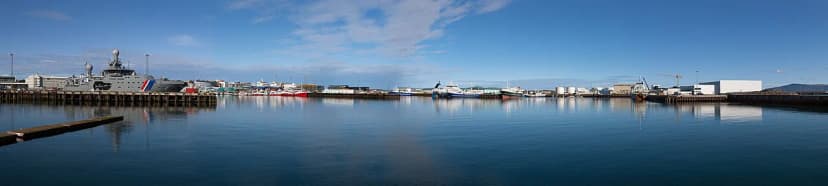
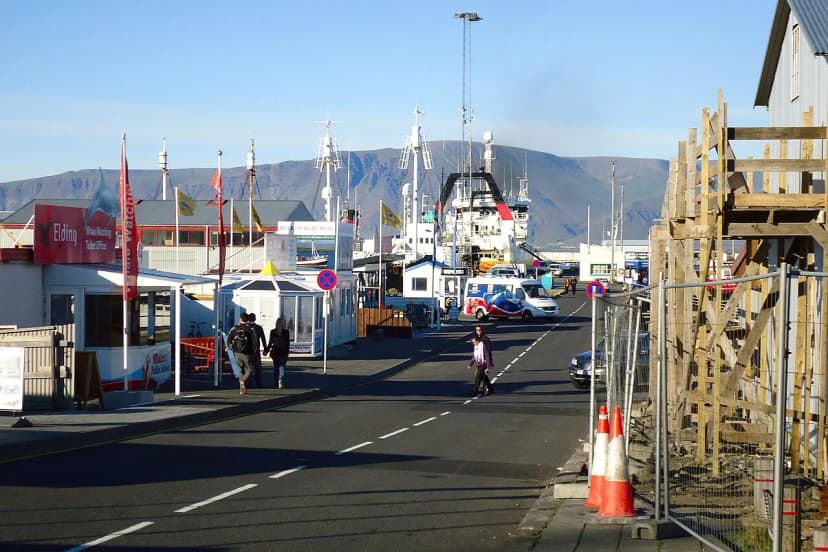
Grótta pairs naturally with a Reykjavík harbor-district stop, since the walk or drive out passes close to Grandi. Grandi's old fish-processing warehouses now hold small workshops, seafood counters, and the Omnom Chocolate factory store, worth a visit before or after an aurora attempt. This neighborhood gets fuller coverage in the guide to Grandi Harbour's quieter corners. If clouds roll in and a warmer wait sounds better than the coastline, central Reykjavík's small cafes and cocktail bars make a reasonable backup while you watch the Kp index and cloud map. For a fuller day trip around the same evening, consider adding Viðey Island earlier in the day, since both spots reward getting away from the densest part of the city.
Mistakes to Avoid at Grótta
Most problems at Grótta are avoidable with a bit of planning, and the same few mistakes come up repeatedly.
- Misjudging the tide and getting stuck on the causeway as the water rises; check a tide table before walking out, not after.
- Underestimating wind exposure; the peninsula has no windbreak, so wind chill is often the real limit, not the air temperature alone.
- Confusing the May 1 to July 15 breeding-season closure with a nightly access restriction; the two have no overlap with aurora season.
- Skipping the forecast check and just showing up; a clear night with a quiet Kp reading can still be a bust if you arrive at high tide.
- Relying only on a phone camera in the dark; a few seconds of exposure on a proper camera often captures color a phone shows as nothing.
Frequently Asked Questions
Is Grótta Lighthouse a good spot to see the northern lights?
In our editorial assessment, yes, it's one of the more reliable options close to Reykjavík, mainly because of its position at the edge of the Seltjarnarnes peninsula. It won't beat a countryside location for total darkness, but for a spot reachable without a car in well under 30 minutes, it holds up well.
How do you get to Grótta Lighthouse from central Reykjavík?
By car, plan on roughly a 20-minute drive out to the Seltjarnarnes peninsula. Without a car, Strætó route 11 covers the area. Get off near the Lindarbraut and Hofgarðar stop and walk about half a mile, roughly 15 minutes, to the lighthouse. Some travelers also walk the whole way from parts of central Reykjavík in 20 to 30 minutes along the coast.
Does the tide affect access to Grótta Lighthouse?
Yes. The causeway out to the lighthouse island is only safely walkable at low tide, and it floods as the water comes back in. Check a tide table before heading out, and treat a rising tide as a hard stop rather than something to push past.
What is the best time of year to see the northern lights near Reykjavík?
Aurora season runs roughly from late August through early April, when nights are dark enough for viewing. Many aurora hunters treat March and September as the strongest window, since equinox-season geomagnetic activity tends to run higher than midwinter. Outside that season, the sky doesn't get dark enough to see the lights at all.
Is Grótta Lighthouse free to visit?
Yes. The peninsula and causeway are open public coastline with no admission fee. The only real cost is getting there, whether that means bus fare, a taxi, or fuel for a rental car.
How does Grótta compare to Perlan for aurora viewing?
Grótta generally offers darker skies, since it sits at the edge of the peninsula away from downtown light. Perlan sits closer to the city center on Öskjuhlíð hill and pairs its view with a paid indoor backup show if the sky itself doesn't perform. Choose Grótta for the better real shot at seeing the aurora, and Perlan for a guaranteed show plus a chance at the real thing.