
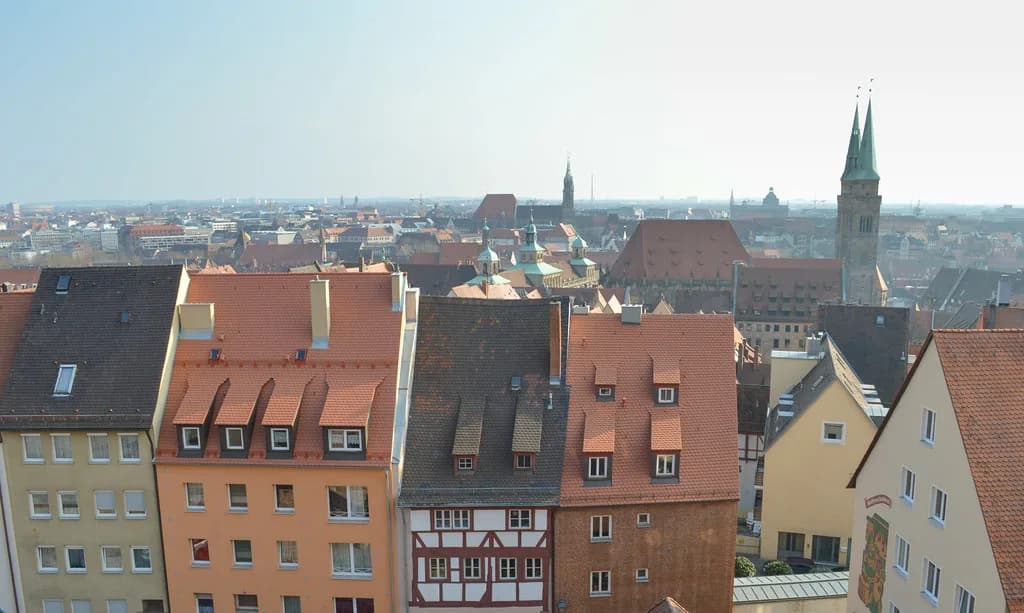
Nuremberg's museum landscape divides into two very different halves. The old town holds large cultural-history collections and compact house museums within a short walk of each other, while the remembrance sites tied to the Nazi Party Rally Grounds sit outside the compact centre and deserve their own half day. One concrete starting detail: the Documentation Centre occupies the north wing of the unfinished Congress Hall on the former rally grounds and its permanent exhibition "Fascination and Terror" covers 1,300 square metres, with the exhibition continuing outside on large panels along the grounds. As Germany's national tourist board frames it, Nuremberg's historical mile runs from the Imperial Castle through ornately decorated churches and fountains, while the Documentation Centre and the Memorium stand as deliberate reminders of the darker years of the city's history. Knowing which group you are choosing on a given morning prevents the classic mistake of racing between unrelated collections. If you want the wider picture of what to see beyond museums, start with this overview of Nuremberg.
A practical starting point is scale. The Germanisches Nationalmuseum has advanced to one of the largest museums of cultural history in the German-speaking world since its founding in 1852, and its highlights include works by Albrecht Dürer, Veit Stoss and Rembrandt, the earliest surviving terrestrial globe, the first pocket watch in the world and the largest collection of historical musical instruments in Europe. A suggested planning figure of three to five hours is realistic if you want more than the highlights, and many visitors give it a full afternoon; treat that as a personal budget rather than an official touring time. For a focused route through that single collection, the guide to visiting the Germanisches Nationalmuseum in Nuremberg breaks the building down.
What Each Museum Actually Covers
The Germanisches Nationalmuseum is the deep end of the pool. It has advanced to one of the largest museums of cultural history in the German-speaking world since its founding in 1852, and a visit is almost obligatory for any trip to Nuremberg. Its highlights include works by Dürer, Veit Stoss and Rembrandt, the earliest surviving terrestrial globe, the first pocket watch in the world and the largest collection of historical musical instruments in Europe. That breadth is exactly why a short visit feels rushed and why skipping it entirely feels like missing the city's main cultural argument.
The remembrance axis is a separate intellectual exercise. At the Nuremberg Palace of Justice, the Memorium Nuremberg Trials occupies the criminal court around Courtroom 600, where on 20 November 1945 the trial against the main war criminals began, with 21 leading representatives of the Nazi regime made to answer for crimes against peace and humanity. Its permanent exhibition opened at the original site to explain the background, proceedings and consequences, and historic sound and film footage conveys a vivid impression of the trials. Out at the former rally grounds, the Documentation Centre occupies the north wing of the unfinished Congress Hall, with a permanent exhibition and outdoor panels providing supplementary information on the history of each venue along the grounds. The Congress Hall was designed by the National Socialists to accommodate 50,000 people, per the Burgenstrasse museum listings.
Between those poles sit the smaller collections that define a Nuremberg day. Albrecht Dürer's House presents the living and working quarters of the Renaissance artist in a restored house, with an audioguide in which Agnes Dürer, his wife, takes you through the master's house, and copies of the paintings rather than the originals. The Nuremberg Toy Museum focuses on the city's centuries-old toy trade, with wooden toys on the ground floor, dolls and exquisite doll houses above, and the worldwide most important collection of Lehmann tin toys. The City Museum at Fembo's House covers urban history inside a late Renaissance merchant's home built between 1591 and 1596, and the New Museum is the state museum for art and design whose curved glass facade rises over the medieval city walls.
Suggested Time Per Museum
Budgets are the most useful planning tool here, provided you treat them as suggestions rather than promises. The Germanisches Nationalmuseum comfortably absorbs half a day, and any honest itinerary should give it three hours at minimum. The Memorium Nuremberg Trials is a smaller footprint but an emotionally heavy one, and the exhibition can easily take about two to three hours to explore because there is a lot to take in. The Documentation Centre, with its vast outdoor site and the walk across the grounds, needs a half day once you add the exhibition.
Compact sites are where you save hours. Dürer's House, the Toy Museum and the City Museum can each be handled in roughly an hour, and the Henkerhaus, the former apartment of Nuremberg's executioner directly above the river, is smaller still, presenting medieval legal and criminal history through the diary of the city's most famous executioner, Franz Schmidt. Two of these small museums plus a coffee break is a satisfying morning. Do not stack two half-day collections on the same date, because the second one always loses.
The underground experiences have their own rhythm. The rock-cut cellars beneath the old town were carved from the red sandstone as early as the fourteenth century, primarily for the fermentation and storage of beer, and later converted into air raid shelters and art bunkers, with a small part of the branched system today used again for maturing and storing speciality beers. The historic art bunker under the castle safeguarded works by Veit Stoss and Albrecht Dürer during the war, and a large part of its ventilation, heating and drainage installations can still be visited. Both are guided or ticketed formats rather than walk-in galleries, and guided tours take place regularly, so the visit lasts as long as the tour does.
Best Museum for Each Type of Visitor
Families and train enthusiasts should head for the DB Railway Museum, whose heart is an exhibition landscape on the history of the railway in Germany, and for the Toy Museum, which devotes its ground floor to wooden toys and holds the worldwide most important collection of Lehmann tin toys. The Toy Museum also runs a supervised children's area where younger visitors can play, and offers multilingual audioguides with special tours for children. The city tourism office lists both the DB Railway Museum and the Toy Museum among the museums designated under the 'Travels for All' scheme, and the same overview presents the New Museum as a state museum for art and design, yet that access scheme is separate from the card's own free-entry list, so check the current visitor information at source.
Art and design visitors can pair the Germanisches Nationalmuseum with the New Museum, the state museum for art and design whose curved glass facade rises over the medieval city wall. The city tourism office presents the New Museum as a state museum for art and design, which makes it a deliberate contrast to the older collection rather than a repeat of it. If you only have one art slot, choose based on whether you want Renaissance and Baroque material or modern and contemporary work. Two of the catalogued special-focus pages sit in this corner: the Germanisches Nationalmuseum visitor guide and the Neues Museum Nuremberg page.
Travellers whose priority is twentieth-century history should give their time to the two remembrance sites and treat everything else as optional. The Memorium sits in the Palace of Justice and tells the story of the trials themselves, while the Documentation Centre explains how the rally grounds were designed, used and remembered. They are distinct institutions in separate parts of the city, not two wings of one museum, so plan them as two separate outings. The dedicated guides to the Nuremberg Trials Memorium and to the Nazi Party Rally Grounds Documentation Center help you do that.
First-timers with a single free afternoon should not attempt a survey. One anchor collection plus one short museum within walking distance gives a better memory of the city than four rushed entries. If you have three days rather than one, a full Nuremberg itinerary for three days can absorb the big museum, both remembrance sites and the small old-town stops without turning the trip into a checklist, and the broader set of landmark guides to Nuremberg helps you place individual museums inside a longer stay as well as inside a single afternoon.
Old Town Versus Outskirts
The walkable cluster is genuinely walkable. Dürer's House stands near the castle hill, the Toy Museum and the City Museum are a few minutes apart, and St. Sebaldus Church, built around 1215 as a three-aisled Late Romanesque pillared basilica, destroyed in the war and reconsecrated in 1957, sits nearby with the bronze tomb cast by Peter Vischer and his sons between 1508 and 1519. Note that the church charges adult visitors and applies a reduced rate for schoolchildren, students and seniors, with children and youths free, so it is not simply a free stop.
The remembrance sites sit outside that compact core, and the Documentation Centre in particular occupies a large area on the former rally grounds rather than a single building on a city street. That geography is the main reason to give it its own slot instead of tagging it onto an old-town morning. Reports from 2024 and 2025 describe the Documentation Centre as remodelled and closed for a period, with only a small interim exhibition in the meantime, so check the operator's own page before travelling rather than relying on older trip reports.
The Memorium is easier to reach than the rally grounds but still sits at the Palace of Justice on Bärenschanzstraße rather than in the tourist core. Courtroom 600 is still used for hearings, which can affect access on a given day, and the exhibition above it is what remains reliably open to visitors. Build flexibility into the day rather than assuming the courtroom itself will be free when you arrive.
Free Versus Ticketed and Card Coverage
The city's own tourism office lists a NÜRNBERG CARD plus Fürth that includes free entry to all included museums and sights, 50 percent off activities at participating partners, and free travel on public transport in Nuremberg, Fürth and Stein in zone A. Crucially, the card covers the institutions that have signed up to it, not every museum in the city, and institutions such as the New Museum or the Germanisches Nationalmuseum may have their own arrangements. Read the inclusions list before buying rather than assuming city-wide coverage.
One trap catches visitors at the castle: the Imperial Castle Museum is described as an external branch of the Germanisches Nationalmuseum, located in the Kemenate across over 300 square metres, with a focus on arms and armour, riding equipment and astronomical measurement equipment. Branch status does not automatically mean one ticket opens both doors, so treat the castle museum and the main museum as separate visits with separate admission terms until the operators say otherwise.
For current prices and opening hours, use each museum's own website, because published figures change and third-party summaries go stale quickly. Admission prices quoted in older travel blogs for Dürer's House and for a municipal day ticket cannot be relied on in 2026. The Germanisches Nationalmuseum publishes its visitor information directly, and the city tourism office maintains a museum overview with links to the individual operators, which is the quickest way to remove the risk of arriving on a closed day.
Plan Your Visit
A workable rule for Nuremberg is to pick one large collection, one remembrance site and one small museum, then fill the gaps on foot. That gives you the Germanisches Nationalmuseum or the New Museum, the Memorium or the Documentation Centre, and a compact stop such as Dürer's House or the Toy Museum without exhausting yourself. Everything else becomes a bonus rather than a debt.
Confirm the practical details directly with each operator before you go, especially admission prices, opening days and whether the Documentation Centre is fully open again. Remembrance sites and underground tours can be affected by construction, official use or limited tour slots, and adult admission to St. Sebaldus Church is a case in point where the church itself is not a free sight. The official Nuremberg museums portal and each museum's own site carry the current information.
Frequently Asked Questions
Is the Germanisches Nationalmuseum worth visiting?
It is the city's largest cultural-history collection and the one most visitors treat as essential, with works by Dürer, Veit Stoss and Rembrandt, the earliest surviving terrestrial globe, the first pocket watch in the world and a major collection of historical musical instruments. Whether it repays your time depends on your appetite for encyclopedic museums: if you prefer focused house museums, the smaller old-town sites such as the Toy Museum or Fembo's House may suit you better. It appears in the city's museum overview, and its own website publishes current visiting details.
How long do you need at the Germanisches Nationalmuseum?
As a planning suggestion rather than an official figure, allow at least three hours and expect a half day if you want to see more than the highlights. The collection is enormous, and the historical instruments, the globe and the painting galleries are spread across the building. If you have less time, decide in advance which two or three departments matter most to you.
Is the Documentation Center Nazi Party Rally Grounds far from the old town?
It sits on the former rally grounds outside the compact old town, which is why it deserves a dedicated half day rather than an hour squeezed between old-town stops. The site itself is large, and the exhibition continues outdoors with large panels providing supplementary information on the history of each venue along the grounds. Check the operator's page before you travel, because the site has been affected by remodelling that changes what is open.
Are the Memorium Nuremberg Trials and the Documentation Center the same museum?
No. The Memorium is at the Nuremberg Palace of Justice, built around Courtroom 600, the criminal court where the trial against the main war criminals began on 20 November 1945, and it deals with the trials and their legacy. The Documentation Centre occupies the north wing of the unfinished Congress Hall on the former Nazi Party Rally Grounds and deals with the rallies, the site and the regime that staged them. Plan them as two separate visits in two different parts of the city.
Which Nuremberg museums are best for families with children?
The Toy Museum and the DB Railway Museum are the usual favourites, since toys and trains hold attention in a way that gallery rooms rarely do. The Toy Museum has a supervised children's area and multilingual audioguides with special tours for children, and the city tourism office lists both museums among those designated under the Travels for All scheme. Albrecht Dürer's House works well for older children who already enjoy art or history, thanks to its audioguide narrated in the voice of the artist's wife.
Do you need to book Nuremberg museum tickets in advance?
For ordinary museum admission, advance booking is often unnecessary, but guided formats such as the rock-cut cellars and the historic art bunker run on scheduled tours with limited places, so reserving is sensible rather than optional. Courtroom 600 is occasionally used for hearings, which can affect access on a given day, and the Documentation Centre has been partly unavailable during remodelling. Check each operator's own page for current booking advice rather than relying on older travel reports.


