
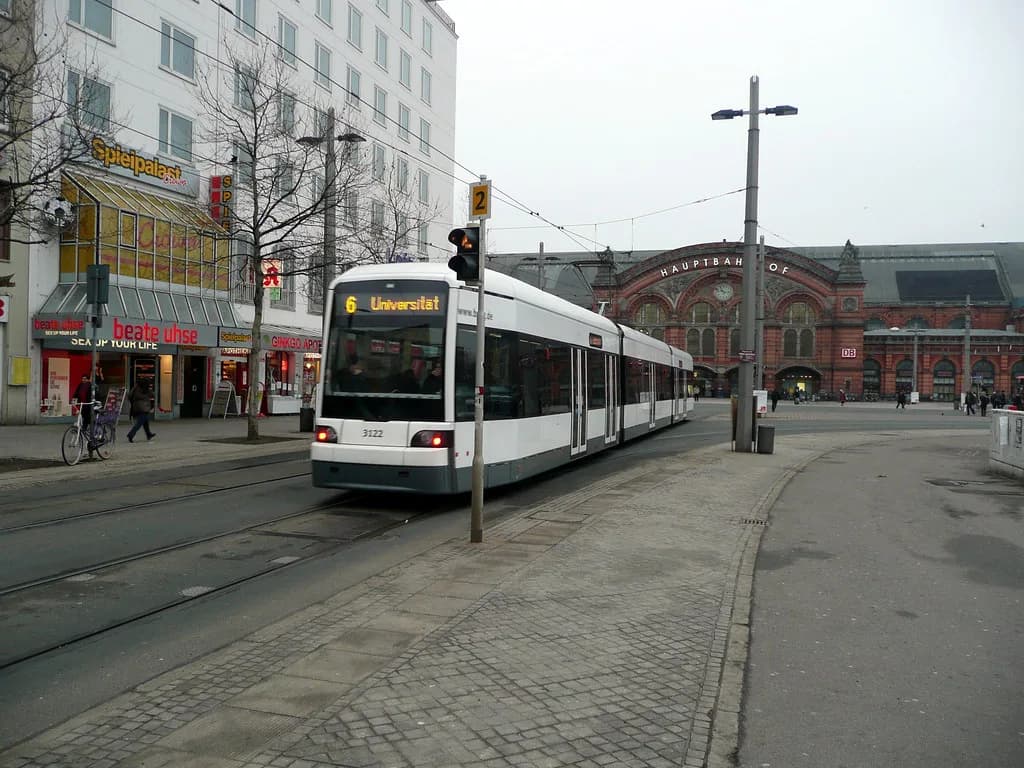
Bremen rewards visitors who treat transport as a single decision rather than a checklist. The city's official travel information describes Bremen as a city of short distances, notes that many corners can be discovered on foot or by bike, and points out that the centrally located main railway station, the central bus station and the airport close to the city make arrival straightforward. That compactness means your real choice is usually between walking and a short tram or bus hop.
Bremer Strassenbahn AG, almost always shortened to BSAG, operates the tram and bus network serving the city and surrounding areas. Bremen has no U-Bahn, so any guide promising a metro is simply wrong. BSAG's own site is also where service updates, diversions and payment news appear first, which makes it the page to check before you travel, and it lists a VBN 24-hour service information line for operational questions.
One warning up front: fare figures quoted in older travel blogs are not reliable, and this guide deliberately avoids repeating them. Ask the operator or the regional transport association for the current price of a single trip or a day ticket on the day you travel. Treat any fare you find in an old blog post, including single, day and multi-day passes, as history rather than a budget line.
The Network in One Picture
Bremen's public transport is a tram and bus system run by BSAG, with timetables, route planning and fare enquiries handled through the regional transport framework. Trams do the heavy lifting in the centre and along the main axes, while buses reach districts and neighbouring towns that the rails do not touch. For a visitor staying anywhere in the Mitte district, that distinction rarely matters because both modes converge on the same central stops.
Stops are close together in the old town, which is why the network works best as a supplement to walking rather than a replacement. Getting from the Hauptbahnhof to the Marktplatz area is a short walk rather than a journey requiring a connection. Save your tickets for genuinely long hops, such as the Weserstadion on a match day or the university campus in the north.
Route numbers and frequencies change with service updates, so check the live timetable on the operator's site for your specific day rather than memorising a line from a guide. BSAG publishes notices about diversions, ticketing changes, contactless payment rollouts and even free travel on public holidays when they apply, which is exactly the kind of change a static article cannot keep up with. A two-minute check before you leave your accommodation prevents most wasted journeys.
Arriving by Air: Bremen Airport
Bremen Airport sits unusually close to the centre, and the city's tourism information states plainly that it is only ten minutes away from the city centre. That single fact shapes how you should plan arrival: you do not need to build in a long transfer buffer the way you would in a larger hub. It also means the airport behaves more like a city stop than a destination in its own right.
Decide between public transport and a taxi on luggage and arrival time, not on an assumed speed advantage. If you are arriving late at night with heavy cases or travelling with small children, a taxi removes the walk at the far end and may be worth the extra cost. For the public option, check the operator's journey planner for the current connection from the airport into town.
Do not rely on airport transfer details found on university or third-party pages, because those describe a specific campus journey rather than the centre. They also quote figures and line numbers that can predate current services and fares and can mislead a general visitor. For the airport-to-centre connection, use a current operator or city source and buy your ticket at the stop or through the official app.
Arriving by Train and Long-Distance Bus
Bremen Hauptbahnhof is a genuinely central station rather than an edge-of-town terminus, and the city's travel information highlights it as a worth-seeing transport hub in the city centre. The central bus station, known as the ZOB, sits alongside it, so coach arrivals and rail arrivals funnel into essentially the same patch of the city. That placement turns your first twenty minutes in Bremen into a walk rather than a transfer.
From the station, the old town, the Schnoor Quarter and the Schlachte promenade on the Weser are all reachable on foot, which is why many visitors never buy a transit ticket at all on a short stay. If your hotel is in Mitte, walking with a rolling suitcase is often simpler than waiting for a tram. If you are staying further out, the tram and bus stops in front of the station will take you the rest of the way.
For onward trips, Bremen's rail position in north-west Germany makes it a natural base for a wider northern itinerary. If you are weighing whether to add a second city to your stay, the trade-offs are worth thinking through before you commit to a rail-heavy plan; see the options in these day trips from Bremen for ideas on how to structure a longer regional loop.
Tickets: Zone Logic and How to Check Current Fares
Bremen's fares are zone-based within the regional transport system, so the price depends on how many zones you cross, not on which vehicle you board. A trip that stays inside the central zone normally costs less than one reaching the outer districts or a neighbouring municipality. That is why a short airport trip and a long cross-city journey are not automatically the same ticket.
Buying rules matter more than the price for most visitors. If you buy a paper ticket in advance, it normally needs to be validated in a stamping machine before you board or immediately on entry, and travelling with an unstamped ticket is treated as travelling without one. BSAG has published information about contactless payment in its buses and trams, but keeping a small amount of cash as a fallback remains sensible for machines that reject foreign cards.
Never trust a fare printed in an old blog post or on a reseller page. Prices change, discount schemes expire, and temporary national tickets that once made headlines are no longer valid simply because they still appear in search results. Check the current fare, the day-ticket options and any group or multi-day products on the operator's own site on the day you plan to travel.
The honest answer to whether you need a day ticket is: only if you will make three or more separate journeys. In a compact stay focused on the old town, walking usually beats paying for short tram hops. Work out your actual movements first, then buy the product that matches them.
Walking as Transport
The old town is a walkable radius around Marktplatz, with the Town Hall, the Roland statue, the cathedral, Böttcherstraße and the Schnoor Quarter all clustered within a short stroll. The city's travel information frames Bremen as a place that can be explored on foot, and that framing holds up. A suggested half day is enough to cover the core at an unhurried pace, with coffee stops included; treat that as planning guidance rather than an official timing.
Cobblestones are the variable that catches people out. The Schnoor's narrow lanes and the older streets around the market are uneven underfoot, so thin-soled shoes and heels turn a pleasant wander into a slow, careful one. Bring footwear with a genuine sole and treat the surface as part of the sightseeing rather than an obstacle to be rushed.
Pace yourself against the light rather than against a list of sights. In the darker months the streets empty early, and a riverside walk along the Schlachte after dark is a different experience from the same walk at midday. If you want to plan an evening out on foot, it helps to know how the city shifts after sunset before you commit to a route.
Cycling: The Local Default, With Caveats
The city's tourism information is direct about this: the bike is the favourite means of transport for Bremen residents, and the city promotes discovering Bremen by bike. Flat terrain and a network of paths make that credible. If you are comfortable on a bike at home, renting one for a day opens up the outer parks and the Weser banks far more efficiently than walking.
Cycling is the wrong choice in specific situations. If you are only visiting the old town, a bike becomes something to lock up and worry about between every stop. If you are unfamiliar with riding in traffic, or visiting in icy conditions, the tram and your own two feet are the better tools. Decide based on your confidence and your itinerary, not on the romance of the idea.
Follow local rules rather than improvising: use marked paths, respect pedestrian zones in the old town, and check signage at junctions where routes cross tram tracks. Tracks are the most common hazard for visiting cyclists because a wheel can catch in the rail groove. Cross them at as close to a right angle as you can manage.
Accessibility and Planning Ahead
The city's tourism information includes a section on planning an accessible visit to Bremen, which is the right starting point if you need step-free routes, accessible stops or venue-specific arrangements. The city describes itself as easily accessible as a city of short distances, but that is a general statement rather than a guarantee about any individual stop or doorway. Verify the specific places you intend to use.
For the transit network itself, ask the operator directly about lift access, boarding assistance and vehicle types on your route. Street-level tram stops vary, and historic parts of the old town have cobbles and kerbs that complicate an otherwise flat walk. Booking any assistance you need in advance is far easier than solving it at the stop with luggage in hand.
Practical Combinations for Different Days
A museum-heavy day is the case where the tram earns its place. If you are moving between the Kunsthalle on the Culture Mile, the Übersee-Museum near the station and the Universum Science Center further out, walking the whole chain wastes time you could spend indoors. Buy your ticket at a machine or through the operator's app and check each museum's own site for its current opening arrangements.
Match days and major events change the traffic picture around the Weserstadion and along the riverside. BSAG regularly publishes event-specific travel information, including for football fixtures and city festivals, and those notices are far more useful than a generic timetable. Check the operator's news section in the days before a known event rather than assuming normal service.
Day-trip arrivals by train are easiest when you plan around the Hauptbahnhof's central position. You can arrive, walk into the old town, cover the core, and return the same evening without needing a transit ticket at all. For a full plan for that pattern, see this One Day in Bremen itinerary, and browse the wider collection of Bremen City guides and landmark visitor guides.
Plan Your Bremen Transport
The core of a Bremen transport plan is deciding how much you actually need to move. The station, the central bus station and the airport are all close to the middle, and the city's travel information is explicit that much of Bremen works on foot or by bike. That means the default answer for a short visit is walking, with the BSAG network reserved for specific, longer hops.
Before you travel, do three things: check the current fare and ticket products on the operator's official site, confirm your specific stop's accessibility if you need it, and look for any service notice covering your dates. These checks take minutes and prevent the two most common Bremen mistakes, which are over-buying tickets and trusting an outdated fare from a blog.
Frequently Asked Questions
Is Bremen easy to get around without a car?
Yes. Bremen has a tram and bus network run by BSAG, no U-Bahn, and a central main station and bus station close to the old town. The city's own travel information describes it as a city of short distances that can largely be explored on foot or by bike. A car is generally a hindrance in the centre, where parking and pedestrian zones make walking and public transport simpler.
How do I get from Bremen Airport to the city centre?
The airport sits only a short distance from the centre; the city's tourism information states it is ten minutes away. You can go by public transport or taxi, and the better choice depends mainly on your luggage and arrival time rather than on any dramatic speed difference. Check a current operator or city source for the connection and buy your ticket at the stop or through the official app.
Do I need a day pass for Bremen public transport?
Only if you will make several separate journeys in one day. In the old town, most sights sit within a short walk of each other, so a day pass can be wasted. Work out your actual movements first, then compare individual tickets with the current day-ticket price on the operator's official site, since fares change and old blog figures are unreliable.
Is Bremen walkable for sightseeing?
Yes. The Town Hall, Roland statue, cathedral, Böttcherstraße and Schnoor Quarter are clustered around Marktplatz within a short radius. The main complication is the cobblestone surface in the older lanes, which slows you down and punishes thin-soled shoes. Wear supportive footwear and pace yourself rather than trying to cover everything in one continuous march.
Can I pay contactlessly on Bremen trams and buses?
BSAG has published information about contactless payment in its buses and trams, and updates appear on its own site, so check there for the latest status. Availability can still vary by vehicle or stop, so carrying a small amount of cash as a backup is sensible. If you buy a paper ticket, remember to validate it before or at the start of your journey.
Is cycling a realistic option for visitors to Bremen?
It can be, provided you are confident riding in traffic and your itinerary stretches beyond the old town. The city's tourism information notes that cycling is the favourite means of transport for residents, and the flat terrain helps. For a short stay focused on Marktplatz and the Schnoor, walking is usually simpler than renting and repeatedly locking up a bike.


