

Last updated August 2026, this guide to free things to do in Lyon covers the city's biggest draws without a single euro changing hands. Start with the view from Fourvière Hill, the passageways called traboules, and the free zoo inside Parc de la Tête d'Or. The sections below add markets, murals, riverbanks, and festival dates so a full day, or three, in Lyon can run on a near-zero budget.
Is Lyon Expensive? A Fast Budget Reality Check
Lyon has a reputation for expensive, Michelin-adjacent dining, and that reputation is fair for bouchons and tasting menus. Away from the table, though, the city's signature sights charge nothing at all. Fourvière Hill, the Roman theatres of Lugdunum, the traboules, and Parc de la Tête d'Or are all free to enter. Several museums add free-entry days to their calendar too. Budget travelers can spend a full day sightseeing and pay only for a metro ticket or a coffee. Even a three-day stay built mostly around this list can keep sightseeing spend close to zero, leaving the daily budget for meals and transit alone. The table below lists the highlights covered in this guide, with typical costs shown as €0 where admission is genuinely free.
| Free Experience | Cost | Location | Good to Know |
|---|---|---|---|
| Fourvière Hill viewpoint | €0 | Fourvière Hill, above Vieux Lyon | Climb the Montée de Saint-Barthélemy; the funicular is a paid alternative |
| Roman theatres of Lugdunum | €0 | Fourvière hillside | Open-air ruins; the adjoining Gallo-Roman Museum usually charges, except select free Sundays |
| Basilique Notre-Dame de Fourvière interior | €0 | Fourvière Hill | The separate rooftop tour is a paid, reservation-only add-on |
| Traboules of Vieux Lyon and Croix-Rousse | €0 | Vieux Lyon and Croix-Rousse | Look for small bronze shields marking passages open to the public |
| Mur des Canuts and Fresque des Lyonnais | €0 | Croix-Rousse and Presqu'île | Best photographed in the afternoon light |
| Parc de la Tête d'Or and its zoo | €0 | 6th arrondissement | One of the few free zoos in France; greenhouses keep seasonal hours |
| Musée des Beaux-Arts cloister garden | €0 | Presqu'île | The museum galleries themselves require a paid ticket |
| Cathédrale Saint-Jean-Baptiste astronomical clock | €0 | Vieux Lyon | Performs at 12:00, 14:00, 15:00, and 16:00 |
Free Things to Do in Lyon: The Icons You Shouldn't Skip
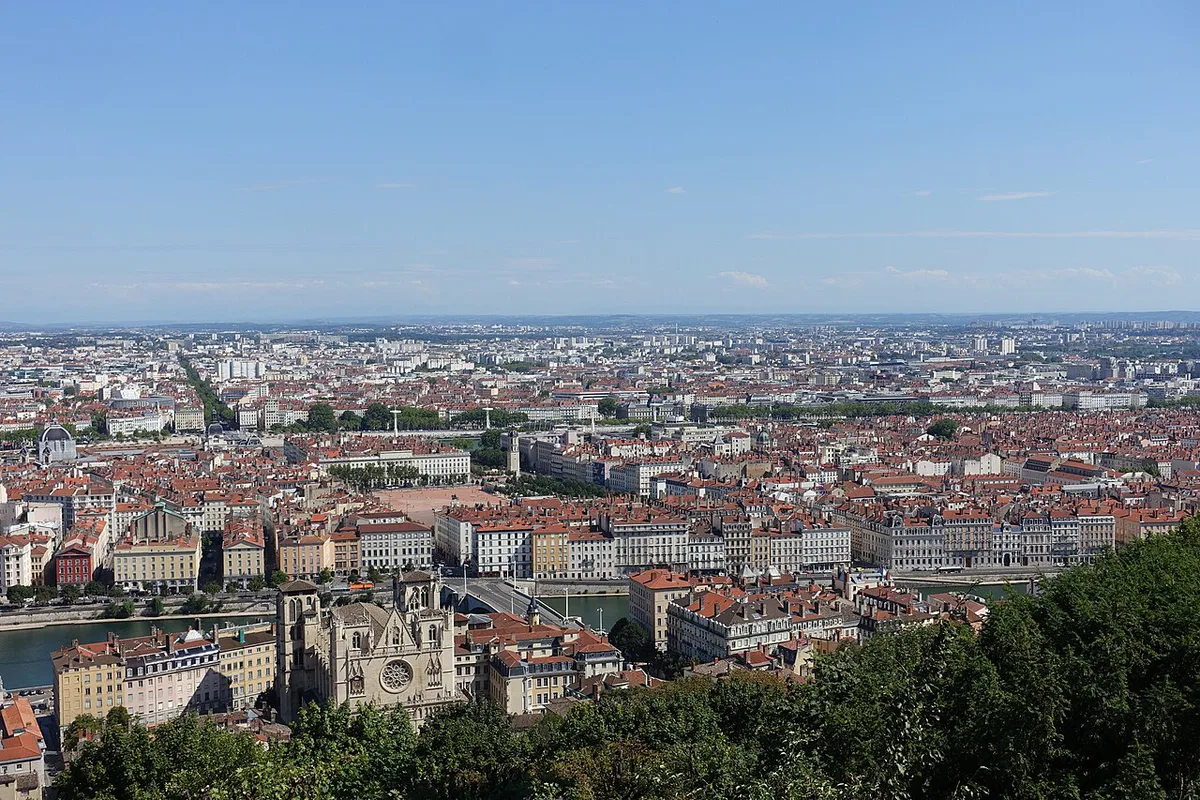
Fourvière Hill delivers Lyon's widest skyline view, looking across the Saône to the Presqu'île and the Rhône beyond. Reaching the top costs nothing if you climb the Montée de Saint-Barthélemy, a steep stepped street from Vieux Lyon. The funicular up to Fourvière is the paid alternative for tired legs. At the top, the Basilique Notre-Dame de Fourvière is free to enter. Its separate rooftop tour, with 300-plus steps, is a paid, French-language experience booked in advance. Downhill from the basilica, a five-minute walk reaches the Roman theatres of Lugdunum. These open-air amphitheaters stay open to the public outside festival performance hours. Entry to the ruins themselves is free. The adjacent Gallo-Roman Museum usually charges for entry, aside from occasional free Sundays worth confirming before a visit.
How to Find Lyon's Secret Traboules
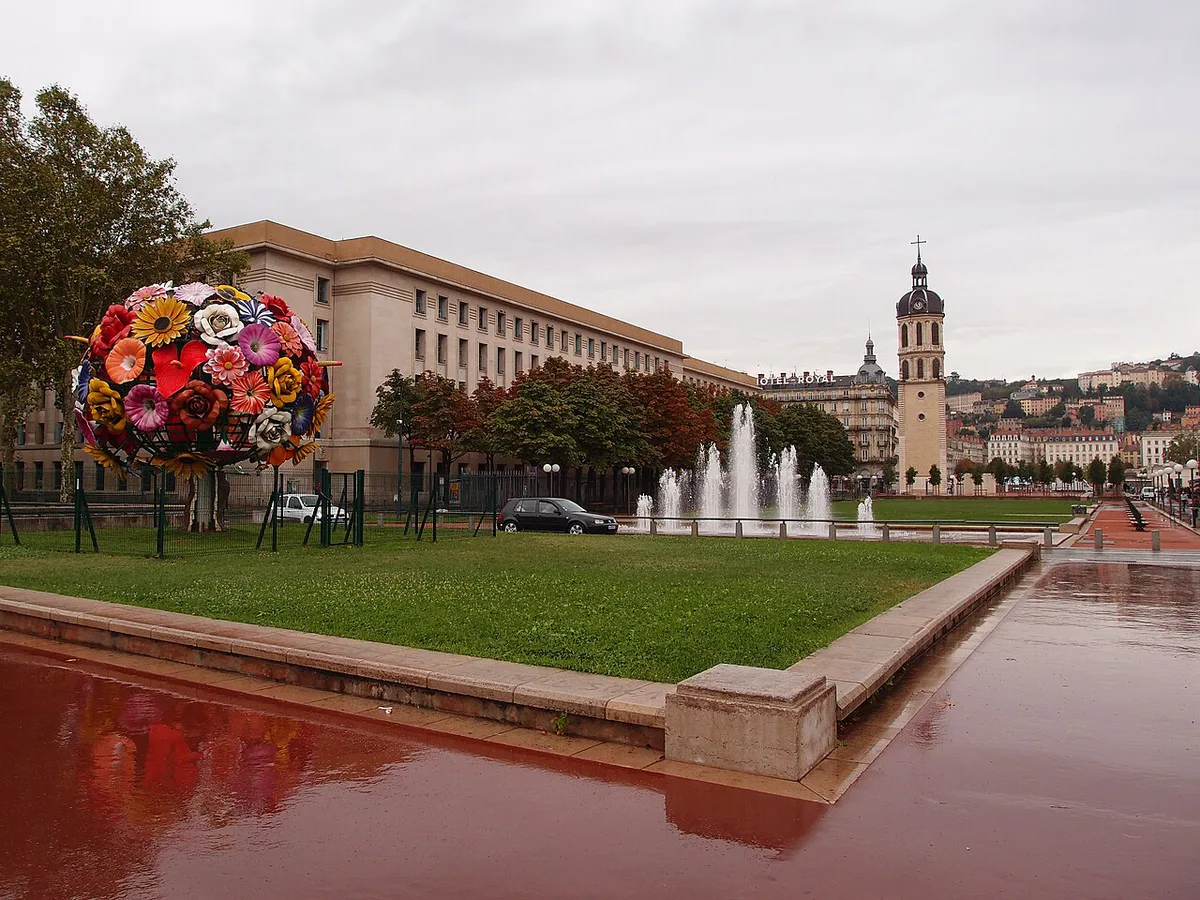
Traboules are covered passageways that cut through Renaissance and 19th-century buildings, linking one street to another without circling the block. Silk workers in Croix-Rousse used them to move fabric between workshops and the river, staying dry and out of the weather. Public traboules are marked with small bronze shields set into the pavement or doorway, a signal that walking through is allowed. Most traboules lead into residential courtyards, so keep voices low, and never enter after dark or when a door is marked private. Vieux Lyon holds the highest concentration of these passages, spread through its Renaissance quarter. Croix-Rousse's traboules connect the hill's old weaving district down toward the riverbanks. For an even quieter version of the same discovery, the guide to Lyon's off-the-radar corners covers lesser-known traboules and the small, overlooked Place Rouville square.
Lyon's Open-Air Gallery: Chasing the City's Murals
Croix-Rousse's Mur des Canuts is a trompe-l'œil mural covering an entire building facade, often cited as Europe's largest work of its kind. It depicts the neighborhood's silk-weaving history in painted balconies, shopfronts, and stairways that trick the eye at street level. Afternoon light works best for photographing the wall, when the sun angles across the painted facade instead of washing it out. Presqu'île's Fresque des Lyonnais adds a second large-scale mural nearby. It depicts historical figures connected to the city and stays viewable any time of day at street level. Both murals sit in public squares, so there is no entry gate, no ticket booth, and no opening hours to plan around.
Green Escapes: Parc de la Tête d'Or and the Riverbanks
Parc de la Tête d'Or is Lyon's largest green space, free to enter from dawn to dusk with no ticket gate at any entrance. Inside, a zoo shares the grounds with botanical greenhouses and a boating lake. Admission to the zoo itself costs nothing, making it one of the few free zoos in France. That detail alone makes the park worth building a morning around for a family visit to Lyon. The botanical greenhouses keep seasonal hours, so confirm the current schedule before planning a visit around them specifically. Beyond the park, the Berges du Rhône and the Rives de Saône form long paved riverside paths along both rivers. Both are free for walking, running, or simply sitting by the water at any hour.
Free Culture: Museum Courtyards, Cathedrals, and Memorials
Musée des Beaux-Arts occupies a former convent on Presqu'île. Its gallery collections require a paid ticket, but the cloister and garden at its center stay open to the public at no cost. Benches ring a quiet courtyard most visitors walk past on their way to the ticket desk, worth a stop on its own. A short walk away, Cathédrale Saint-Jean-Baptiste offers free entry and houses an astronomical clock that performs at set times each day. Its mechanical figures appear at 12:00, 14:00, 15:00, and 16:00, so timing a visit around one of those slots is worth the short wait. For a heavier stop, the memorial to Montluc Prison documents the site's role during World War II. Entry policies and free hours vary, so confirm the current schedule before visiting.
The Cathédrale Saint-Jean-Baptiste's astronomical clock performs at 12:00, 14:00, 15:00, and 16:00 daily. Its location in Vieux Lyon sits within walking distance of Fourvière Hill and the Roman theatres, enabling a single efficient morning route through three major free sights.
Free Festivals and When Museums Open Without Charge
Fête des Lumières turns Lyon's facades, bridges, and squares into large-scale light installations every winter, and the display is free to walk through on foot. Illuminated murals join the display too, adding another reason to plan an evening route through Lyon after dark. In summer, Nuits de Fourvière brings concerts to the Roman theatres on the hillside. Some of the season's performances are free to attend, though ticketed headline shows are not. Many municipal museums, including sites tied to the Gallo-Roman collection, traditionally open without charge on the first Sunday of each month. That policy can shift year to year, so confirm the current 2026 free-Sunday calendar before building a visit around it.
Markets and Squares Worth a Free Wander
Marché Saint-Antoine runs along the Saône on Presqu'île's western edge, and browsing the stalls costs nothing even without buying a single item. Vendors sell produce, cheese, and flowers within view of the river, and early mornings bring the best light and the least crowding. Place des Terreaux, anchored by its large fountain, works as a free spot to sit between sights in the city center. Farther out, the island of Île Barbe sits quietly in the Saône. It's reachable on foot and largely free of the crowds drawn to the hill and the old town. Confluence sits at the tip where the Rhône meets the Saône, with a contrast in modern architecture. Nothing there requires a ticket. Budget tip: public fountains across Presqu'île and Vieux Lyon offer free refills, cutting the daily cost of bottled water to zero.
A Zero-Euro Day in Lyon: A Sample Itinerary
Free sights cluster well enough to fill a single day without much backtracking, especially across Fourvière and Vieux Lyon. For a version of this route that also folds in paid highlights and exact timing, the tighter single-day route lays out a fuller schedule. The zero-euro version below strips that plan down to the sights that never charge admission. With an extra day on hand, pair this route with a day trip beyond the city to stretch the same low-budget approach further afield.
- Morning: Climb the Montée de Saint-Barthélemy to Fourvière Hill for the skyline view, then step into the free Basilique Notre-Dame de Fourvière.
- Late morning: Walk downhill five minutes to the Roman theatres of Lugdunum and explore the open-air ruins.
- Midday: Cross into Vieux Lyon and trace a traboule route, watching for the bronze shields that mark public passages.
- Afternoon: Browse Marché Saint-Antoine along the Saône, then cross to Croix-Rousse for the Mur des Canuts in the best afternoon light.
- Early evening: Finish at Parc de la Tête d'Or, walking the grounds and the free zoo before the park gates close.
Getting Around Lyon Without a Car
Central Lyon rewards walking, since Vieux Lyon, Presqu'île, and the base of Fourvière Hill sit within a compact core. Climbing to Fourvière on foot avoids any transit cost entirely, using the Montée de Saint-Barthélemy described above. For longer hops, or on a day when the climb feels like too much, the funicular is an option. It runs from Vieux Lyon toward St Just and uses the same ticketing as Lyon's metro and bus network. Getting off at the Minimes stop places visitors close to the Roman theatres of Lugdunum without the uphill walk. None of this requires a car, and parking in central Lyon adds cost without adding access to any of the free sights covered here.
What's Worth Paying For
Not every worthwhile experience in Lyon is free, and a few paid additions round out a visit well. The basilica's rooftop tour reaches views the ground-level terrace cannot match, though it requires advance reservation and runs primarily in French. Gallo-Roman Museum tickets unlock exhibits explaining the ruins at Lugdunum in far more depth than the open-air theatres alone. That extra depth is useful on any day other than a free Sunday. Multi-attraction passes bundling public transport with several paid sights exist for visitors packing many stops into a short stay, worth comparing against buying individual tickets. A sit-down meal at a traditional bouchon remains the one line item worth budgeting for on an otherwise free-focused visit. Lyon's food culture is central to why people come at all.
The basilica's rooftop tour requires advance reservation in French and adds 300-plus steps of climbing. The free ground-level basilica and the free climb from Montée de Saint-Barthélemy deliver comparable architectural and skyline experiences without those barriers.
Frequently Asked Questions
Is Lyon expensive to visit on a tight budget?
Lyon can run inexpensively if free sights anchor each day. Fourvière Hill, the Roman theatres of Lugdunum, the traboules, and Parc de la Tête d'Or cost nothing to enter. Only food, transit, and paid add-ons affect the total.
How do you find a traboule that's open to the public?
Look for a small bronze shield set into the pavement or doorway near the entrance. That marker signals a public passage rather than a private residence, and once inside, keep voices low since many traboules lead into occupied courtyards.
Is the zoo inside Parc de la Tête d'Or really free?
Yes, admission to the zoo is free, which makes it one of the few zoos in France without an entry charge. The botanical greenhouses inside the same park keep seasonal hours, so confirm the current schedule before visiting with children.
When do museums in Lyon offer free admission?
Many municipal museums traditionally waive admission on the first Sunday of each month, though the policy can change year to year. Confirm the current 2026 calendar before planning a museum visit around a free date.
Do you need the funicular to reach Fourvière Hill?
No, the funicular is a paid convenience, not a requirement. Walking up the Montée de Saint-Barthélemy from Vieux Lyon reaches the same viewpoint and the basilica for free, though the climb is steep.
What is the cheapest way to combine sightseeing with lunch in Lyon?
Pack a light lunch from Marché Saint-Antoine's stalls. Eat it in a free space such as Parc de la Tête d'Or or along the Berges du Rhône. That approach keeps the only cost to the food itself, with no seating charge or reservation needed.


