
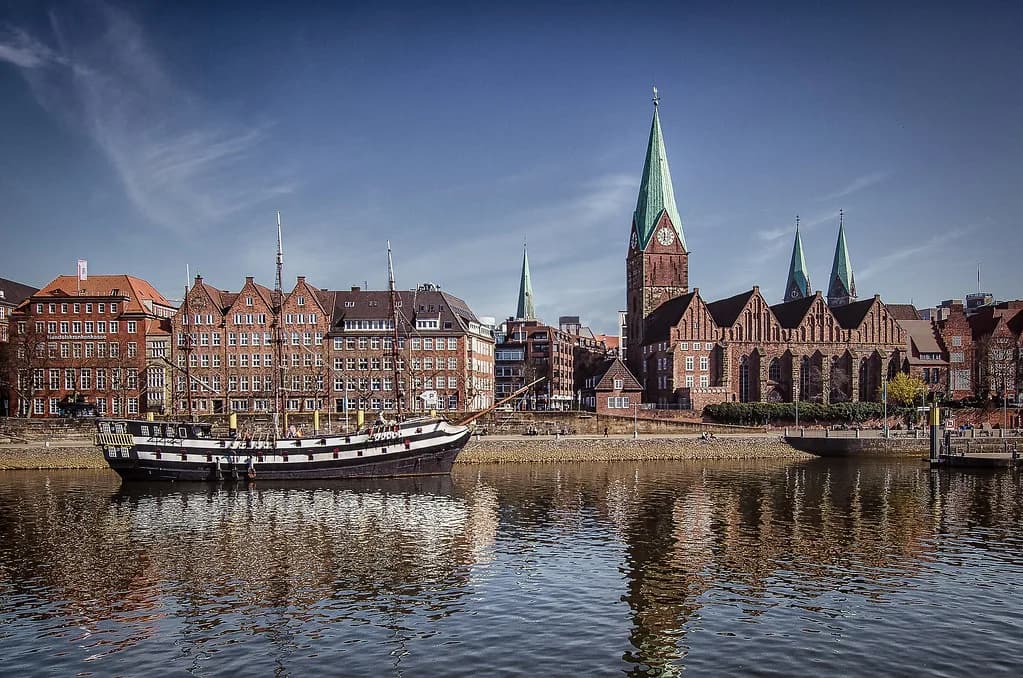
The Weserburg Museum of Modern Art sits on Bremen's Teerhof peninsula, in converted warehouse buildings at Teerhof 20 in the Bremen-Neustadt district, with the river on its doorstep. The complex reuses four former warehouses, and the museum is known for showing privately owned collections rather than a single municipal survey. Its Centre for Artist Publications holds a body of artists' books and written material that the museum describes as unique in Europe. A suggested budget for the galleries alone is roughly two hours, but that is a planning estimate, not an official figure.
This guide is about visiting one place: the Weserburg. It does not try to cover the whole city, and it deliberately avoids quoting prices, daily opening hours or booking rules, because those details are the museum's to publish and are best confirmed on its own visitor information pages before you travel. For the wider city, including how the Weserburg fits alongside the Kunsthalle Bremen and other institutions, use the Bremen City guide and the Bremen museums shortlist.
1. Where the Weserburg Is and How It Sits on the Weser
The museum stands on the Teerhof, a peninsula between the Weser and the old town, at Teerhof 20 in the Bremen-Neustadt district. The complex reuses four former warehouse buildings, a conversion that gives the galleries their brick character and river-facing outlook. Its entrance bridge is one of the building's most recognisable features. Because the museum is across the water from the historic centre, walking there is part of the visit rather than a detour.
On the old-town side, the Bürgermeister-Smidt-Brücke provides the direct link across to the Teerhof, and the Schlachte embankment is a natural companion for a riverside walk before or after the galleries. The light across the water shifts through the day, which is worth factoring in if you want photographs of the exterior. The museum describes itself as sitting in the middle of the Weser, and the setting is a genuine part of what you are visiting, not just an address.
The wider city core — Marktplatz, the cathedral and the Schnoor quarter — clusters on the old-town side within a compact area, so an art-focused stop can be folded into a broader day without long transfers. If you are building a route around the river, keep the museum and the old town on the same half of the day to avoid crossing back and forth. The Bremen City: Landmark Visitor Guides hub is a useful starting point for the surrounding sights.
2. The Collector-Led Model: What the Weserburg Actually Shows
The Weserburg does not present one encyclopedic municipal collection. It shows private collections on loan, each retaining its own character and emphasis, so the rooms read as distinct positions rather than a single chronological sweep. The concept grew out of the idea of a museum for collectors, and the institution opened in 1991 under the name Neues Museum Weserburg Bremen, later becoming known simply as the Weserburg. Its collection base spans roughly the 1940s to the present.
For a visitor, the collector model is a decision factor rather than a detail. You are seeing what private individuals chose to assemble, which often means concentrated strengths and personal obsessions instead of a textbook survey. That can be more rewarding if you like following a thread through a collection, and less useful if you want a neat timeline of modern art from one artist to the next.
The programme rotates around these holdings, so what is on view changes between visits. Before travelling, check the museum's own exhibition list rather than relying on a description from an earlier year. If a specific collection or lender is the reason for your trip, confirm it is on display before you commit a day to it. Exhibitions at the Weserburg have travelled to venues in Europe, Asia and South America, which is a reminder that the displays are curated projects with defined runs.
3. Centre for Artist Publications: A Slow, Research-Flavoured Stop
The Weserburg holds a collection of artists' publications and written material that the museum describes as unique in Europe. Its archive and collection holdings underpin both exhibitions and academic research, which is why this area works as a scholarly resource as much as a display. A named component is the Archive for Small Press & Communication, acquired in 1999, covering artists' books, multiples, records and posters from the 1960s onward. The wider archive description spans mainstream and alternative scenes, with figures such as Joseph Beuys and Andy Warhol represented.
This is not a room to rush. Artist publications reward browsing, and the material is dense enough that a research-minded visitor could spend far longer here than in the galleries. Treat the archive as a destination in its own right if you have a specific interest, rather than a ten-minute add-on at the end of a visit.
Access arrangements for archive material can differ from ordinary gallery visiting, and the museum does not publish a simple walk-in procedure for everything it holds. If you need to consult specific items, ask the museum directly or check its visitor information well ahead of your trip. Building in flexibility protects your schedule if a consultation needs to be arranged in advance.
4. Tours and Guided Formats: How to Time Your Visit
The museum runs a broad public programme of tours, talks, artist conversations and workshops alongside its exhibitions, aimed at adults, young people and children. Curator-led formats are a recurring feature. The museum's own programme has listed a curator tour of the Edition S Press presentation with Susanne Hänsgen, described as lasting 50 minutes and included in the admission price, and a curator-led tour of the Aase and Poul Gernes display with Janneke de Vries on a later date. Details like these change with the programme, so check the museum's events calendar for current dates and formats.
If a specific tour is the reason you are going, the visit has to be built around it. Tour dates are tied to particular exhibitions, so the subject matter changes as the programme does. Check close to your travel date rather than months ahead, since new dates are added as exhibitions change.
For visitors who prefer to move at their own pace, the exhibitions work equally well without a guide. The trade-off is interpretation: a curator tour connects works to the collector and to the museum's research, while a self-guided visit gives you more time in the rooms you care about. Choosing between them is mostly a question of whether you want a narrative or freedom.
5. Free Art Outside the Ticketed Galleries
Not everything at the Weserburg requires a ticket. The museum states that numerous works around the building, on the facade and in and in front of the foyer are freely accessible. That includes Monica Bonvicini's light work POWER JOY HUMOR RESISTANCE, which is part of the outdoor art.
The riverside setting adds a second piece to look for: the outdoor sculpture Trois Triangles by the American artist Sol LeWitt, sited near the Bürgermeister-Smidt-Brücke, echoing the museum's architectural form and acting as a marker for people crossing the bridge. Both the Bonvicini light work and the LeWitt sculpture can be seen without entering the paid galleries.
Consider treating the free outdoor layer as its own short stop if you are short on time or simply passing along the river. It works as an introduction to the building before you decide whether to buy a gallery ticket, and nothing outdoors tells you what is installed inside, so a separate check of the exhibition programme is still needed. The riverside Schlachte promenade is the natural next step if you continue on foot.
6. Practical Planning: What to Verify Before You Go
Admission prices, concession rules and current daily opening hours are the details most likely to change, and they should be checked on the museum's own visitor information page shortly before your trip. The official site carries the museum's stated opening times and entry prices, which is the only reliable basis for planning. Rely on the operator's information rather than third-party listings, which may show outdated or no details at all.
Booking mechanics are also worth confirming directly. The museum publishes its arrangements for tickets and tours on its own pages, so any claim about online-only entry or mandatory advance booking should be checked there rather than assumed. Third-party platforms are not the museum's official admission channel.
For time budgeting, a reasonable approach is to allow around two hours for the galleries and add time if you want the archive or a guided tour. The museum does not publish an official recommended duration, so treat this as a planning suggestion rather than a fixed figure. If you are combining the Weserburg with other stops, decide which one gets the flexible slot. Accessibility, cloakroom and security arrangements are also best confirmed with the museum, since they are not fixed public guidance.
The museum also has a shop, a library and hire spaces, and its events programme includes concerts, readings and talks that may affect normal visiting on a given day. If a particular room matters to you, ask whether it is affected by an event. The broader Bremen City: Itineraries and City Travel Guides hub helps you slot the museum into a longer stay.
7. Pairing the Weserburg With the Rest of Bremen
The most natural companion is the Kunsthalle Bremen, the city's other major art museum, which sits on the old-town side at Am Wall. The two are genuinely different decisions: the Kunsthalle's day ticket prices and opening hours are its own, and they must not be read across to the Weserburg. The Kunsthalle charges separate day-ticket rates for adults, seniors, teenagers and children, with reductions for visitors with disabilities and free entry for members of the Kunstverein in Bremen, and its special exhibitions may carry an additional charge.
A river-and-old-town route works well around a Weserburg visit: cross the Bürgermeister-Smidt-Brücke, walk the Schlachte embankment, then continue to the Marktplatz, the cathedral and the Schnoor quarter. Keep the museum and the old town on the same half of the day so you are not criss-crossing the water. If you want more than one museum, a shortlist of Bremen museums worth visiting helps you judge how much art time to allocate.
Bremen's museums differ sharply in scale and subject, and the Weserburg's collector model is one specific option among them. Build the rest of your day around whichever collection interests you most, rather than trying to see everything. If you are staying longer, city itineraries can help you decide how the museum fits into a two- or three-day plan.
Plan Your Weserburg Visit
The Weserburg rewards a decision made in advance: know whether you are going for the collector-led displays, a named temporary exhibition, or the artist publications archive, because each leads to a different use of your time. Check the museum's own programme and visitor information for current hours, admission and tour dates before you travel, and rely on those pages rather than third-party listings.
The free outdoor art around the building and the riverside walk make the trip worthwhile even if you keep the interior visit short. If you are still weighing up Bremen's art options, compare the Weserburg with the Kunsthalle Bremen visitor guide and with the city's wider museum shortlist; both are strong choices, but the Weserburg's private-collection model gives it a distinct character that is easy to plan around once you know what you want from the visit.
Frequently Asked Questions
What makes the Weserburg Museum of Modern Art different from other Bremen museums?
The Weserburg is built around private collections shown under one roof, with each collection keeping its own character, rather than around a single municipal survey. That collector-driven approach shapes both the displays and the temporary programme. The museum also holds a substantial archive of artists' publications and written material, which gives it a research dimension that most city art museums do not have.
Do you need to book Weserburg tickets in advance?
The museum does not publish a simple mandatory advance-booking rule that applies to all visitors, and booking arrangements can change with the programme. Check the museum's own visitor information and events pages before your trip, especially if you want a specific curator-led tour, since those run on set dates. Third-party ticketing sites are not the museum's official sales channel and may list no events at all.
How long should you spend at the Weserburg?
A sensible allowance for the galleries is around two hours, and you should add time if you plan to use the artist publications archive or join a guided tour, which the museum describes as lasting about 50 minutes. There is no published official recommended duration, so treat any figure as a planning suggestion. If you also want the free outdoor art and the riverside walk, allow extra time on top.
Is there free art to see at the Weserburg without a ticket?
Yes. The museum states that works around the building, on the facade and in and in front of the foyer are freely accessible, including Monica Bonvicini's light work POWER JOY HUMOR RESISTANCE. The outdoor sculpture Trois Triangles by Sol LeWitt, near the Bürgermeister-Smidt-Brücke, is also part of the exterior setting. These are separate from the ticketed galleries.
What is the Centre for Artist Publications at the Weserburg?
It is the Weserburg's collection and archive of artists' publications and related written material, which the museum describes as unique in Europe. Its holdings include the Archive for Small Press & Communication, acquired in 1999, covering artists' books, multiples, records and posters from the 1960s onward. It functions as a research resource as well as an exhibition source, so plan it as a slower, more focused part of a visit. If you need to consult specific material, ask the museum about access arrangements in advance.
Is the Weserburg the same as Bremen's Kunsthalle?
No, they are separate institutions with different collections and locations. The Kunsthalle Bremen is the city's other major art museum and sets its own admission prices and opening hours; those details do not apply to the Weserburg. If you plan to visit both, check each museum's own published information so you are comparing current facts rather than assuming they match.


